The two aren't really competing for the same clothes — a wardrobe stores what needs to hang to avoid creasing (coats, shirts, dresses), and a chest of drawers stores what doesn't (folded jumpers, underwear, t-shirts). Most bedrooms need real capacity in both categories, which is why the common mistake is buying a bigger version of whichever one you already have rather than the one you're actually short of.
What follows is how to tell which you're short of, and eight of our own pieces measured — hanging space against drawer space, side by side.
| Item type | Wardrobe | Chest of drawers |
|---|---|---|
| Coats, dresses, tailored shirts | Yes — needs hanging | No — creases |
| Jumpers, t-shirts, underwear | Wastes hanging space | Yes — folds flat |
| Shoes, bags | Floor or shelf space inside | No |
| Spare bedding | Top shelf, if there is one | Bottom drawer, if deep enough |
Rule one. Count what you actually own before buying either
The honest way to tell which you're short of is to count hangers currently in use against how full your existing drawers are — most people already know the answer once they actually look, rather than guessing from how the bedroom feels. A wardrobe bought to solve a folded-clothes problem doesn't solve it; the clothes just move to a different form of not-quite-fitting.
This matters more than either piece's total 'storage volume' as advertised — a wardrobe with generous hanging rail and a chest with generous drawers can have similar overall capacity and still leave you short, if what you actually own is mismatched to the split between them.
Rule two. An open wardrobe trades a door for visibility and airflow
An open wardrobe — rail and shelving with no doors — shows everything hanging on it, which works well for a considered, curated wardrobe and less well for one that's genuinely just storage. It also airs better than a closed cabinet, which matters for anything stored slightly damp or for a room prone to condensation.
A door-fronted wardrobe hides the same rail and shelving, at the cost of needing floor clearance to actually open the doors — worth checking against the room's layout before assuming any wardrobe fits where an open one would.
Rule three. A chest's drawer count matters more than its total height
More drawers, even in the same total height, generally beats fewer bigger ones for actually finding things — a 5-drawer chest sorts by category (socks, t-shirts, jumpers, and so on) in a way a 3-drawer chest with the same volume can't. The trade-off is that more, shallower drawers hold less of any one thing than fewer, deeper ones.
This is also why a chest's advertised drawer count is worth checking against what's actually going in it — bulky folded jumpers want fewer, deeper drawers; smaller folded items sort better across more, shallower ones.
Eight of our pieces, hanging and folded storage compared
Wardrobes first, then chests of drawers, so the two types of storage are easy to compare directly rather than reading as one long list.
| Piece | Width | Storage |
|---|---|---|
| Bradbury Dark Oak Effect Open Wardrobe | 84cm | Open rail and shelving |
| Bradbury Natural Oak Effect Open Wardrobe | 84cm | Open rail and shelving |
| Kyra Grey Wash Elm Wood Wardrobe | 95cm | Door-fronted, rail and shelving |
| Lyon Rattan and Oak Wood 2 Door Wardrobe | 92cm | Door-fronted, rail and shelving |
| Salvar Natural Oak and Elm Chest of 5 Drawers | 70cm | 5 drawers |
| Sarter Black Mango Wood Chest of 4 Drawers | 98cm | 4 drawers, wider/shallower |
| Salem Mango Wood Chest of 4 Drawers | 85cm | 4 drawers |
| Gaya Mango Wood Chest of 5 Drawers | 60cm | 5 drawers, narrower/deeper |
The short version
A wardrobe stores what needs to hang; a chest of drawers stores what doesn't. Count what you actually own before buying either, since most bedrooms are short of a specific type of storage rather than storage in general. An open wardrobe shows and airs its contents; a door-fronted one hides them but needs clearance to open. More drawers sorts better than fewer bigger ones for the same total capacity.
Common questions
- Do I need a wardrobe or a chest of drawers?
- Most bedrooms need both, for different clothes — a wardrobe for anything that needs to hang to avoid creasing, a chest of drawers for anything that folds flat. Count what you actually own in each category before assuming you need a bigger version of whichever you already have.
- Is an open wardrobe worse than one with doors?
- Not worse, just different — an open wardrobe airs better and suits a curated, considered wardrobe on display. A door-fronted one hides the same rail and shelving, at the cost of needing floor clearance to open the doors.
- How many drawers should a chest of drawers have?
- More drawers generally sorts better than fewer at the same total height — a 5-drawer chest lets you separate categories (socks, t-shirts, jumpers) in a way a 3-drawer chest of the same volume can't. Fewer, deeper drawers suit bulkier folded items better.
- Can a chest of drawers replace a wardrobe?
- Not for anything that needs to hang — coats, dresses and tailored shirts crease if folded and stored in a drawer. A chest handles folded clothing well; hanging storage is a genuinely separate need it doesn't cover.
- Does an open wardrobe need more space than a closed one?
- About the same footprint for the rail and shelving itself, but a closed wardrobe needs extra clearance in front for the doors to open, which an open wardrobe doesn't require at all.
The pieces in this guide
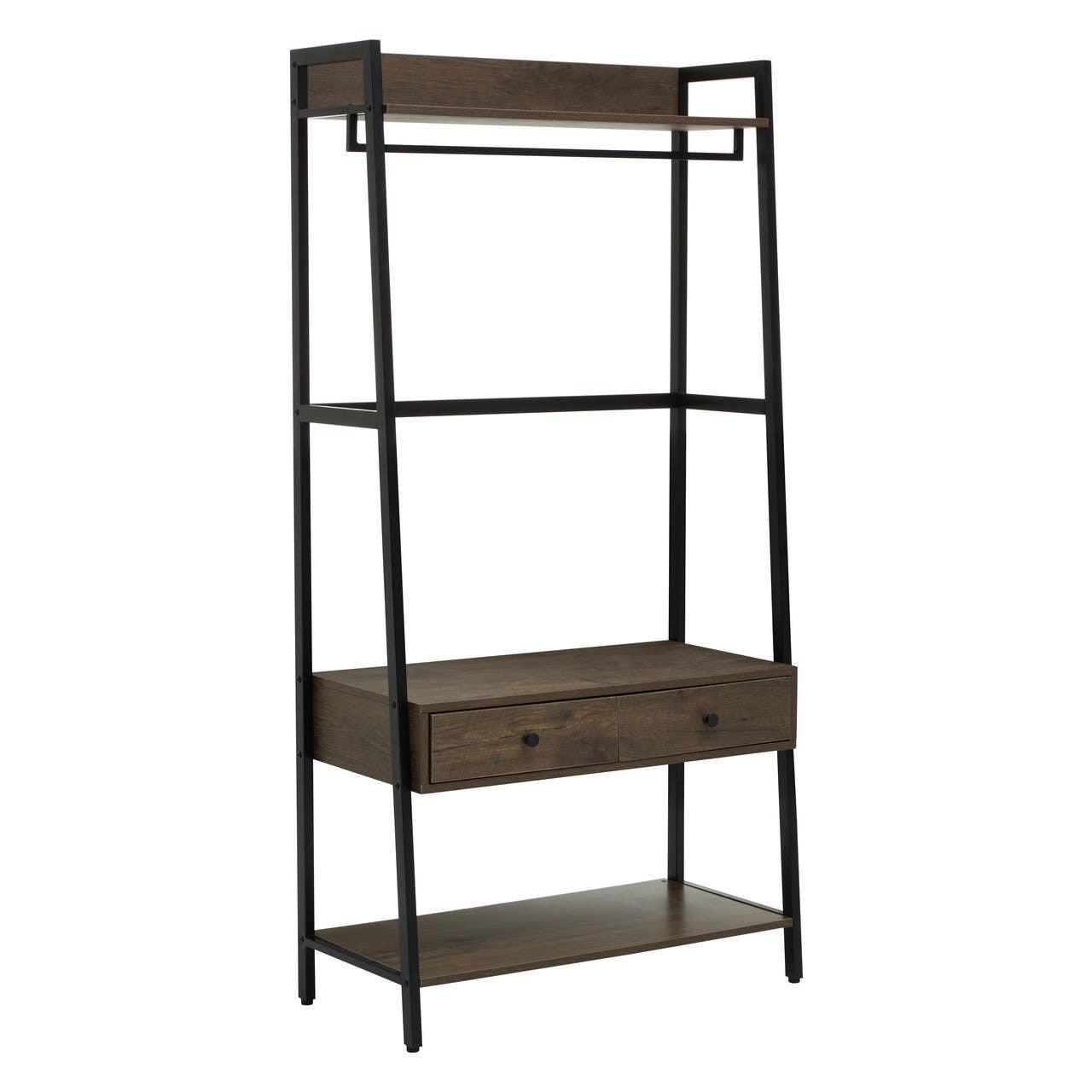
Bradbury Dark Oak Effect Open Wardrobe
£209
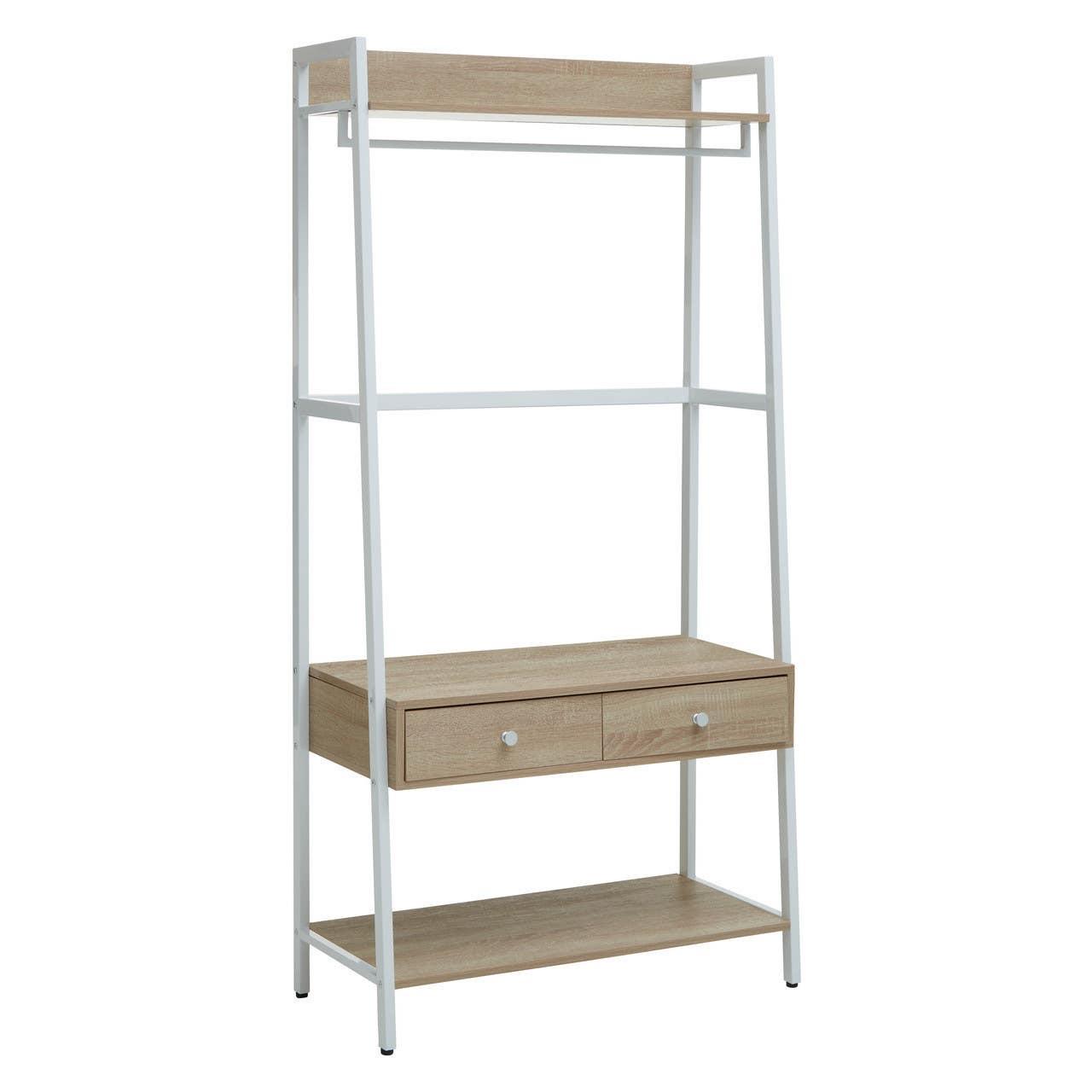
Bradbury Natural Oak Effect Open Wardrobe
£199
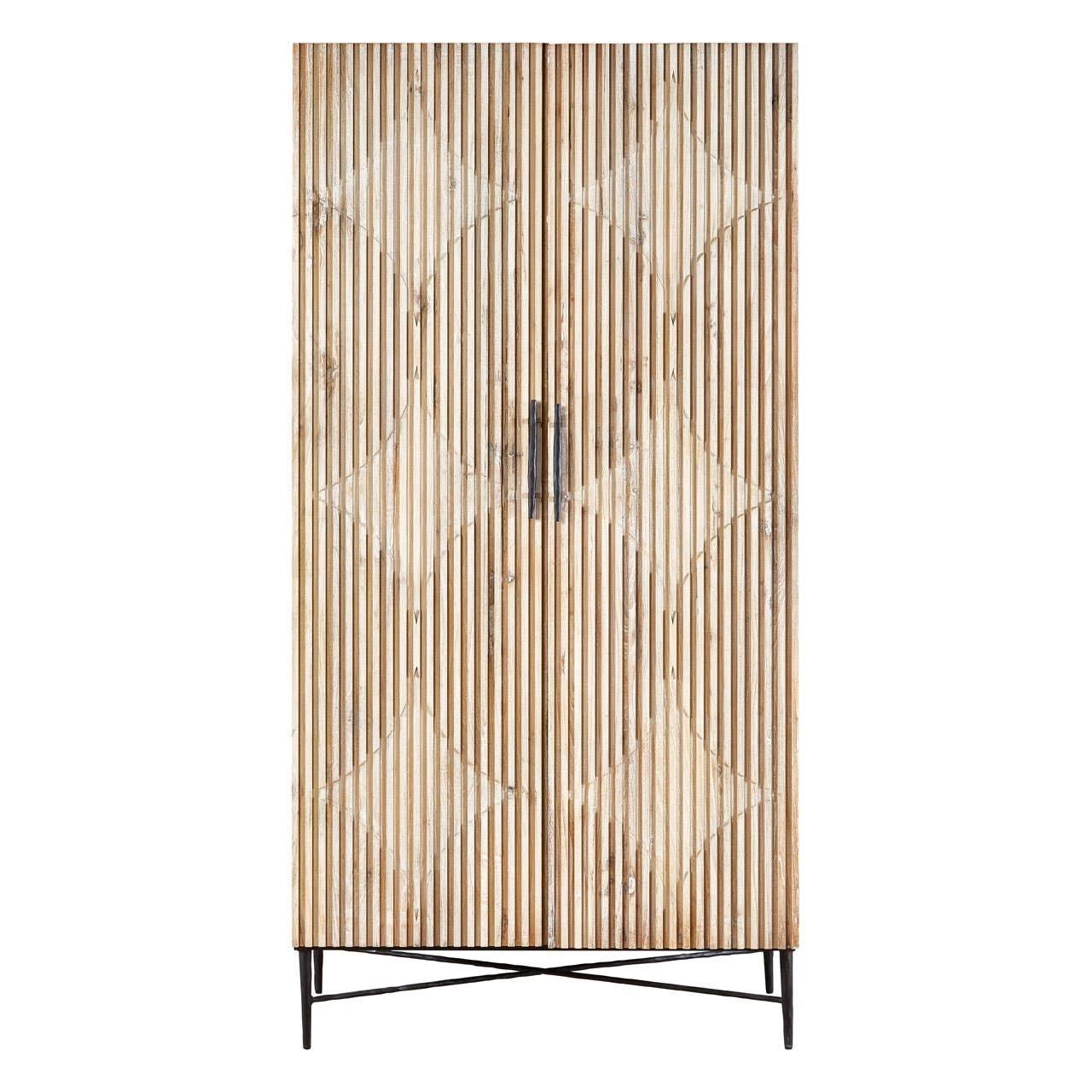
Kyra Grey Wash Elm Wood Wardrobe
£1,429
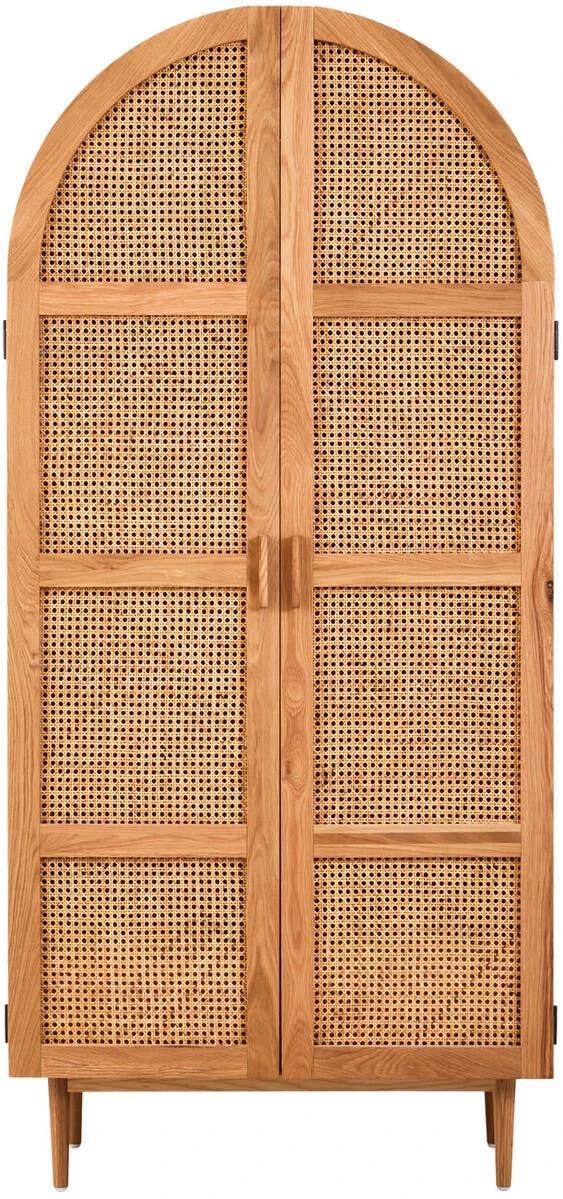
Lyon Rattan and Oak Wood 2 Door Wardrobe
£1,524
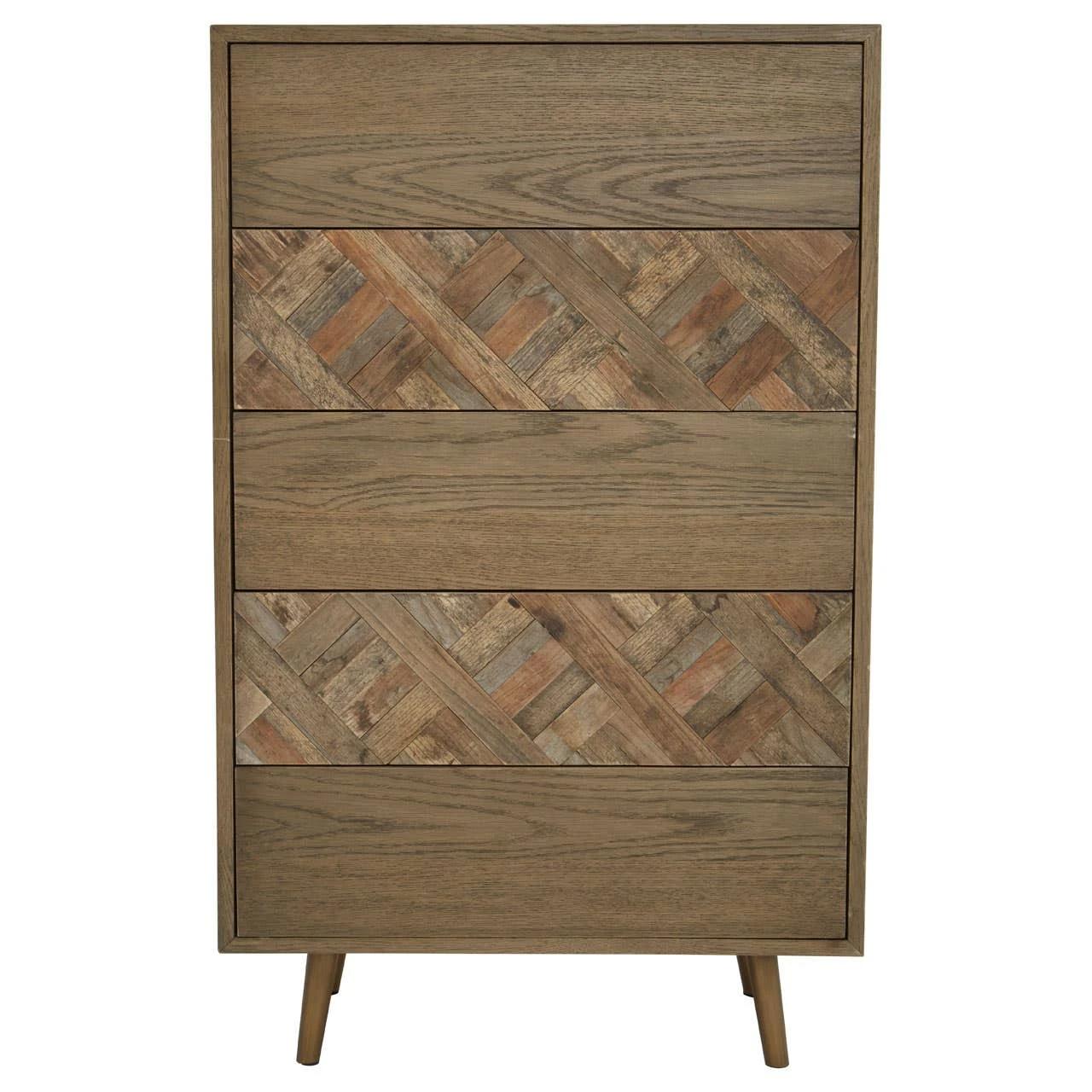
Salvar Natural Oak and Elm Wood Chest of 5 Drawers
£1,013
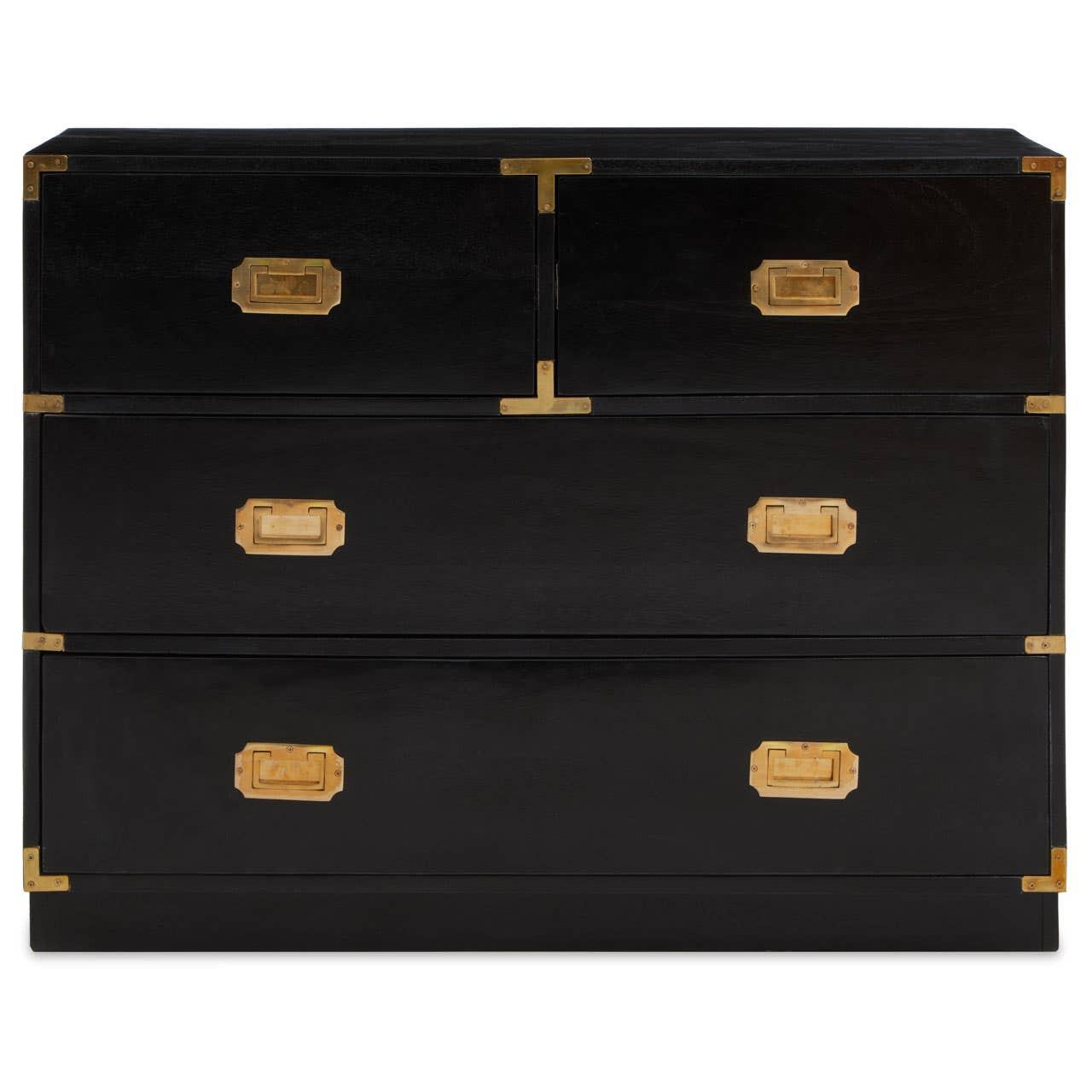
Sarter Black Mango Wood Chest of 4 Drawers
£811
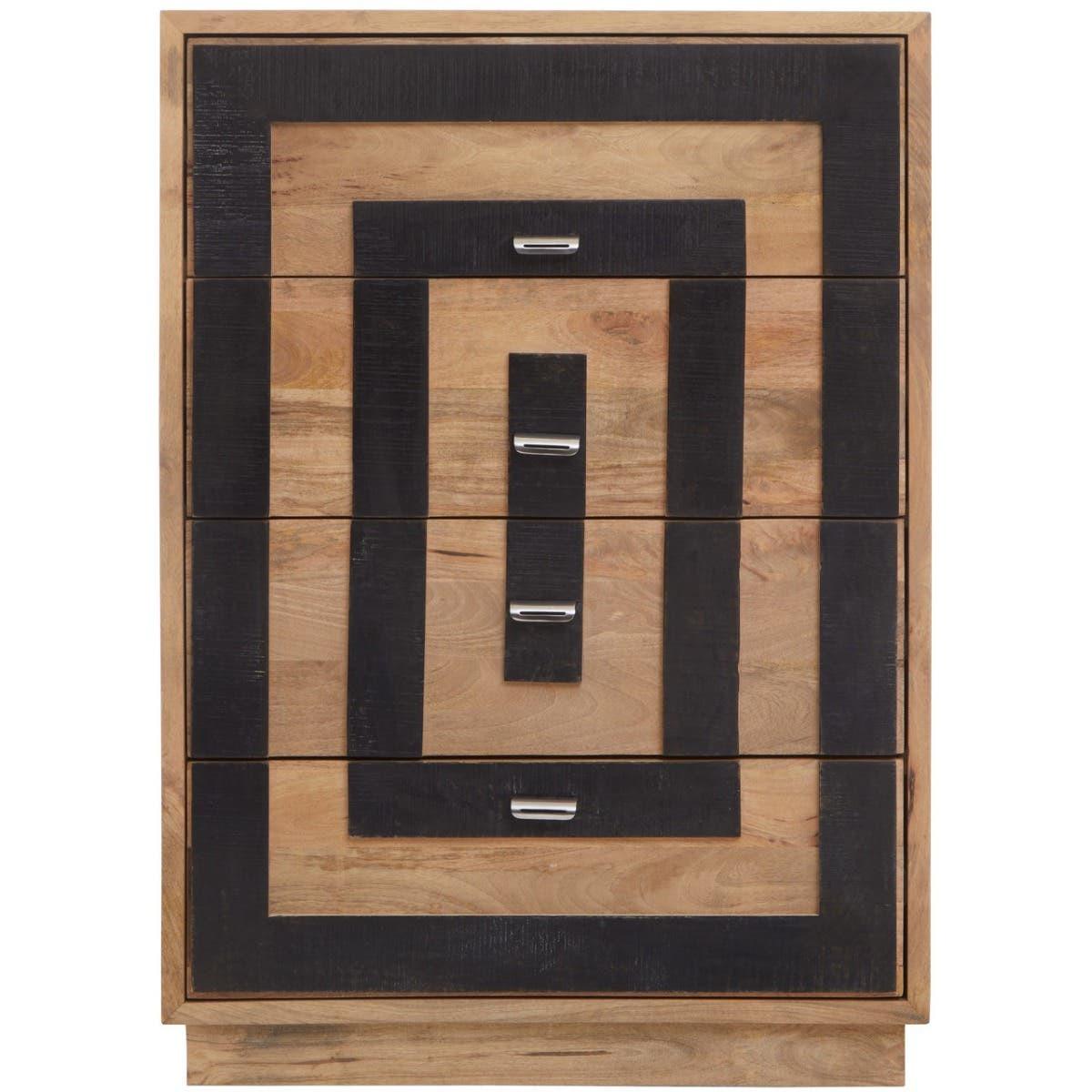
Salem Mango Wood Chest of 4 Drawers
£1,128
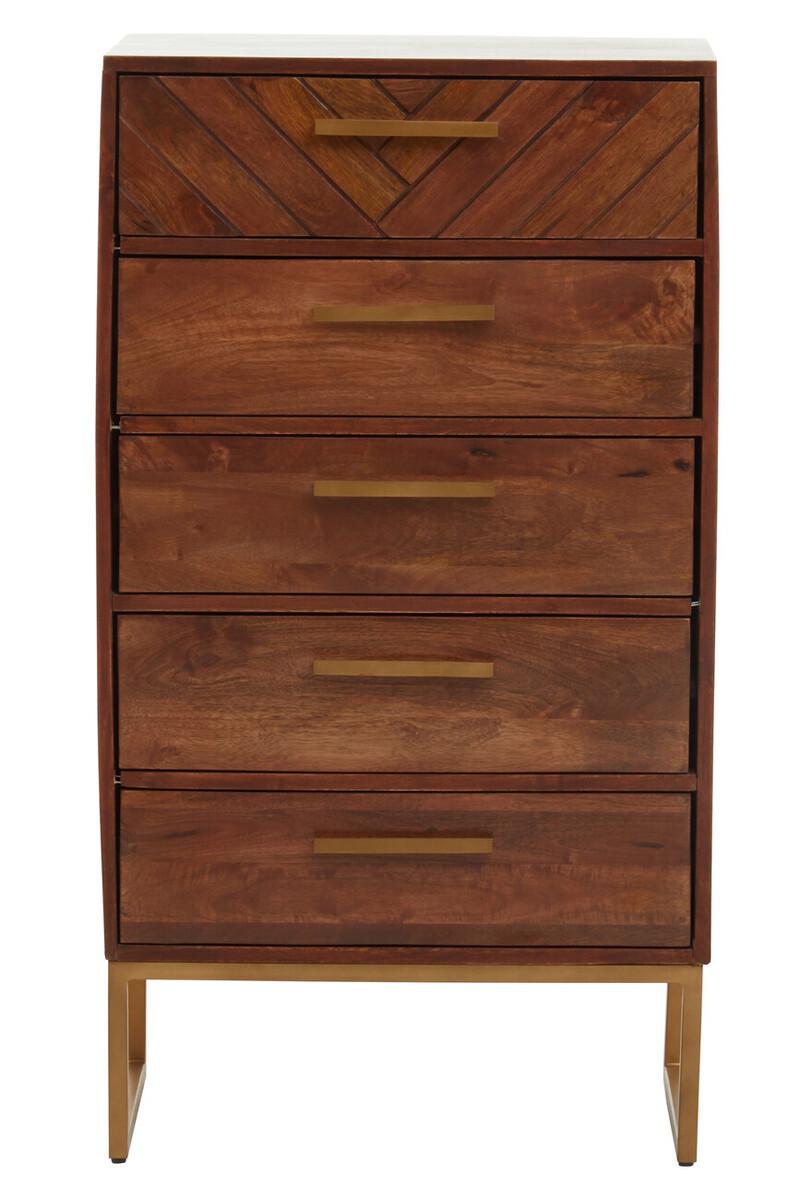
Gaya Mango Wood Chest of 5 Drawers
£691