When you repot, go up by two to four centimetres of diameter for a small plant and five to ten for a large one. Not more. A 30cm planter holds roughly 15 litres of compost and a 60cm one holds over a hundred, which is the second thing worth knowing before buying. And if it is going outside, it needs a drainage hole — that one is not a preference.
Planters are bought on looks and lost on those three numbers, because none of them is visible in a photograph.
| Plant is in | Move it to | Compost needed |
|---|---|---|
| 9cm nursery pot | 12cm | About 0.5 litres |
| 12cm | 15cm | About 1 litre |
| 15cm | 19cm | About 2 litres |
| 19cm | 24cm | About 4 litres |
| 24cm | 30cm | About 8 litres |
| 30cm | 35–40cm | 15–25 litres |
Work it out here
Your planter, in litres — and whether you are over-potting
Across the top, inside
Inside, to the base
Optional — the nursery pot it came in
Enter the planter’s size, or the pot your plant came in.
Rule one. Two to four centimetres, not twenty
The instinct when repotting is to give a plant room to grow into. It is the wrong instinct, and it is the most common way a healthy plant dies after being moved.
Compost holds water and roots are what remove it. Surround a small root system with a large volume of compost and most of that compost has no roots in it, so it stays saturated for days after every watering. Roots sitting in permanently wet compost rot. Step up gradually and do it again next year instead of trying to skip a stage.
Rule two. Outdoors, drainage is not optional
A planter with no holes, left outside through a British winter, fills with rainwater. There is no version of this that ends well. The plant drowns slowly over weeks, and because the surface of the compost looks normal throughout, the cause is rarely obvious until the plant is gone.
If a planter you love has no holes, use it as a cover pot instead. Keep the plant in its nursery pot inside it, lift it out to water, and let it drain before it goes back. That is not a compromise — it is how most large indoor planting is actually done.
Rule three. Lift it off the ground
Holes pressed flat against paving seal themselves, and a pot with blocked drainage is a pot with no drainage. Pot feet, a couple of tiles or a pair of battens are all it takes.
It also keeps the base out of standing water, which is what rots timber planters from the bottom up and what cracks ceramic ones in a freeze.
Rule four. Frost-resistant and frost-proof are different words
Water soaks into porous ceramic, freezes, expands, and splits the pot from the inside out. A pot that has survived three winters can fail in the fourth, because the damage accumulates invisibly before it shows.
Glazed stoneware fired at high temperature generally copes. Low-fired terracotta generally does not, though it is the most forgiving material to plant into because it breathes. If a listing does not say frost-proof, treat it as a pot that comes in for winter.
Rule five. Fill the bottom third of anything over 40cm
Volume rises with the square of the radius, so a planter twice as wide holds four times as much. This surprises people at the checkout of a garden centre more than anywhere else in gardening.
Unless you are planting something genuinely deep-rooted, fill the bottom third with something inert and light — broken polystyrene, upturned plastic pots, crushed cans. It saves a bag or two of compost and keeps the planter light enough to move, which you will want to do at least once.
Rule six. Match the depth to the root, not to the plant
Herbs, succulents and most bedding are shallow-rooted and are happier in a wide low bowl than in a tall column, where the compost at the bottom never dries.
Shrubs, small trees and anything that will be there for years want depth — at least 40cm — because that is where the root ball goes and because a tall planter is far harder to blow over.
Where it is going
Windowsill. 12–15cm, and something with a saucer or a sealed base, because a windowsill is a wooden surface with a radiator under it. Small pots dry out fast in that position — expect to water twice as often as anywhere else in the house.
Living room floor. 30–40cm for anything that reads as a floor plant. Below 30cm a floor-standing planter looks like it is waiting to go somewhere else.
Doorstep and porch. Go tall rather than wide, and go in pairs. A pair of 50cm planters either side of a door does more for a house front than six pots scattered along it.
Patio. Group in odd numbers at different heights and leave the smallest ones out of the group — a 15cm pot on a patio disappears. This is where the wide low bowls earn their place, planted densely enough to hide the compost.
Balcony. Weight is the constraint, not size. Fill the bottom third as in rule five, use a soil-less compost, and keep the tall ones against the wall rather than at the rail.
Eight of our planters, and what goes in them
Working the rules backwards: the nursery pot each planter takes is its opening less about 4cm, rounded down to a size nursery pots are actually sold in, and the compost figure is the internal volume with the root ball allowed for.
| Planter | Opening × depth | Takes a plant in | Compost |
|---|---|---|---|
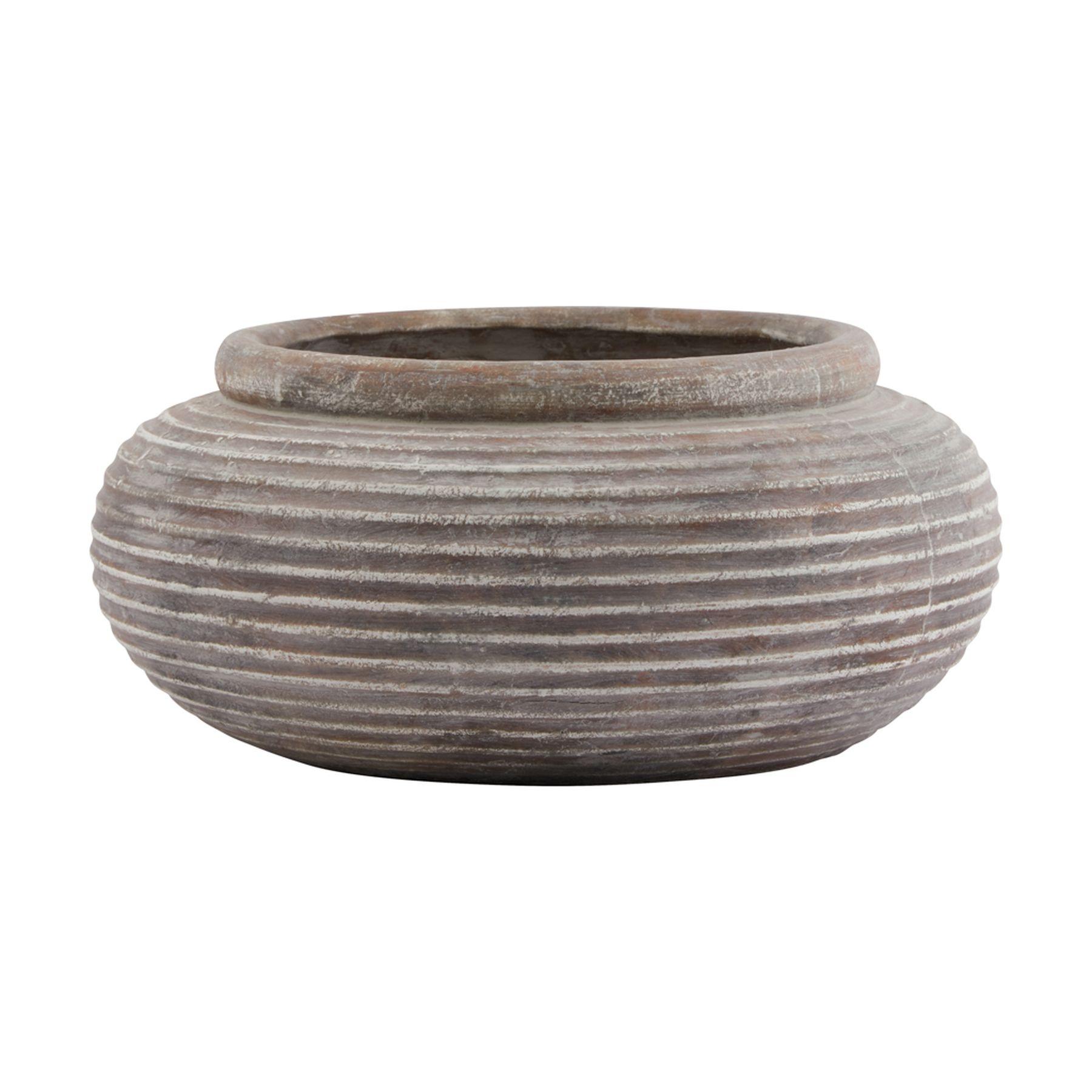
| Siena Brown Round Ribbed Planter | 41cm × 19cm | 35cm pot | 18 litres |
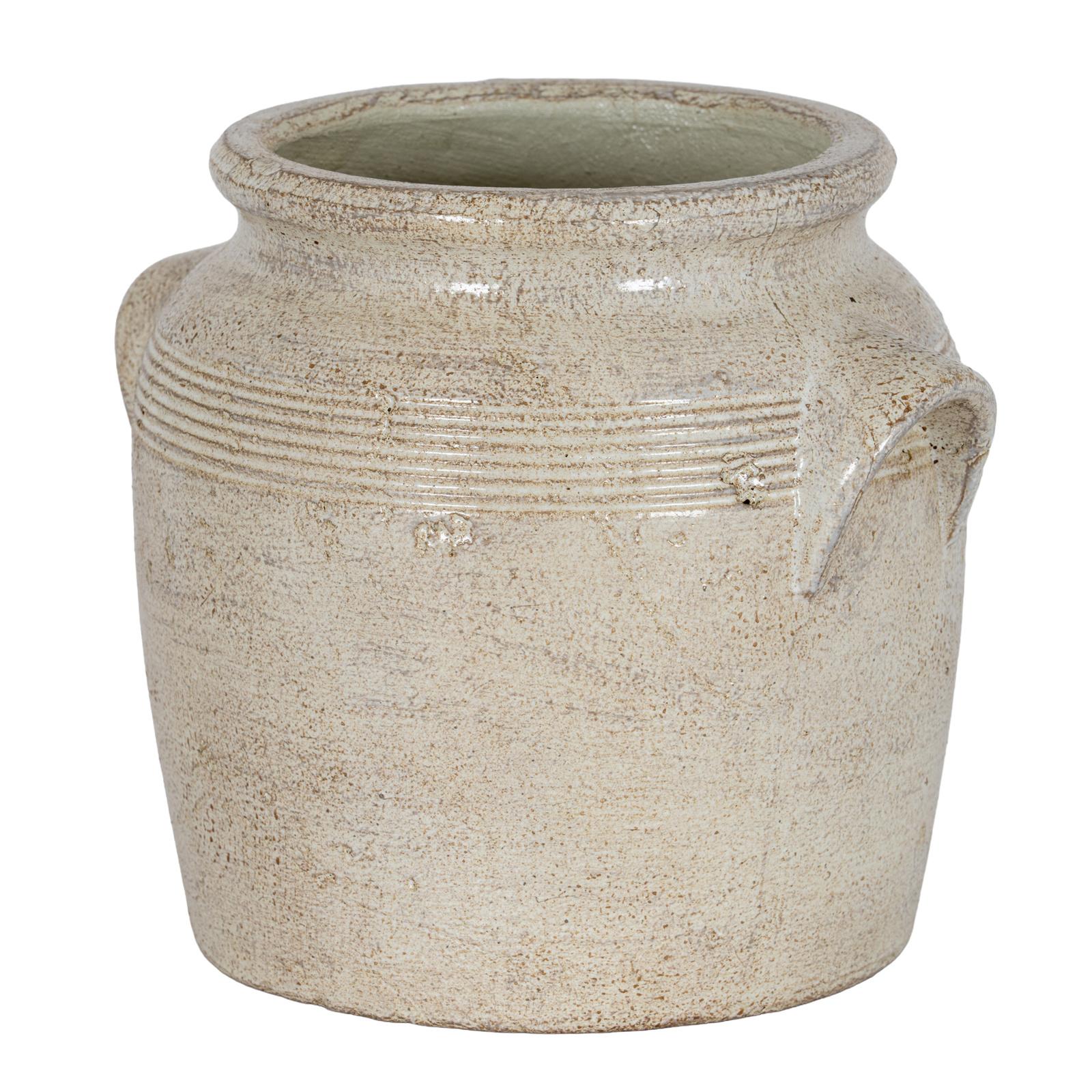
| Tarn Large Pot with Handles | 27cm × 26cm | 19cm pot | 10 litres |
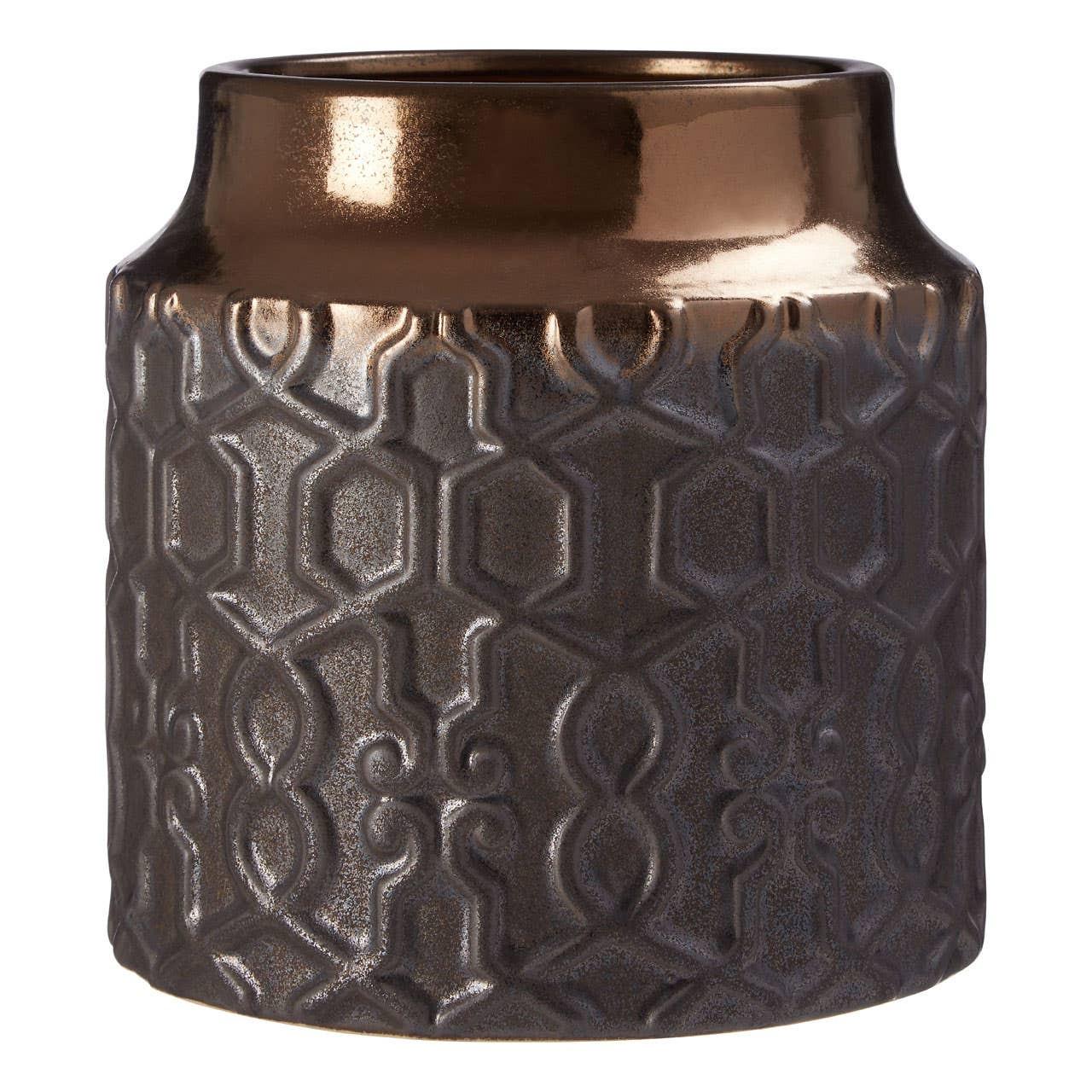
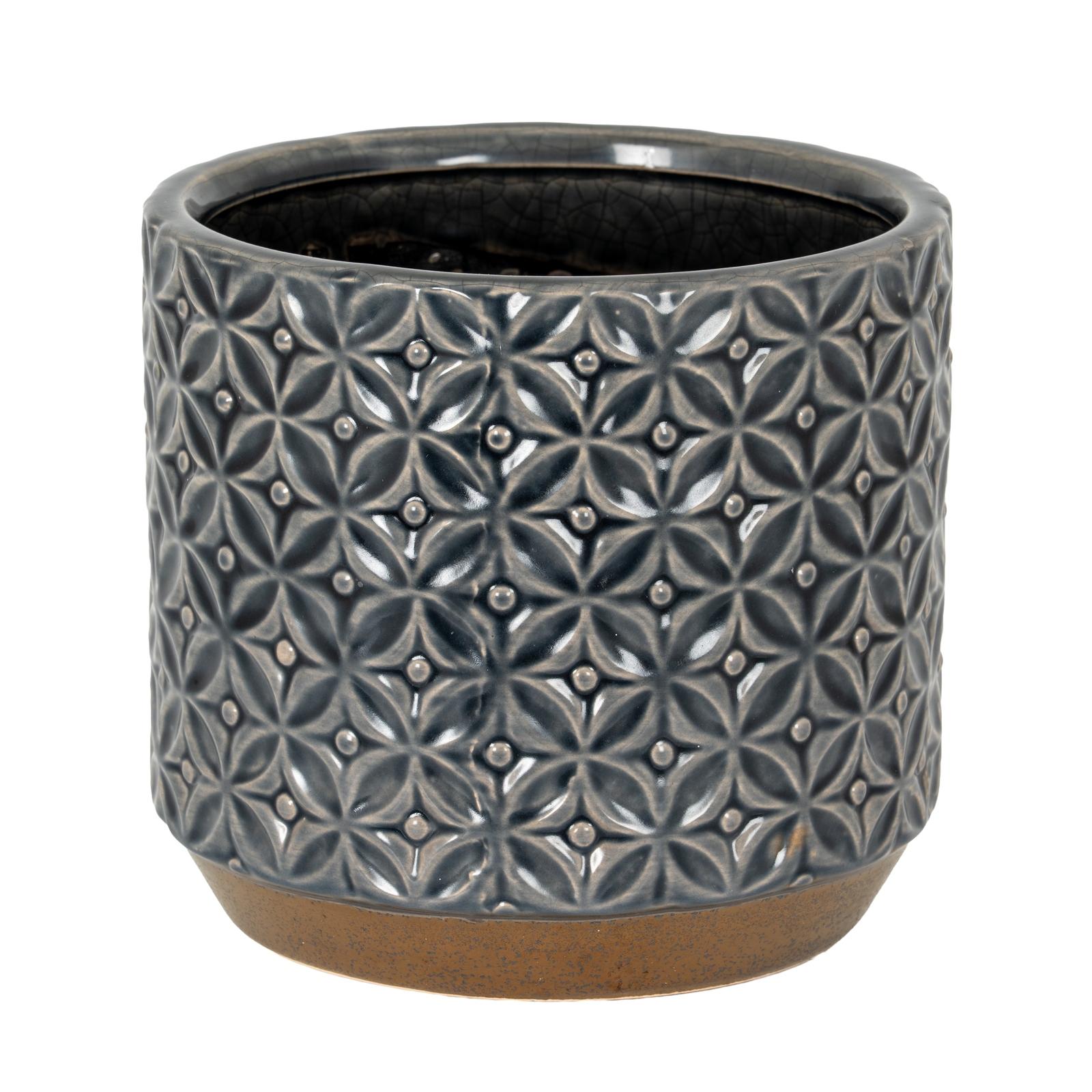
| Zircon Large Planter | 20cm × 21cm | 15cm pot | 4.5 litres |
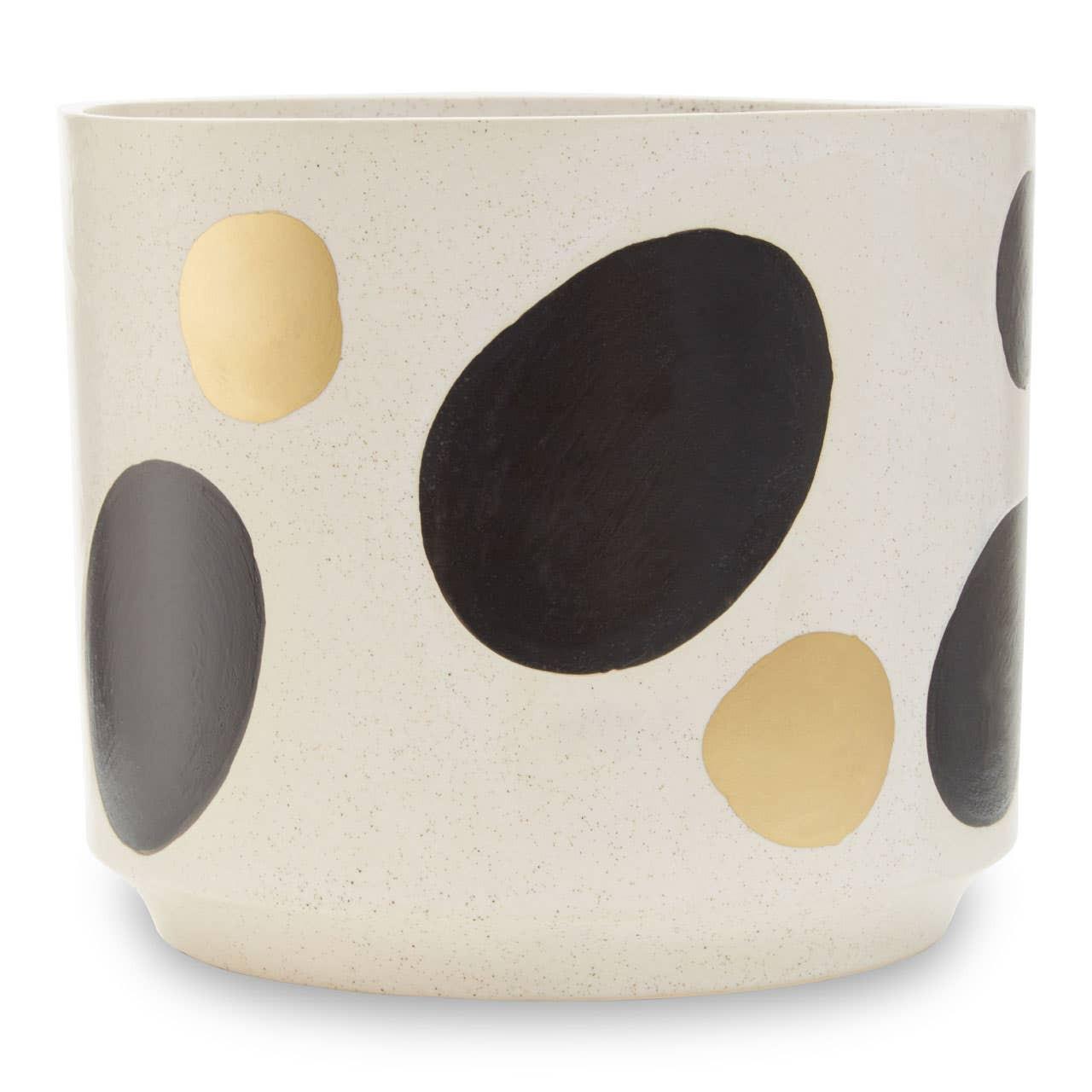
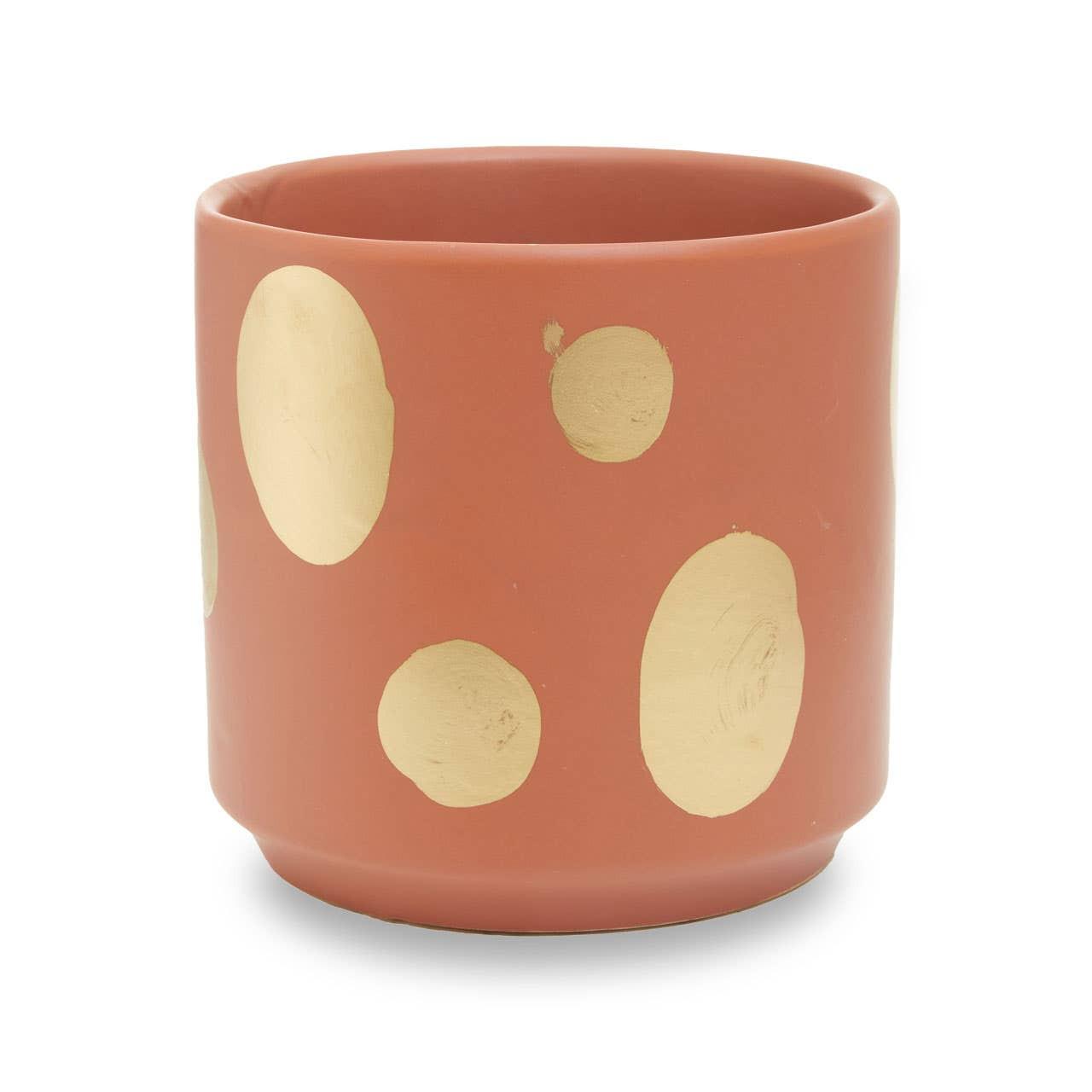
| Yuri White And Gold Spotted Planter | 18cm × 17cm | 12cm pot | 3 litres |
| Zircon Small Ceramic Planter | 15cm × 17cm | 9cm pot | 2 litres |
| Yuri Small Terracotta Gold Spotted Planter | 14cm × 14cm | 9cm pot | 1.5 litres |
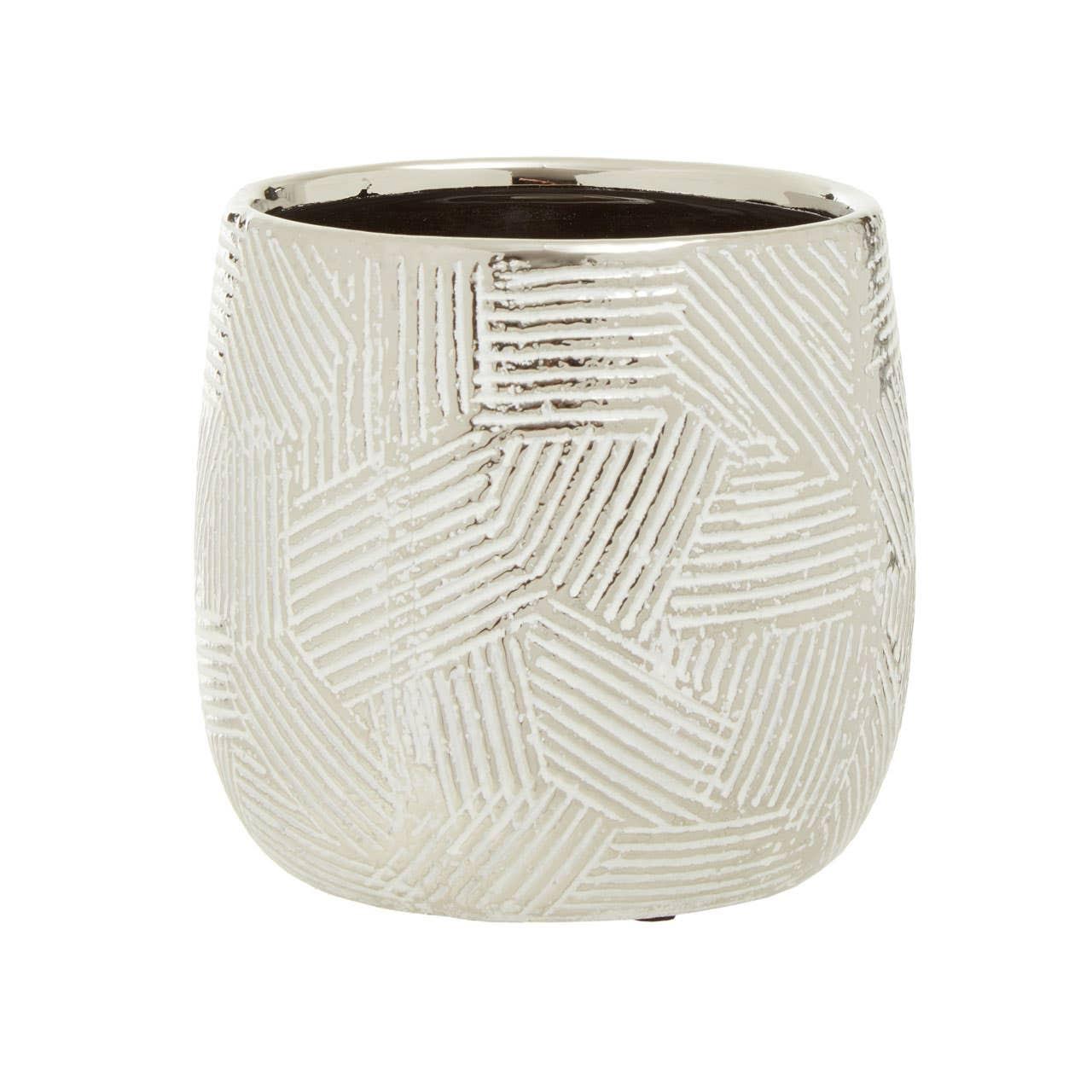
| Honna Small White Silver Ceramic Planter | 15cm × 14cm | 9cm pot | 1.5 litres |
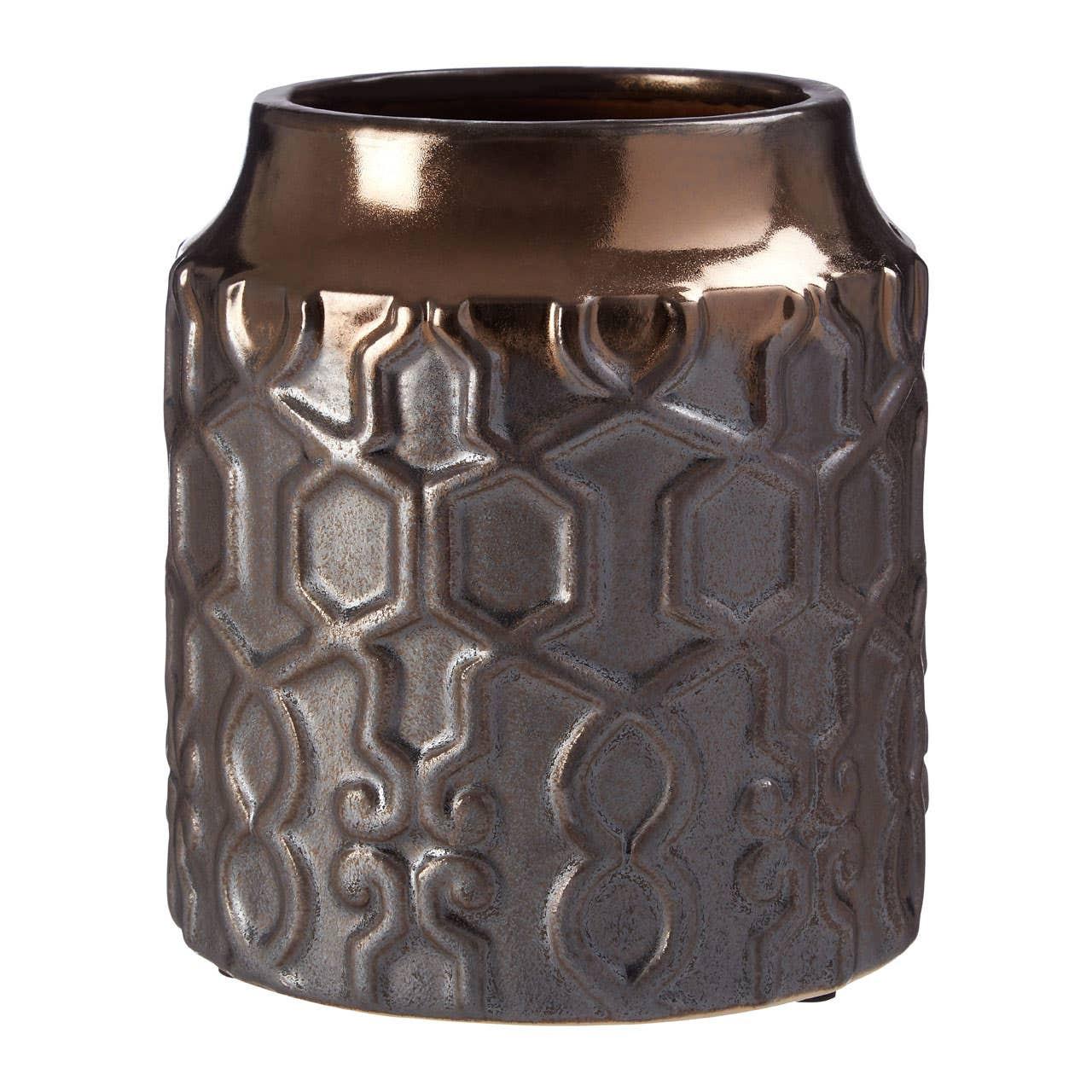
| Seville Collection Lebes Planter | 17cm × 15cm | 12cm pot | 2.5 litres |
Our tall planters and trellis boxes are missing from this table on purpose. Their listed height is the whole piece rather than the planting depth, so a compost figure worked from it would be wrong by a factor of three — for those, measure the inside of the box and use the calculator above.
The short version
Step up 2–4cm for a small plant, 5–10cm for a large one. Outdoors, it must have holes, and it must sit off the ground. Assume ceramic is not frost-proof unless the listing says so. Fill the bottom third of anything over 40cm. And match the depth to the roots — bowls for herbs, columns for shrubs.
Common questions
- What size pot should I repot a plant into?
- Two to four centimetres wider in diameter for a small houseplant, five to ten for a large one. Going much bigger surrounds the roots with compost they cannot dry out, and waterlogged compost is what causes root rot after repotting.
- Do planters need drainage holes?
- Outdoors, always — a planter with no holes fills with rainwater and drowns the plant over a few weeks. Indoors you can use a planter with no holes as a cover pot, keeping the plant in its nursery pot inside it and lifting it out to water.
- Can ceramic planters stay outside in winter?
- Only if they are described as frost-proof. Water soaks into porous ceramic, freezes and splits the pot from within, and the damage builds up over several winters before it shows. High-fired glazed stoneware generally survives; low-fired terracotta generally does not.
- How much compost does a large planter take?
- Far more than it looks. A 30cm planter takes roughly 15 litres, a 40cm one around 30, and a 60cm one over a hundred, because volume rises with the square of the radius. Filling the bottom third of anything over 40cm with something inert saves a bag and keeps the planter movable.
- Should a planter be tall or wide?
- Match it to the roots. Herbs, succulents and bedding are shallow-rooted and do better in a wide low bowl. Shrubs and small trees want at least 40cm of depth, which also makes the planter much harder to blow over.