How many shelves do you need, and open or behind a door?
The number to work from is roughly 23-26 average hardbacks per linear metre of shelf, packed solid, spine to spine — the common library-science rule of thumb. Real-world capacity is lower than that: allow gaps, bookends, and books of different heights, and 65-75% of the solid-packed figure is what a shelf actually holds in practice, not the full number.
Open or cupboard-fronted is a separate decision from how many shelves — it's about whether you want the contents on display or hidden, for the same footprint. What follows covers both.
| Measure | Solid-packed | Real-world (65-75%) |
|---|---|---|
| Per linear metre of shelf | 23-26 hardbacks | 15-19 hardbacks |
| Per linear foot of shelf | 7-8 hardbacks | 5-6 hardbacks |
Rule one. Measure your own shelf run, don't guess it
Multiply a unit's shelf width by however many shelves it has for the total linear run, then apply the real-world figure above rather than the solid-packed one — a shelf that's never touched again after the first tidy-up is worth planning for at capacity you'll actually use, not the maximum a library would pack it to.
Paperbacks and thin reference books shift the number in opposite directions — paperbacks pack slightly denser than hardbacks, oversized reference books noticeably less dense — so treat the figure above as a starting point for a mixed collection rather than an exact count for either extreme.
Rule two. Open shelving displays; it also demands tidiness
An open unit shows everything on it, which is exactly why it works well for books, considered objects, or anything that looks intentional lined up — and exactly why it looks cluttered the moment it's storing things that aren't meant to be seen. It suits a room where what goes on the shelf is also part of the decoration.
It's also the easier piece to fill gradually — a half-empty open shelf still looks like a shelf, where a half-empty cupboard behind a closed door doesn't cost you anything visually either way.
Rule three. A cupboard hides the same footprint's worth of mess
A door-fronted piece — a sideboard, in most of our own range — takes up similar floor space to an open unit of the same width and gives you the option most open shelving doesn't: storing things that don't need to look good, chargers and spare bedding and the things that accumulate in every home, behind a door rather than on display.
The trade-off is upkeep of a different kind — a cupboard hides mess rather than preventing it, so a fully crammed one can be its own problem the next time you need to find something specific inside it.
Six open units and two closed cupboards, measured
Sorted so the choice between open and closed is a straight comparison, not a guess from photos.
| Piece | Width | Tiers / doors | Type |
|---|---|---|---|
| Laxton 3 Tier Light Oak Effect | 120cm | 3 open tiers | Open |
| Laxton 5 Tier Light Oak Effect | 120cm | 5 open tiers | Open |
| Ulmus Grey Elm Wood 4 Tier Bookshelf | 130cm | 4 open tiers | Open |
| Lyon Washed Grey Oak Bookcase with Ladder | 308cm | Multiple open tiers | Open |
| Grenoble Brushed Brass Multi Tier | 110cm | Multiple open tiers | Open |
| Alto Shelf Unit with Glass Shelves | 80cm | Multiple open tiers | Open, glass |
| Midas Recycled Elm Wood Sideboard | 200cm | 4 doors | Cupboard |
| Lyon Rattan and Oak Wood Sideboard | 160cm | 4 doors | Cupboard |
The short version
Work from 23-26 hardbacks per linear metre solid-packed, then apply 65-75% for real-world capacity with gaps and mixed sizes. Open shelving displays its contents and wants them to look intentional; a cupboard-fronted piece hides the same footprint's worth of mess behind a door instead.
Common questions
- How many books fit on a metre of shelf?
- About 23-26 average hardbacks packed solid, spine to spine — the common library rule of thumb. Real-world capacity, allowing for gaps and mixed sizes, is closer to 15-19 per metre.
- Is open shelving or a cupboard better for a living room?
- Depends what's being stored. Open shelving suits books and objects meant to be seen and looks cluttered otherwise; a cupboard-fronted sideboard hides the same footprint's worth of mess behind a door, at the cost of not being able to see what's inside without opening it.
- How much shelf space do I need for 200 books?
- At the real-world figure of roughly 15-19 hardbacks per metre, 200 books needs about 10-13 linear metres of shelf — which, split across a 5-tier unit around 120cm wide, is roughly two such units.
- Does Kaiku sell cupboard-style shelving?
- Not under Shelving specifically, which is open units only — door-fronted storage in our range is sold as sideboards, under Living Room and Office Storage, and works for the same footprint if a closed cupboard is what you're after.
- Do paperbacks take up less shelf space than hardbacks?
- Slightly less, yes — paperbacks pack a bit denser than the 23-26-per-metre hardback figure. Oversized reference books go the other way and take noticeably more space each, so a mixed collection sits somewhere in between.
The pieces in this guide
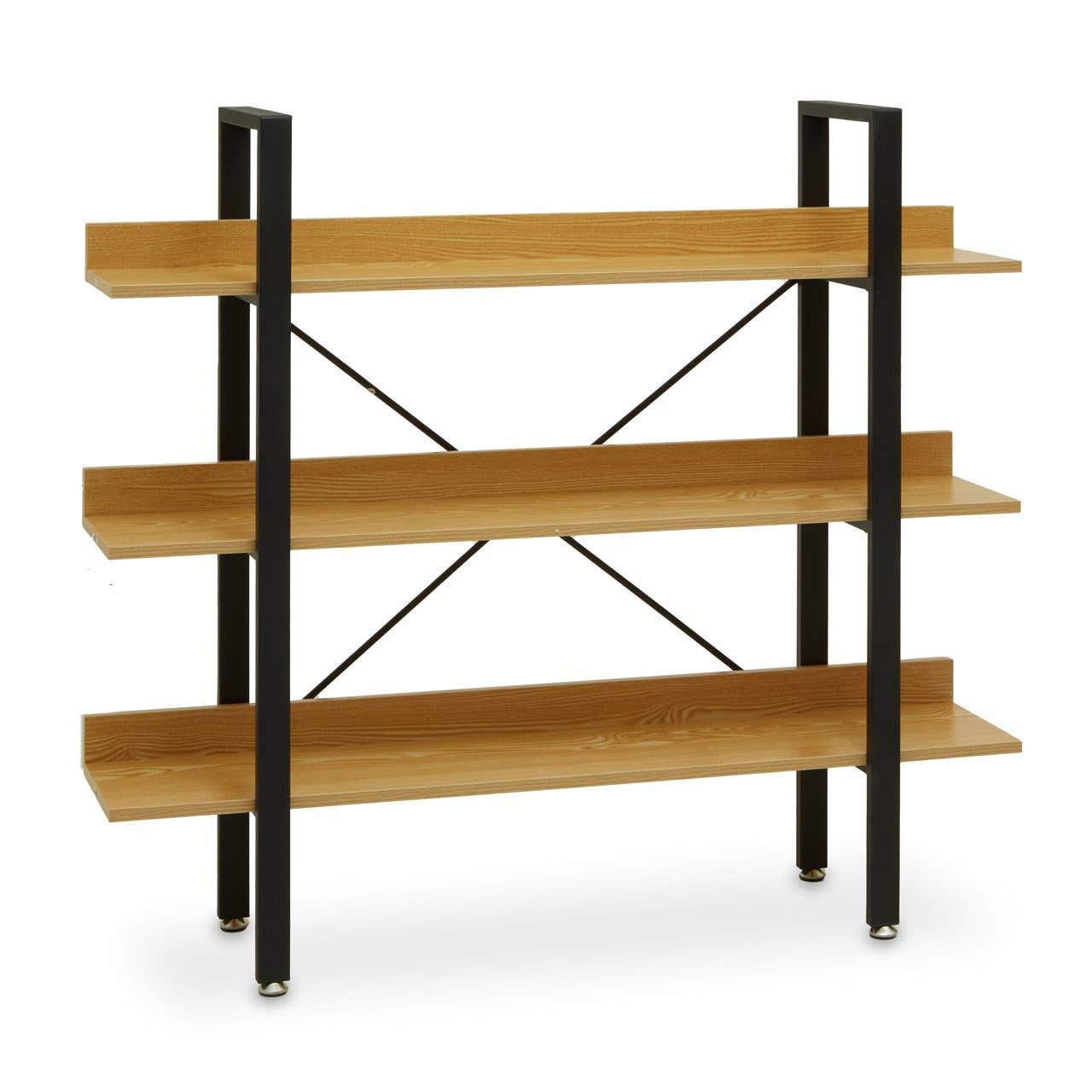
Laxton 3 Tier Light Oak Effect Shelving Unit
£164
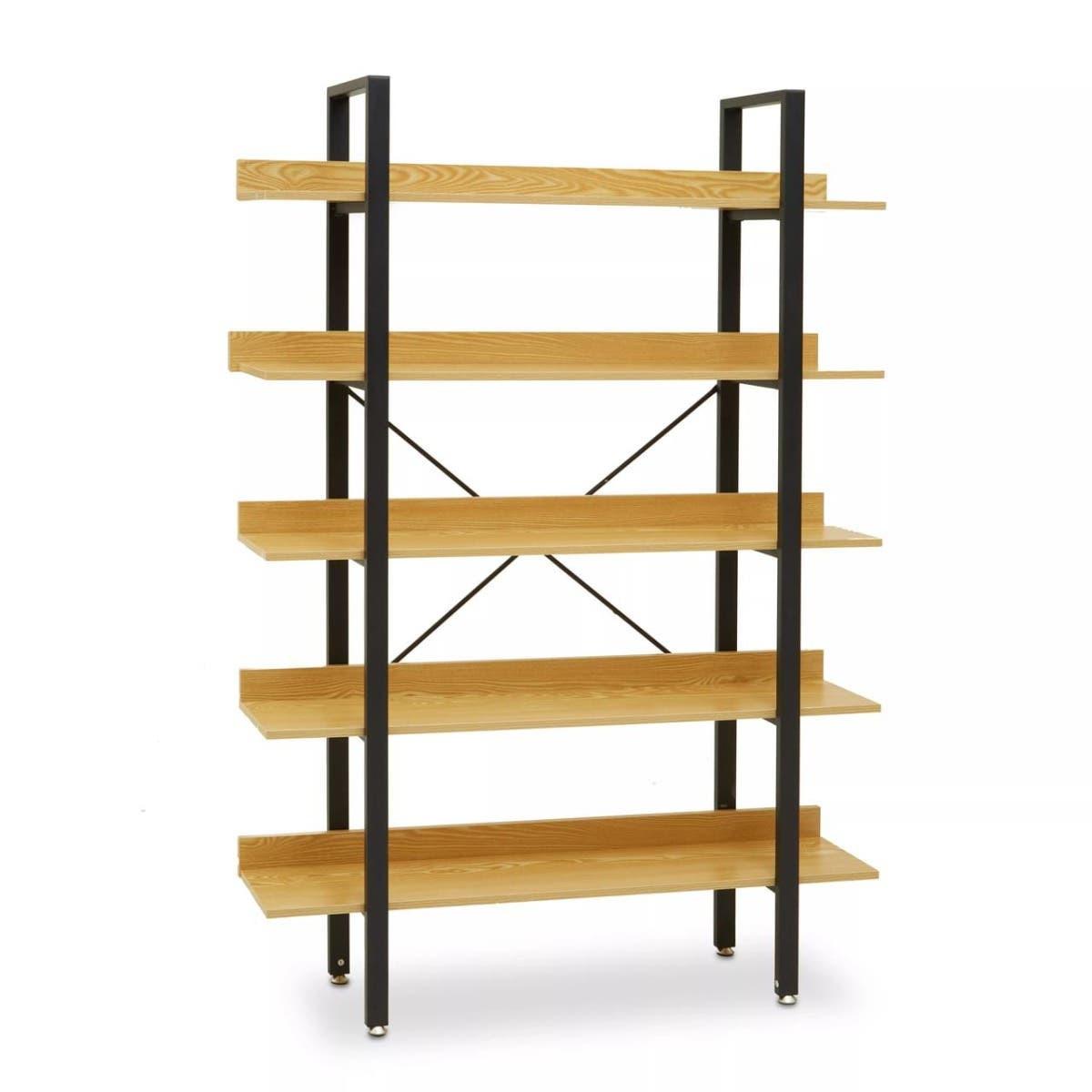
Laxton 5 Tier Light Oak Effect Shelving Unit
£169
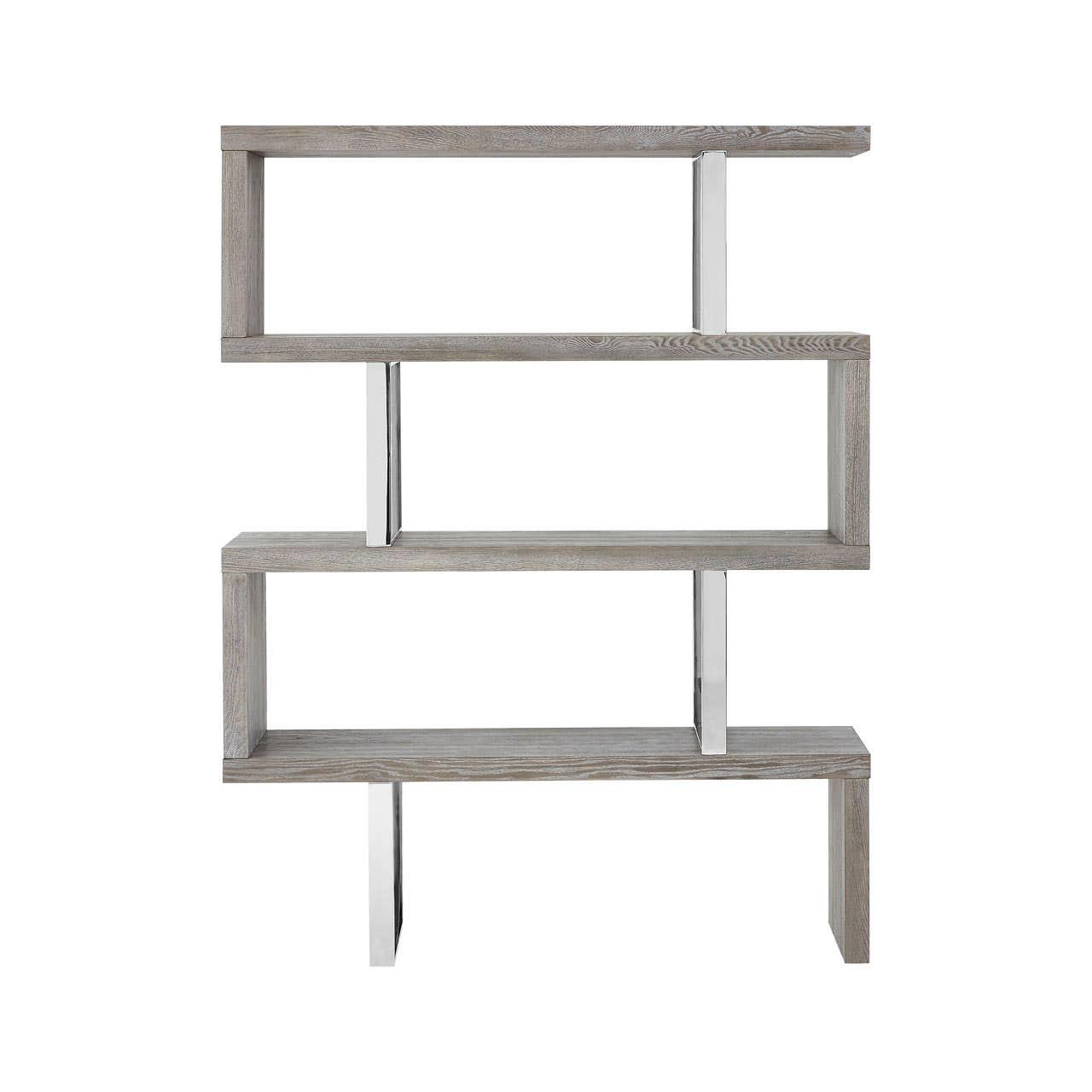
Ulmus Grey Elm Wood 4 Tier Bookshelf
£963
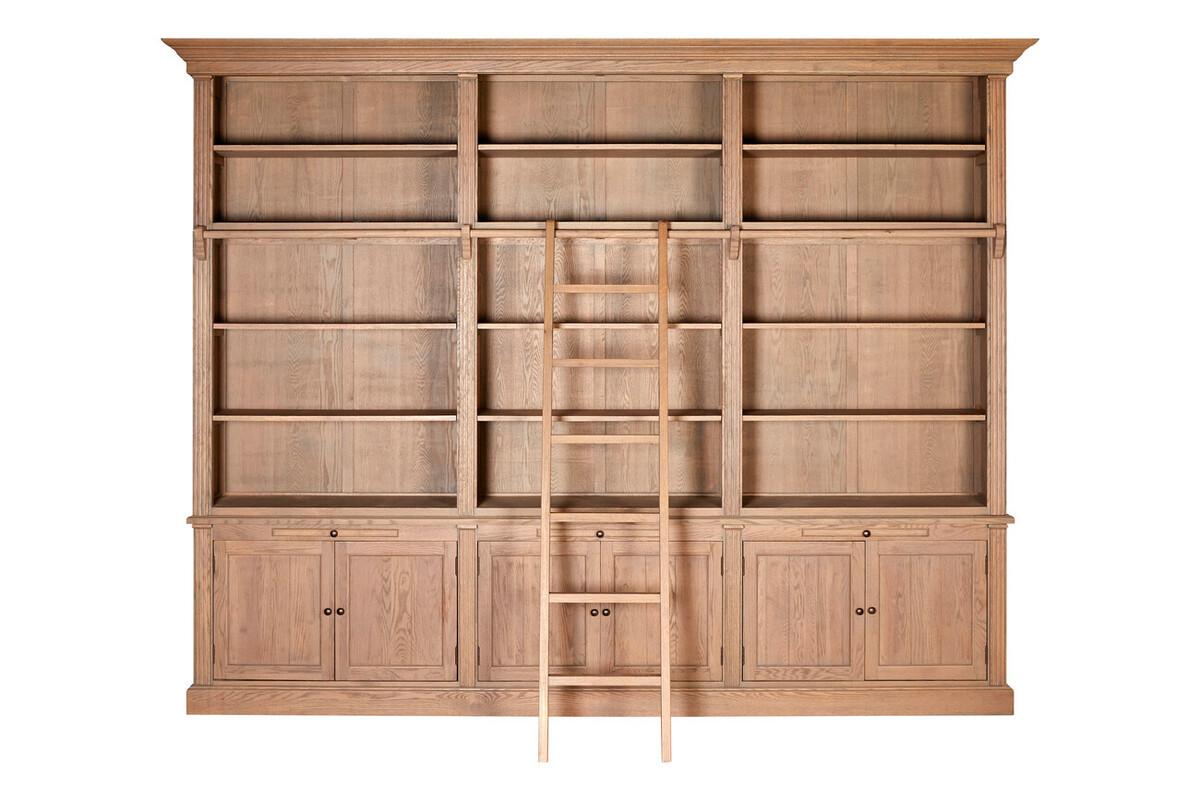
Lyon Washed Grey Oak Wood Large Bookcase With Ladder
£4,567
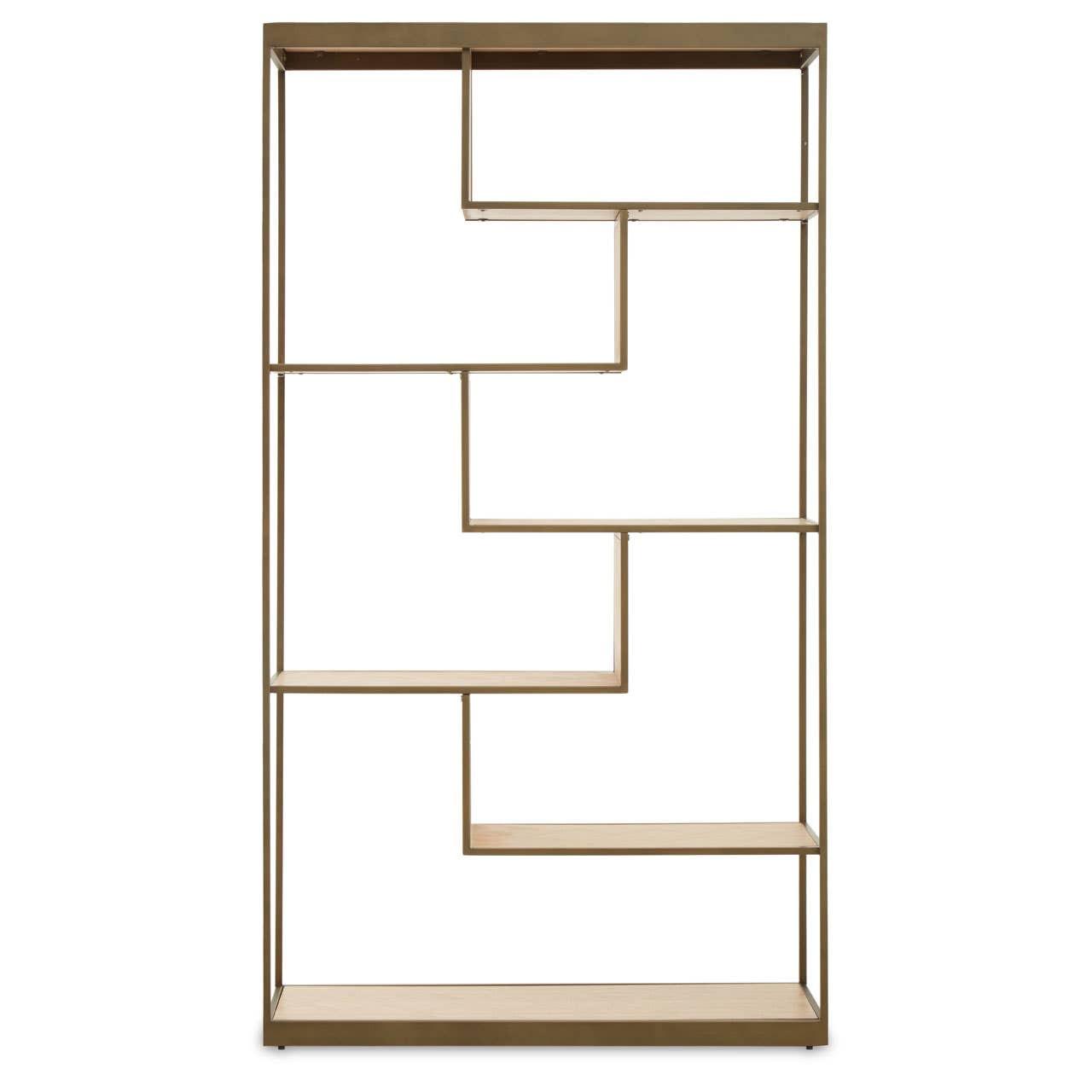
Grenoble Brushed Brass Multi Tier Shelving Unit
£1,274
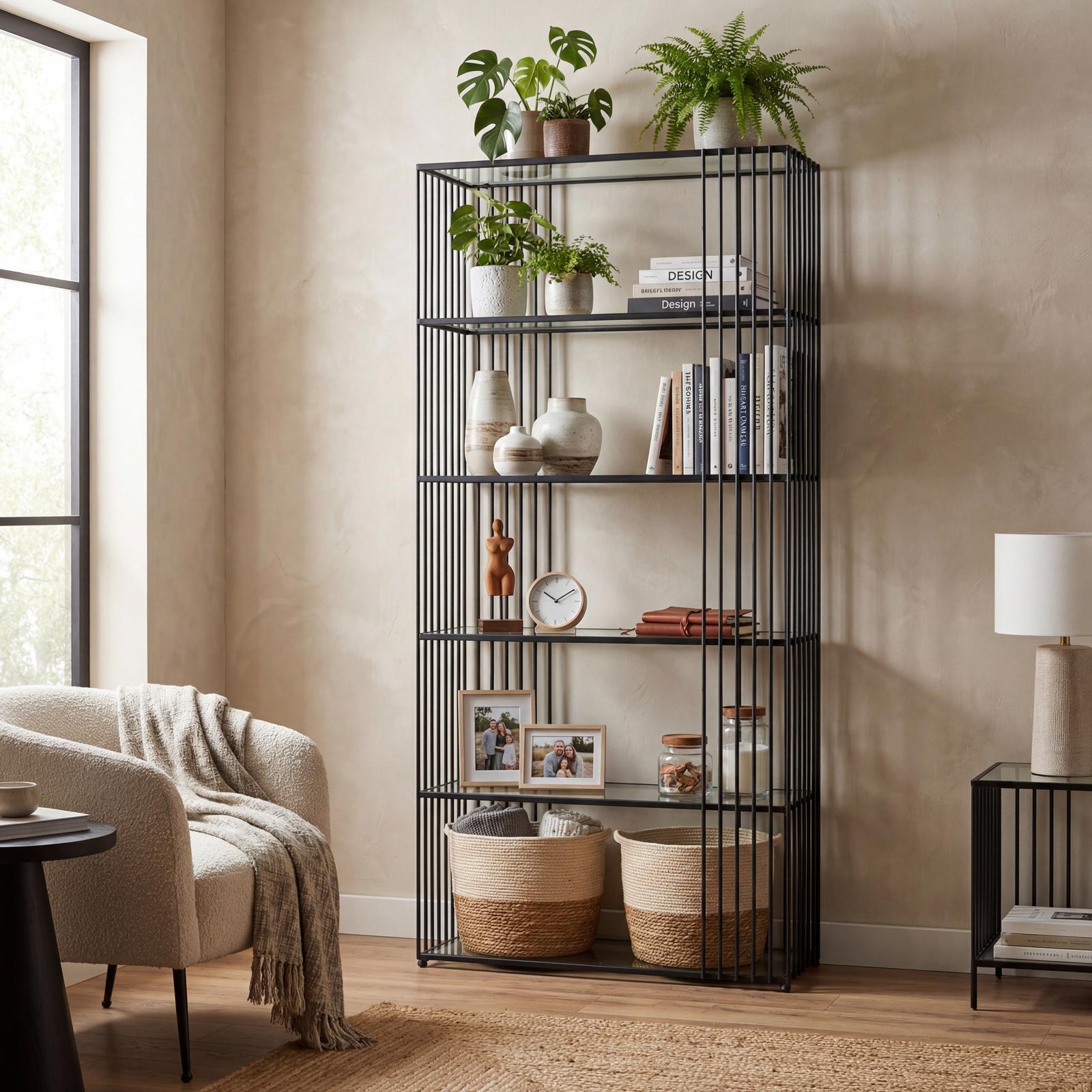
Alto Shelf Unit With Glass Shelves
£199
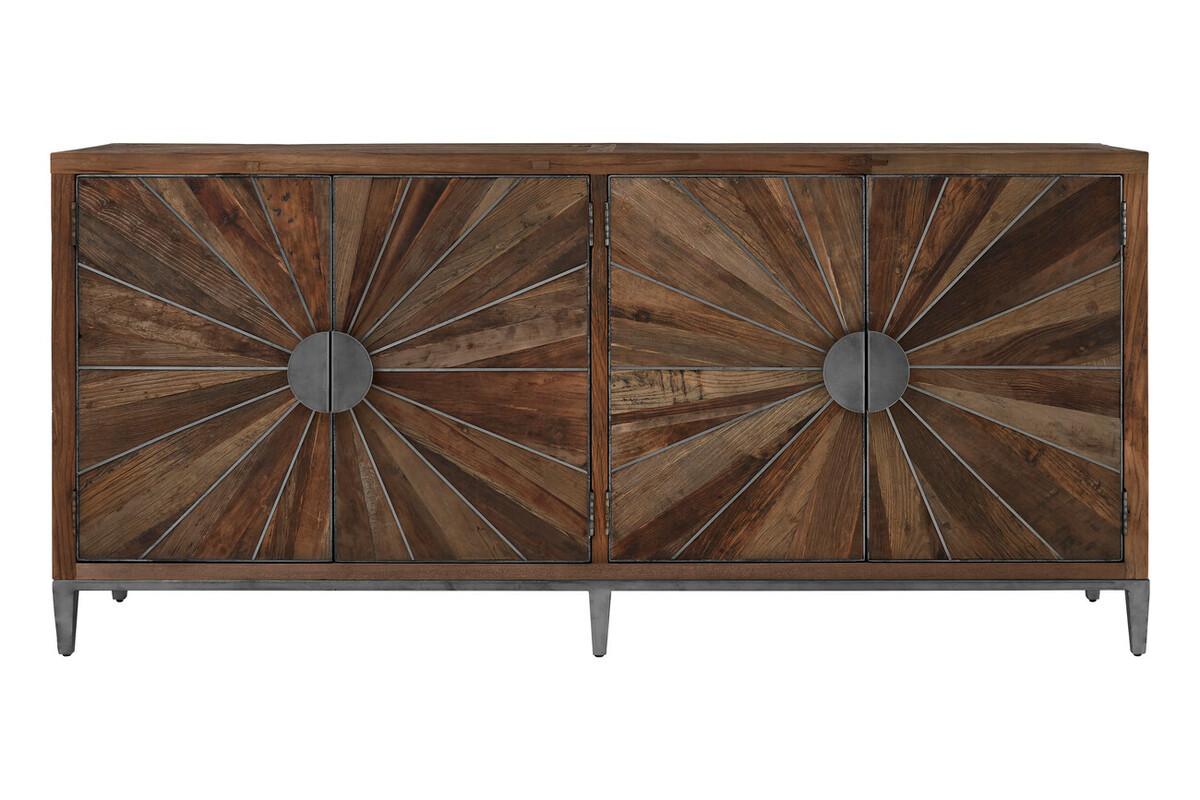
Midas Recycled Elm Wood 4 Door Sideboard
£1,749
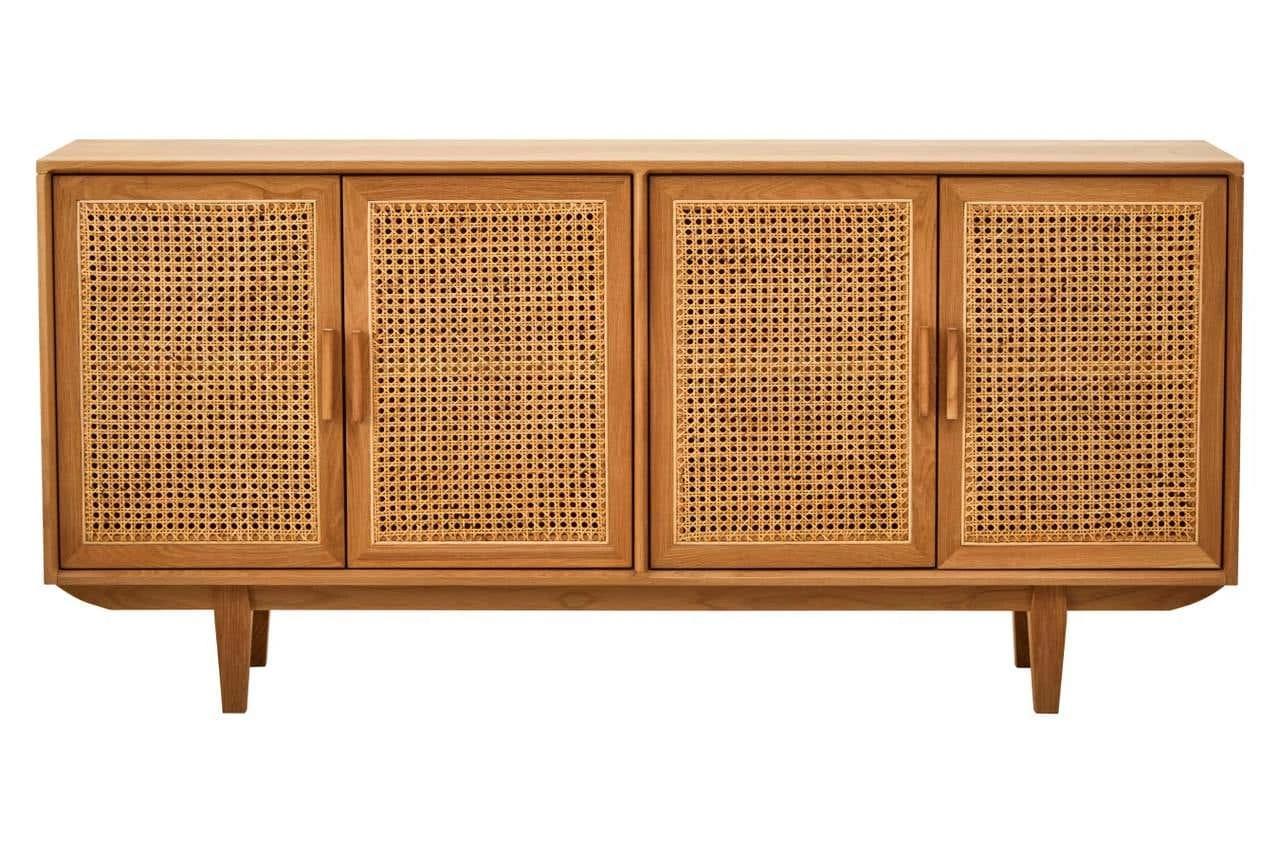
Lyon Rattan and Oak Wood 4 Door Sideboard
£1,246