The number that decides a TV unit's width isn't the TV's diagonal — it's the screen's actual width, and the two are easy to confuse. A 65in TV, measured corner to corner on a 16:9 panel, is only about 144cm wide. The unit underneath wants to be at least that wide, ideally 5-20cm wider in total so the screen doesn't overhang the ends.
Height follows a simpler, size-independent rule: centre the screen 100-110cm from the floor, whether it's wall-mounted above the unit or sitting on top of it. Below is the width by common screen size, and eight of our own units measured against real TVs.
| Diagonal | Actual screen width | Unit width needed |
|---|---|---|
| 43in | ~95cm | 100-115cm |
| 55in | ~122cm | 127-142cm |
| 65in | ~144cm | 149-164cm |
| 75in | ~166cm | 171-186cm |
Work it out here
Check your own TV and unit
From the sofa to where the screen will hang or sit
Leave blank if you're choosing the TV too
Enter your seating distance, your TV's size, or both — either one on its own still gives you an answer.
Rule one. Diagonal is a sales number; width is the one that fits furniture
TVs are sold and marketed by diagonal because it's one number that sounds bigger, but nothing about a room actually cares about the corner-to-corner measurement — the unit, the wall space, and the shelf all care about the screen's actual width and height. Converting first avoids buying a unit that's technically 'the right size on the box' and visibly too narrow in the room.
The conversion is fixed for any 16:9 screen: width is about 87% of the diagonal. A 55in TV is roughly 122cm wide, not 140cm — worth doing the sum before measuring the space rather than after.
Rule two. The unit wants to be wider than the screen, not equal to it
A unit exactly as wide as the screen looks accidentally matched rather than deliberately chosen — the usual guidance is 5-20cm wider in total, split roughly evenly either side, so the TV reads as sitting within the unit's width rather than balanced precisely on the edge of it.
Much more than 20cm wider and the relationship reverses — the unit starts to look like the main piece of furniture with the TV as an afterthought on top of it, which suits a piece bought for its own storage more than one bought specifically to hold the screen.
Rule three. A hundred to a hundred and ten centimetres, wall-mounted or not
The centre of the screen at 100-110cm from the floor puts it at eye level for someone seated on a typical sofa, and this doesn't change based on whether the TV sits on the unit or is mounted on the wall above it. What changes is the unit's own height: a taller unit pushes a TV sitting on top of it higher, so the unit height and the screen's own height need adding together before checking against the 100-110cm target.
A wall-mounted TV skips that arithmetic — the unit underneath becomes pure storage, mounted at whatever height suits the room, with the screen positioned independently at the correct eye level.
Eight of our units, measured against real TV sizes
Width is what to check against the table above; the unit's own height and storage are the rest of the decision.
| Unit | Width | Height | Fits up to |
|---|---|---|---|
| Westbury Oak Wood Veneer | 90cm | 47cm | 43in TV (with a little overhang) |
| Addison Warm White Metal Fluted Glass Door | 150cm | 60cm | 55-60in TV |
| Hampstead White Media Unit | 180cm | 60cm | 65-70in TV |
| Deskey Grey Shagreen Effect | 200cm | 60cm | 75in TV |
| Surati Sheesham and Acacia Wood | 175cm | 50cm | 65in TV |
| Spezia Grey Marble Top | 200cm | 51cm | 75in TV |
| Nashik Three Drawer Acacia | 120cm | 60cm | 50in TV |
| Hampton Ivory Shagreen TV Unit | 160cm | 55cm | 65in TV, closer fit |
The short version
Convert diagonal to actual width first — about 87% of the diagonal for any 16:9 screen. The unit wants to be that width plus 5-20cm, not equal to it. Centre the screen at 100-110cm from the floor regardless of whether it's wall-mounted or sat on the unit, adding the unit's own height where the TV sits on top of it.
Common questions
- What size TV unit do I need for a 65 inch TV?
- A 65in TV is about 144cm wide, so the unit wants to be roughly 149-164cm wide — 5-20cm wider than the screen so it doesn't overhang the ends.
- Is TV size measured by width or diagonal?
- Diagonal — but width is the number that decides what fits under it. For any 16:9 screen, actual width is about 87% of the diagonal, so a 55in TV is roughly 122cm wide, not 140cm.
- How high should a TV unit be?
- The unit's own height matters less than where the screen's centre ends up — aim for 100-110cm from the floor to the middle of the screen, adding the unit's height to the TV's own height if it sits on top rather than being wall-mounted.
- Should a TV unit be wider or narrower than the TV?
- Wider — by 5-20cm in total is the usual guidance, so the screen reads as sitting within the unit rather than balanced on its edge. Much more than that and the unit starts to look like the main piece of furniture instead.
- Does a wall-mounted TV still need a TV unit?
- Not for support, but most rooms still want one for the AV equipment, cables and storage a wall-mounted screen doesn't hold. Its height can be chosen independently of the screen, since the two aren't mounted together.
The pieces in this guide
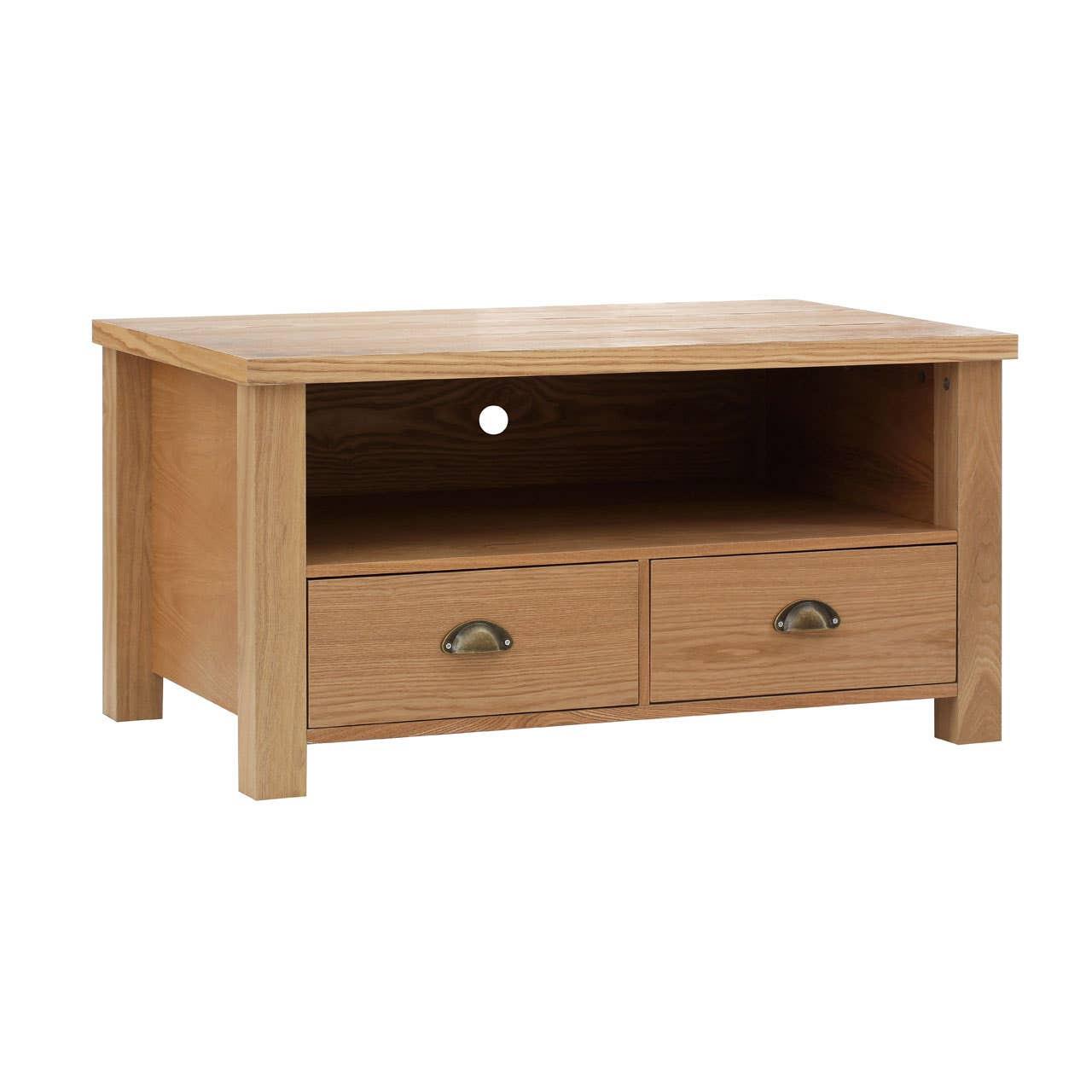
Westbury Oak Wood Veneer Media Unit
£139
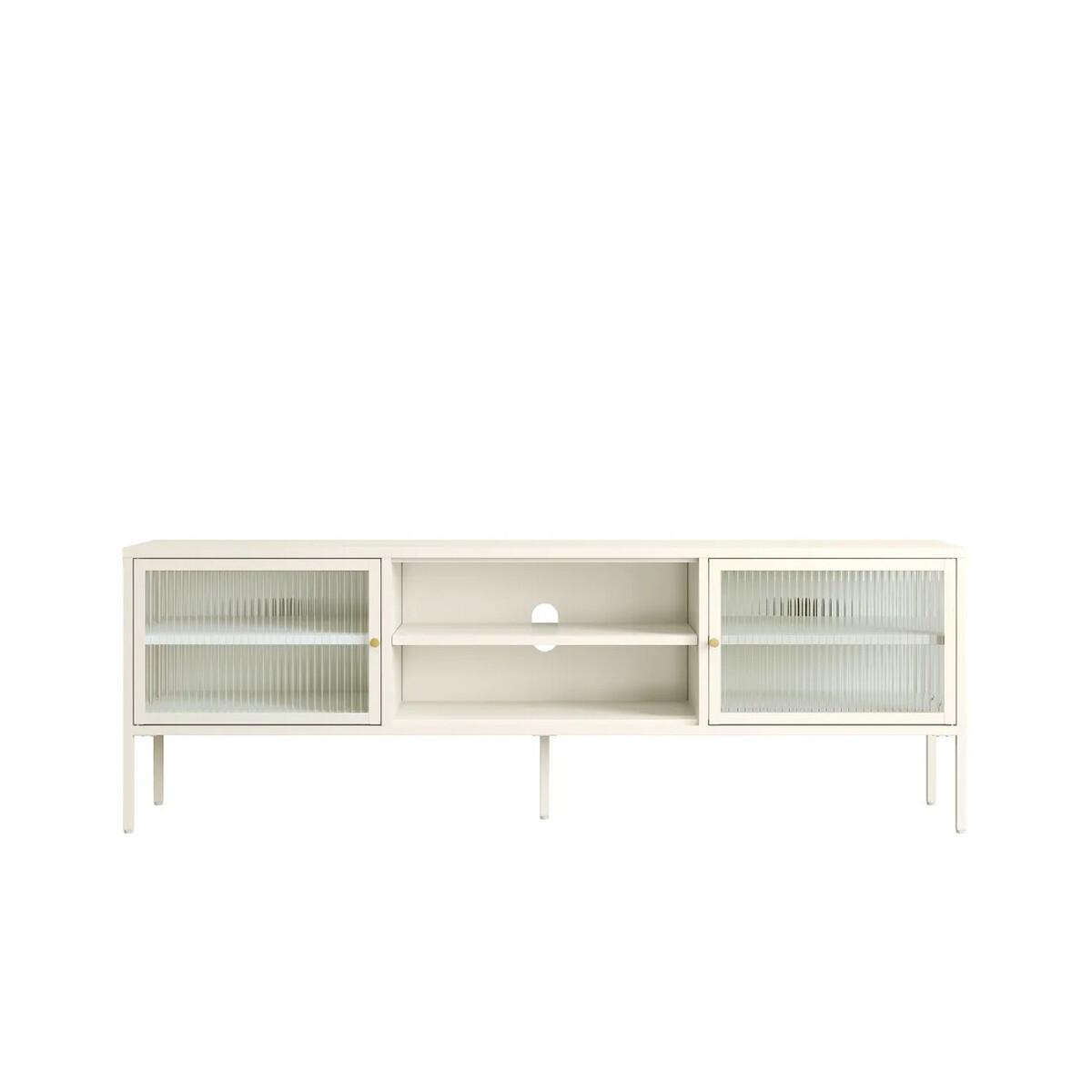
Addison Warm White Metal Fluted Glass Door Media Unit
£398
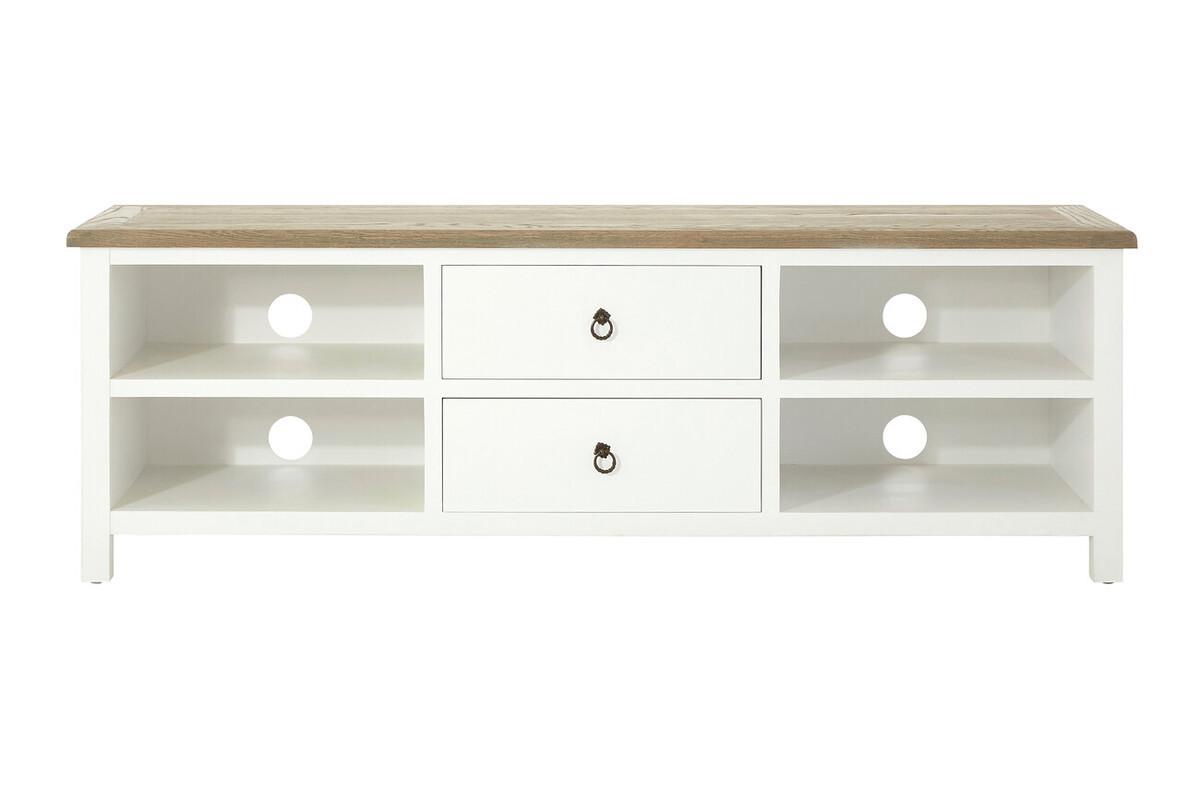
Hampstead White Media Unit with Oak Wood Top
£646
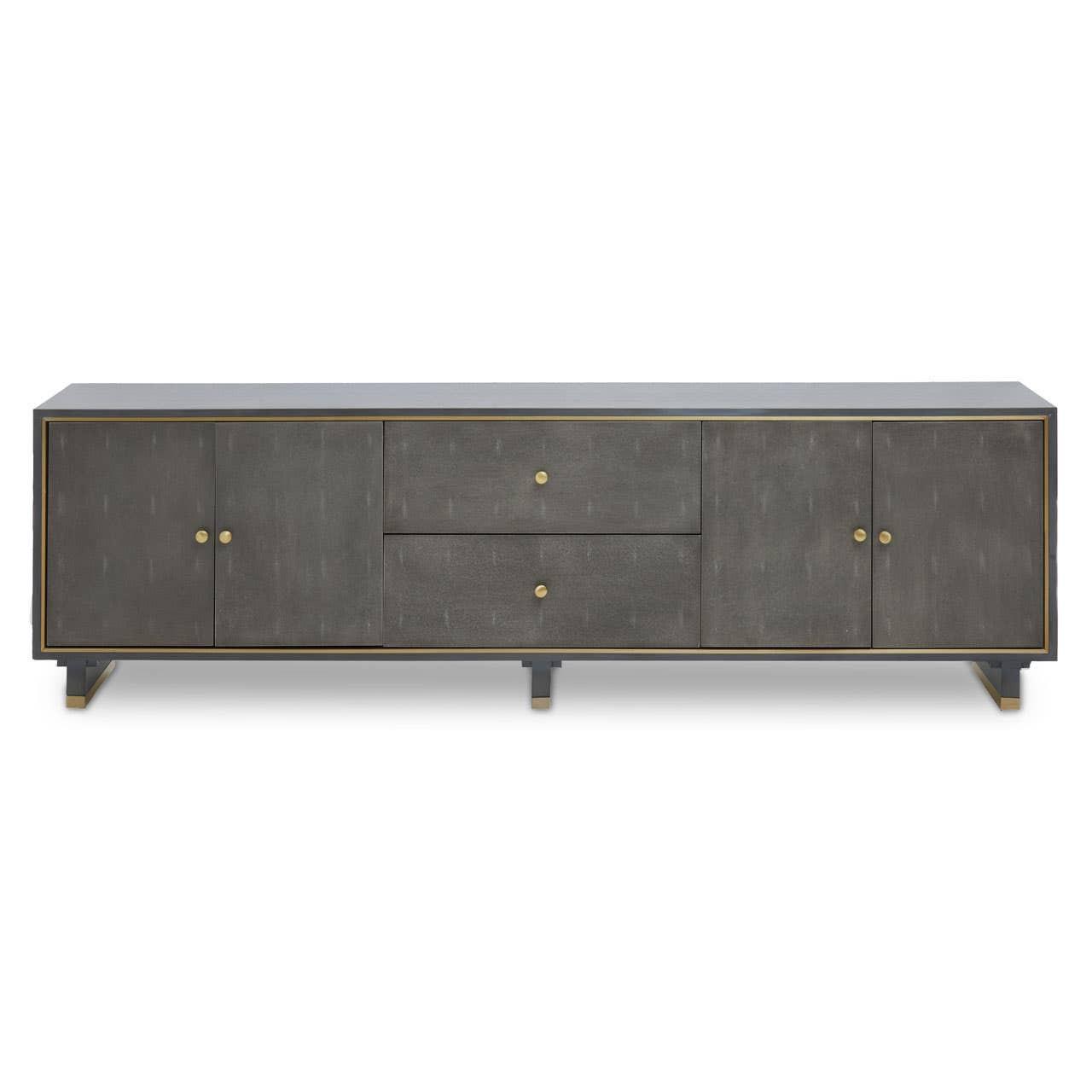
Deskey Grey Shagreen Effect Media Unit
£1,469
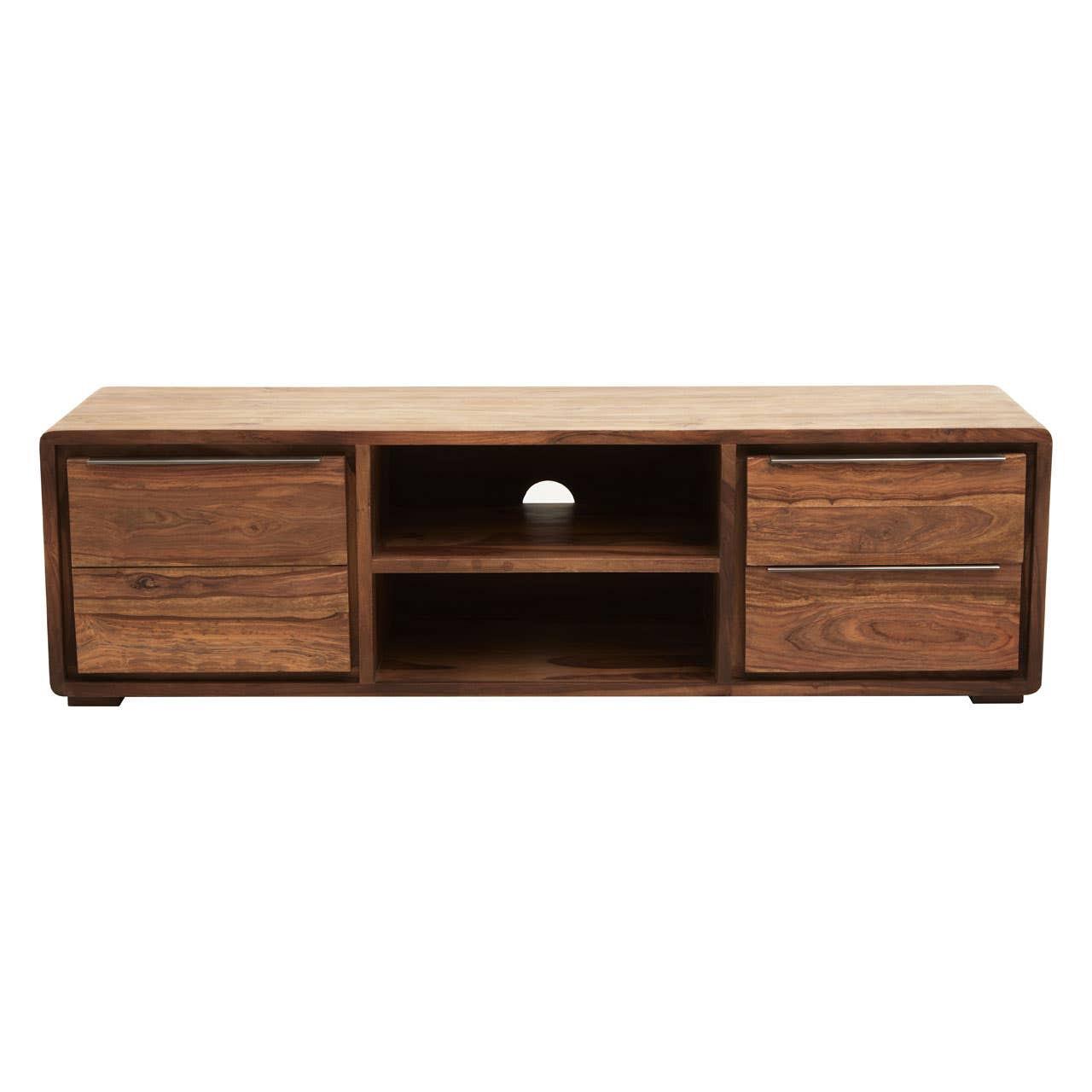
Surati Sheesham And Acacia Wood Media Unit
£799
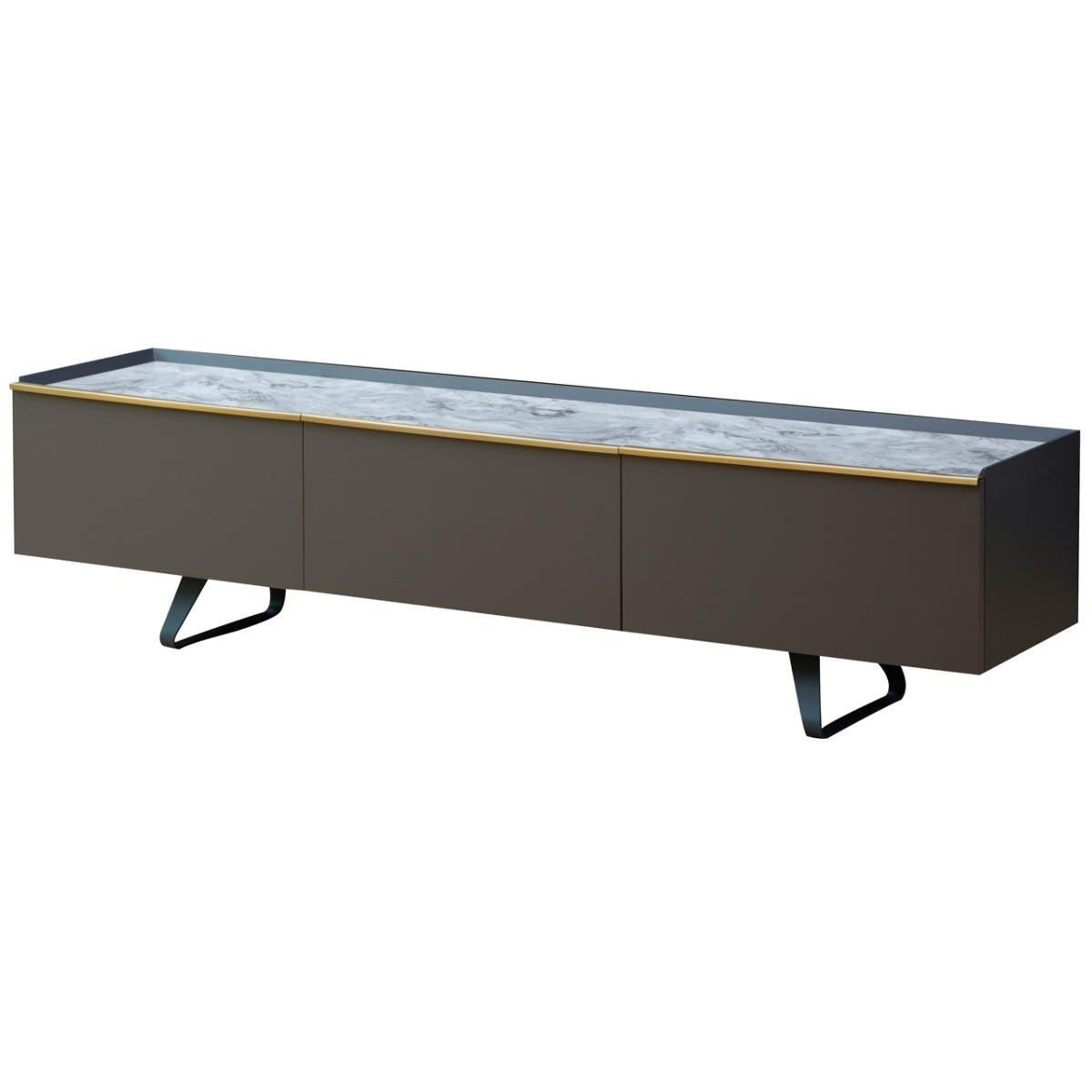
Spezia Grey Marble Top Media Unit
£1,565
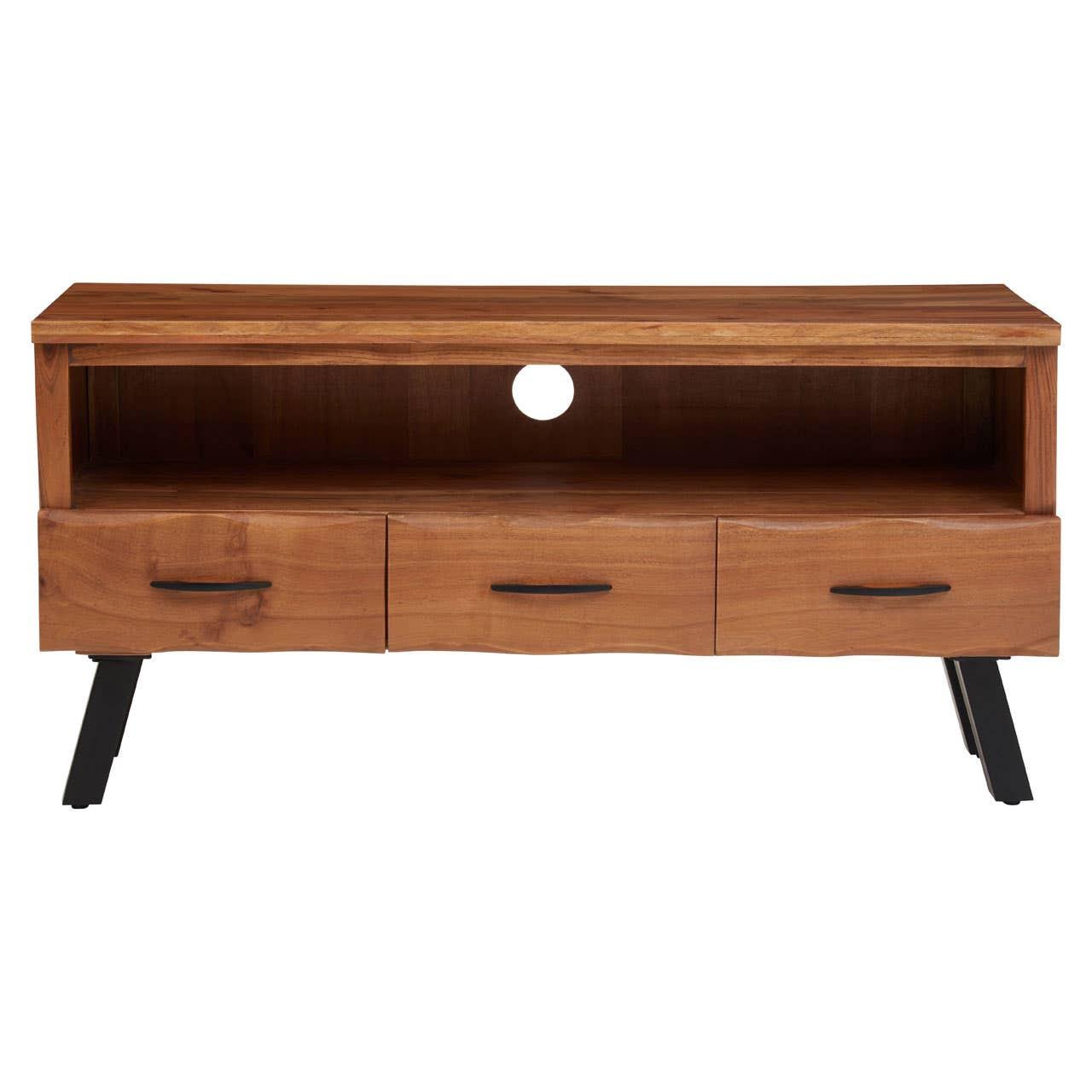
Nashik Three Drawer Acacia Media Unit
£767
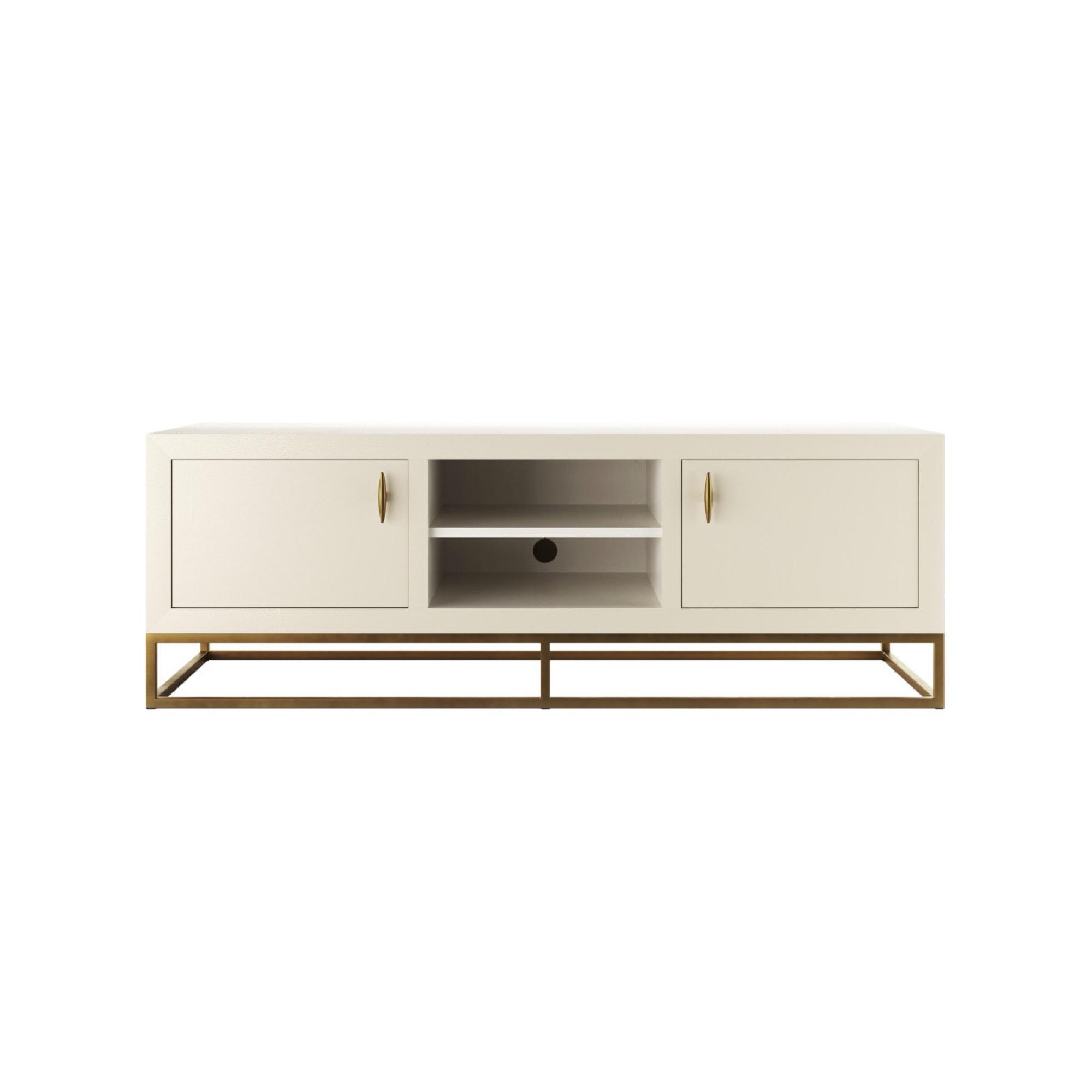
Hampton Ivory Shagreen TV Unit
£1,095