The sizing rule is the one this site already uses for mirrors and wall clocks: art reads as belonging to the furniture below it at roughly two-thirds of that furniture's width. What's different about a gallery wall — several pieces arranged as a group — is that the rule applies to the whole arrangement's outer edges, not to each piece measured on its own.
That's also the answer to gallery-wall-or-single-piece: it's not really a size question. Both fill the identical footprint at the identical proportion — the choice is about upkeep and commitment, covered in the rules below, with eight of our own pieces shown both ways.
| Placement | Target width | Applies to |
|---|---|---|
| Over furniture | 60-75% of furniture width | One piece, or the whole gallery footprint |
| Bare wall | 50-75% of usable run | One piece, or the whole gallery footprint |
Work it out here
Size a single piece or a whole arrangement
The console, sideboard or sofa it hangs over
Optional — gives you the hanging height too
Enter the furniture or wall width for the size to shop at and where to hang it.
Rule one. A gallery wall is one shape, judged as a whole
Five small prints spanning the right two-thirds of a sideboard are correctly sized, even though any single print in that group looks too small hung alone. The mistake is judging each piece against the furniture individually — the arrangement's total footprint is what the proportion actually governs.
This also means a gallery wall can mix wildly different piece sizes without breaking the rule, as long as the outer boundary of the whole cluster lands in the right range.
Rule two. Frames sit 5-8cm apart, not by eye
Individual pieces in a group usually sit 5-8cm apart — tight enough to read as one arrangement rather than a scatter of unrelated pictures, loose enough that each piece still stands on its own rather than merging into its neighbour. Much closer and the group looks crowded; much further apart and it stops reading as a group at all.
Working this out on the wall by eye is where most gallery walls go wrong — laying the pieces out on the floor first, with a tape measure between them, catches spacing mistakes before they're nail holes.
Rule three. A single statement piece is lower-commitment than it looks
One large canvas is easier to hang, easier to rehang if the furniture moves, and asks nothing of you beyond finding the centre point — no relative spacing between multiple pieces to get right. It's also easier to swap out entirely later, since there's only one hole pattern to reckon with rather than several.
A gallery wall's real advantage is the opposite of commitment: it can be built gradually, piece by piece, and individual prints can be swapped without redoing the whole arrangement — better suited to a collection that's still growing than to someone who wants the wall finished this weekend.
Rule four. Height follows the same rule as a mirror
Over furniture, leave 20cm between the top of the piece — or the lowest piece in a gallery group — and the furniture below. On bare wall with nothing beneath it, centre at 145cm, the gallery convention that puts the middle of the arrangement at eye level for an adult standing in front of it.
Eight of our pieces, single and paired
A large single statement canvas, a matched pair sized identically for a symmetrical hang, and a mix of sizes suited to building a gallery wall gradually.
| Piece | Size | Best as |
|---|---|---|
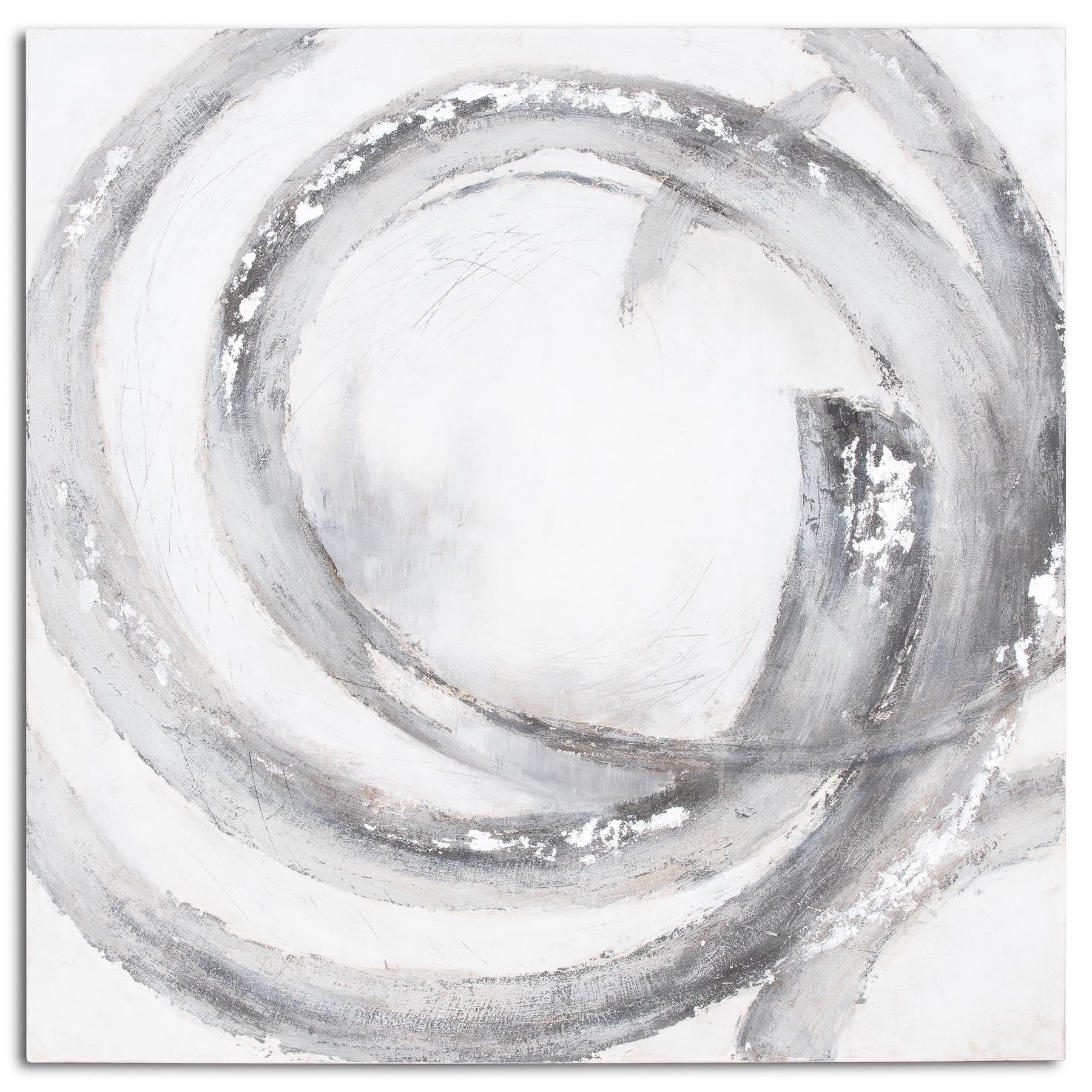
| Galaxy Silver and Grey Hand Painted Canvas | 150 x 150cm | Single statement piece |
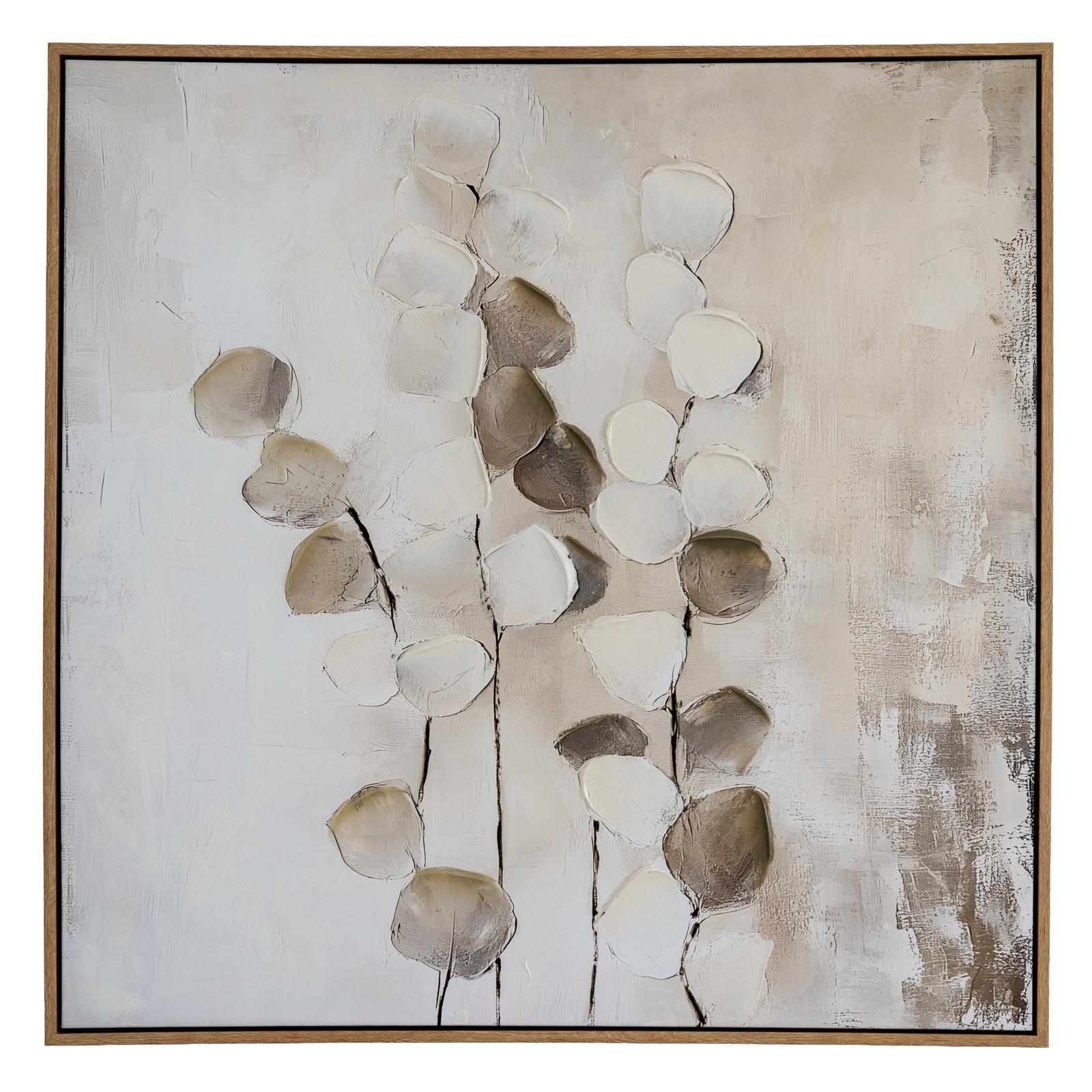
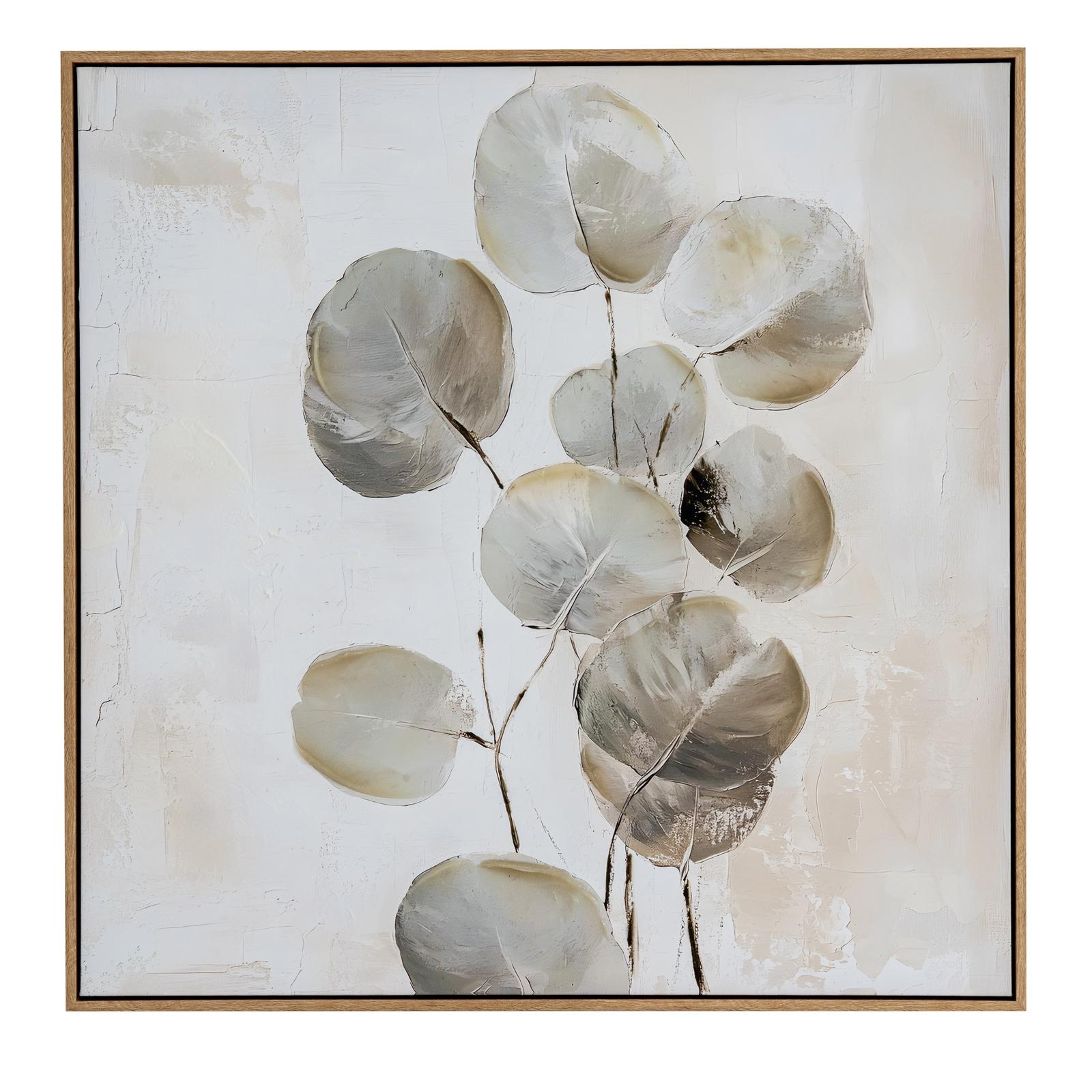
| Mistora Hand Painted Canvas In Frame | 80 x 80cm | One half of a matched pair |
| Silvra Hand Painted Canvas In Frame | 80 x 80cm | The other half — same size, different finish |
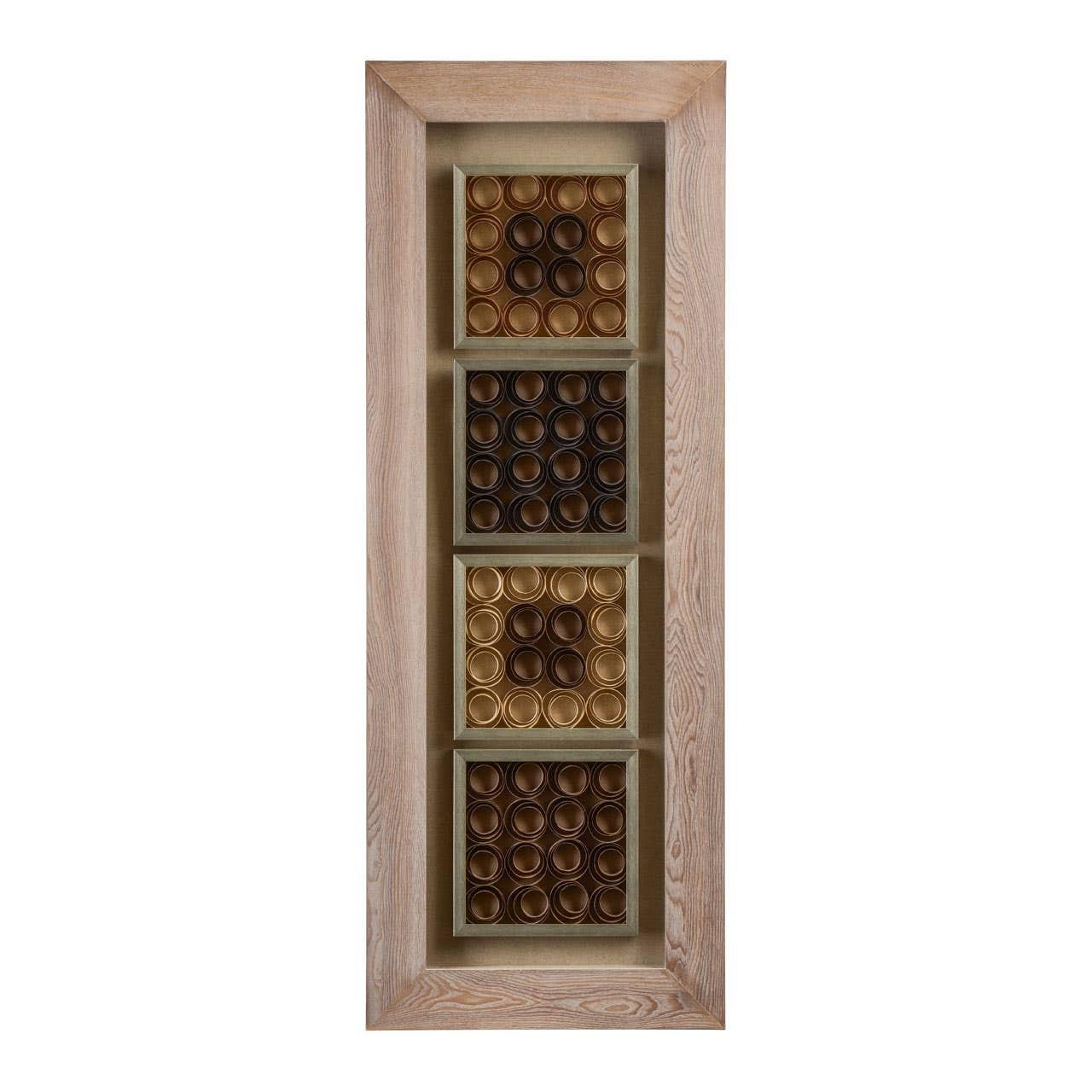
| Circle Design Natural Frame Wall Art | 160 x 60cm | Single piece, wide format |
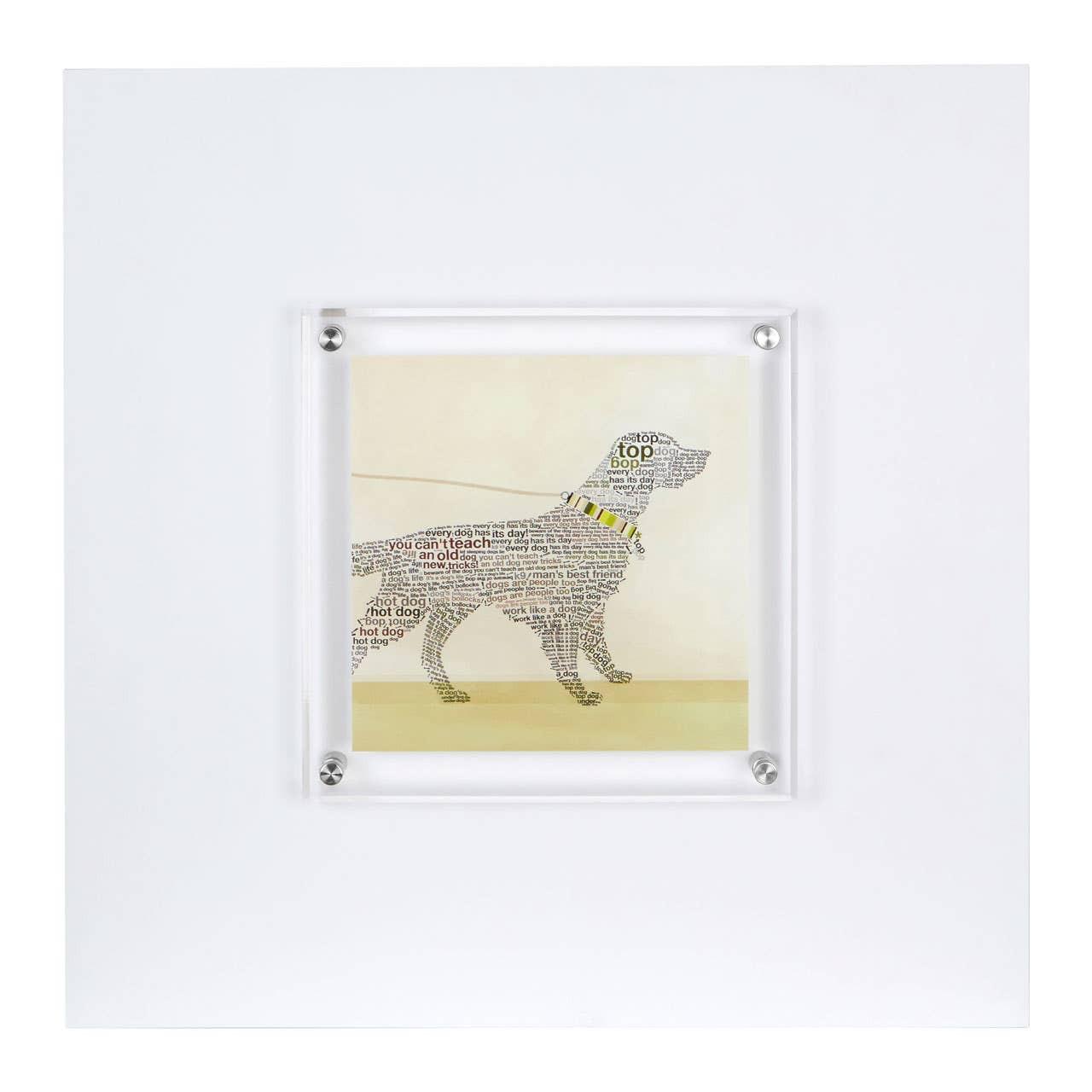
| Framed Labrador Wall Art | 50 x 50cm | Gallery wall — smaller anchor piece |
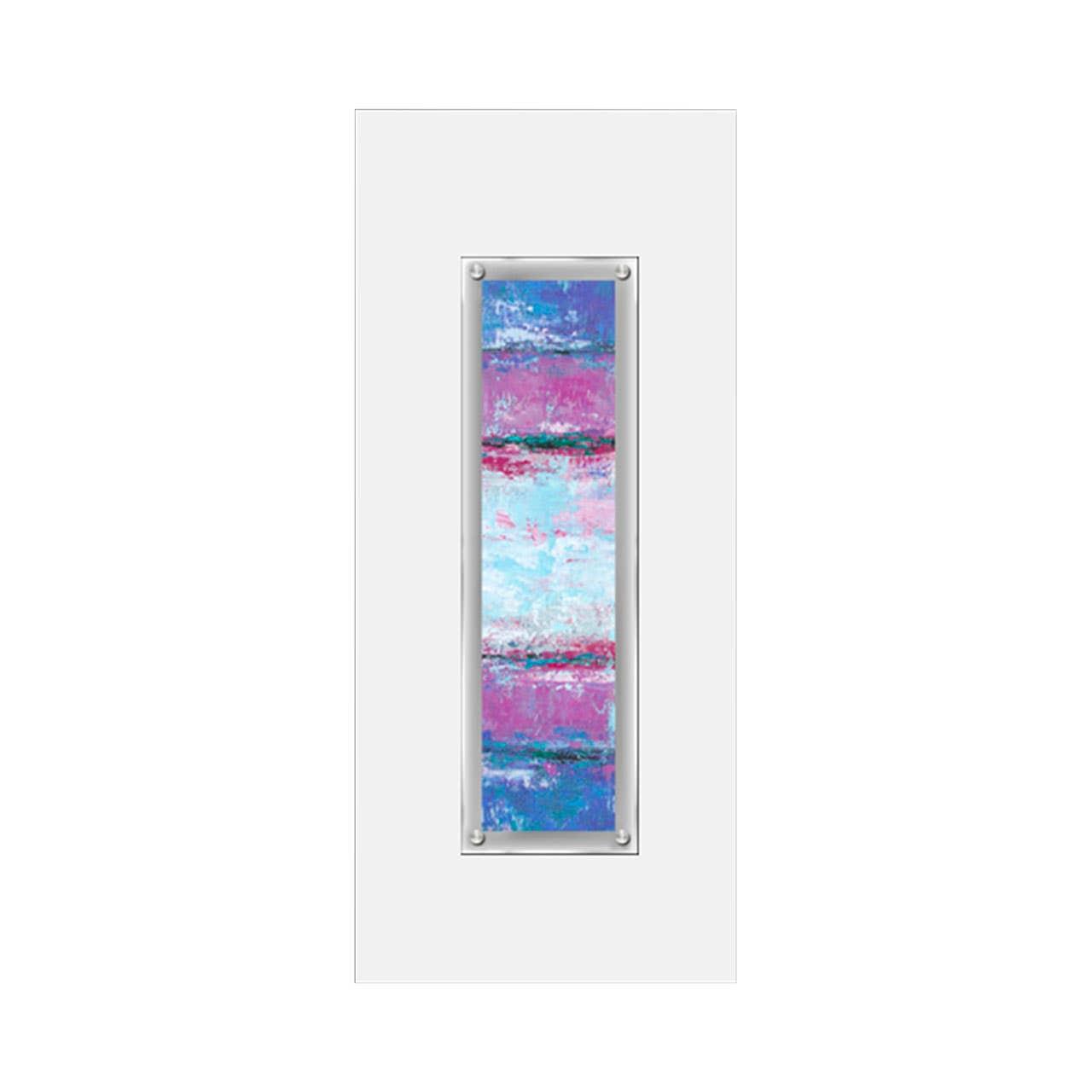
| Abstract Blue 2 Framed Wall Art | 80 x 35cm | Gallery wall — narrow accent piece |
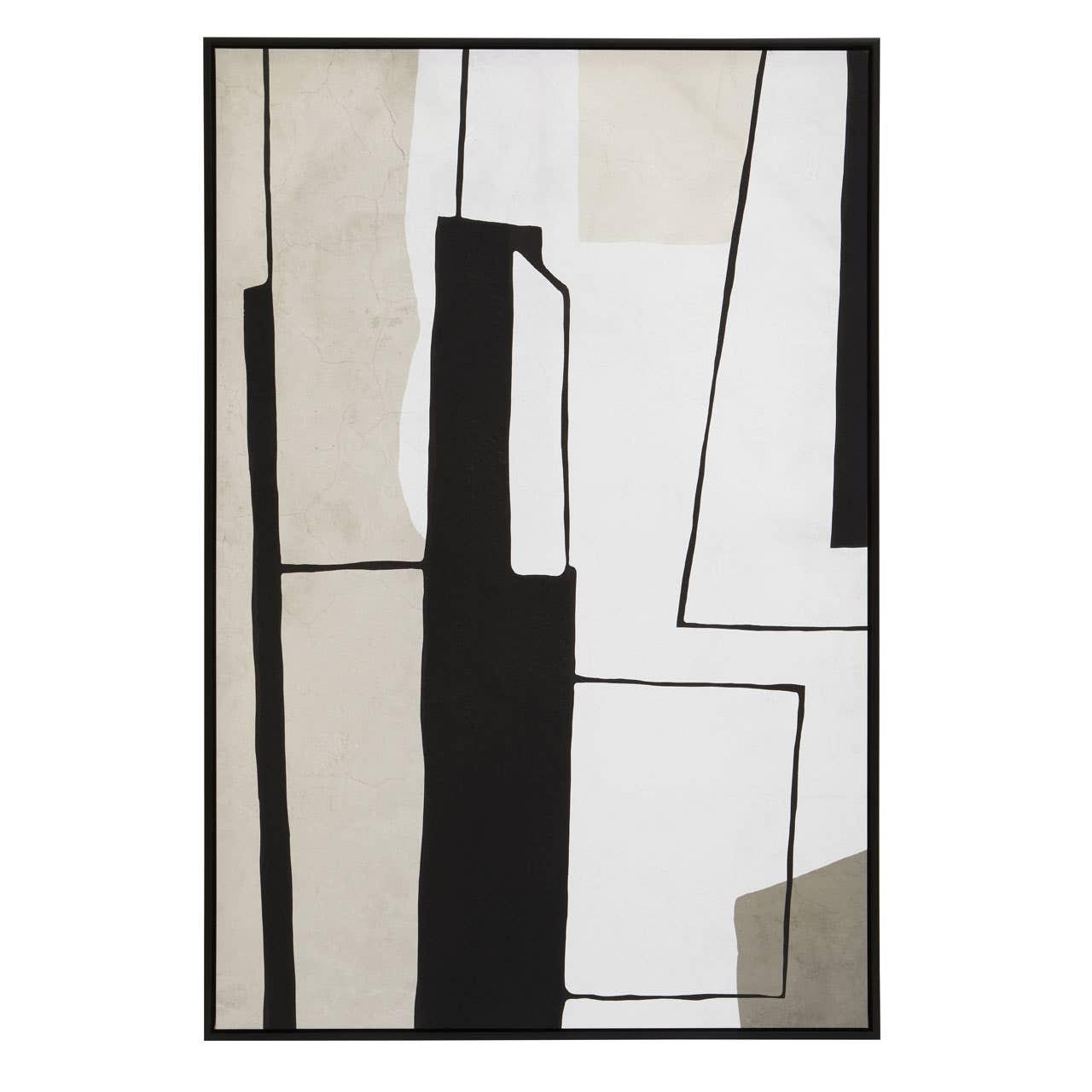
| Astratto Abstract Wall Art | 122.6 x 82.6cm | Single piece, or a gallery pairing |
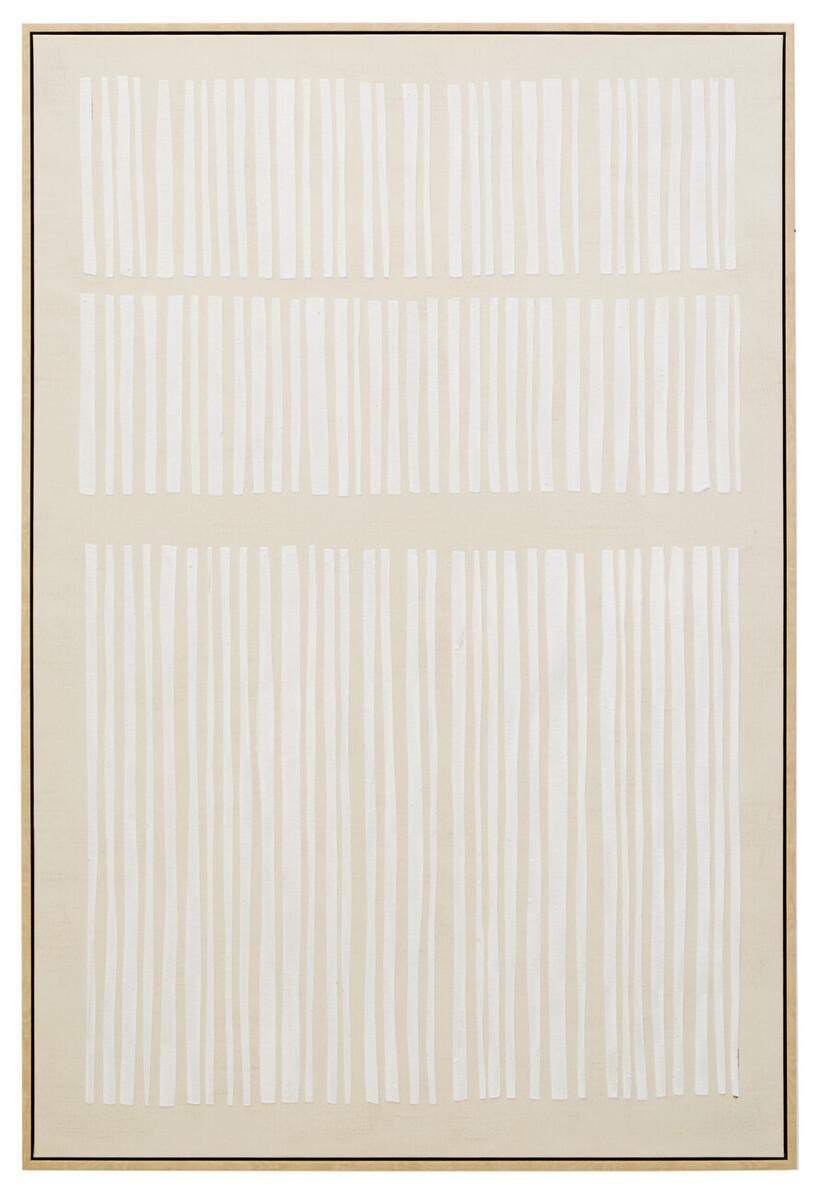
| Astratto Natural Textured Canvas | 123 x 82.6cm | The gallery pairing for the piece above |
The short version
Size the whole arrangement at 60-75% of the furniture width, or 50-75% of a bare wall's usable run — the same proportion whether it's one canvas or a cluster of six. Space grouped frames 5-8cm apart. A single piece is lower-commitment and easier to rehang; a gallery wall can be built gradually and adjusted piece by piece.
Common questions
- How do you size a gallery wall?
- As one shape, not piece by piece. Work out the target width for the whole arrangement using the two-thirds-of-furniture (or half-to-three-quarters of bare wall) rule, then lay the individual pieces out to fill that footprint with 5-8cm between them.
- Is a gallery wall or a single large piece better?
- Both fill the same footprint at the same proportion, so it's not really a sizing question. A single piece is easier to hang and rehang; a gallery wall can be built gradually and individual pieces swapped without redoing the whole arrangement.
- How far apart should gallery wall frames be?
- 5-8cm is the usual spacing — close enough to read as one arrangement, loose enough that each piece still stands on its own. Lay the pieces out on the floor with a tape measure first, rather than guessing by eye on the wall.
- What size art should go above a sofa?
- Roughly 60-75% of the sofa's width, whether that's one large canvas or a gallery arrangement's combined footprint. The bottom edge — or the lowest piece in a group — wants to sit about 20cm above the top of the sofa back.
- Can a gallery wall mix different sized frames?
- Yes — since the proportion applies to the whole arrangement's outer edges rather than each piece individually, a group can mix sizes freely as long as the overall footprint lands in the right range for the furniture or wall it's on.