What size wall clock do you need, and where does it hang?
A wall clock wants to be about two-thirds as wide as the furniture beneath it, and its centre wants to sit between 150cm and 170cm from the floor. Over a 120cm sideboard that is a clock of roughly 80cm. On a bare wall with nothing under it, measure the usable run — architrave to shelf, not corner to corner — and take about half.
Those two numbers settle most of it. The rest of this guide is the five rules they come from, what changes room by room, and eight of our own clocks measured against the same arithmetic.
| What is below | Its width | Clock diameter | Clear wall needed |
|---|---|---|---|
| Small console | 80–100cm | 50–65cm | 100–130cm |
| Sideboard | 110–130cm | 70–85cm | 140–170cm |
| Large sideboard | 140–170cm | 90–110cm | 180–220cm |
| Fireplace | Mantel 120–140cm | 75–95cm | Mantel width |
| Nothing | Usable wall run | About half of it | The run itself |
Work it out here
Your sideboard, your wall, your kitchen gap
The console, sideboard or mantel it hangs over
Enter width of the furniture for the size and the hanging height.
Rule one. Two-thirds of what is below it
The proportion that governs mirrors and pictures governs clocks too. Aim for around two-thirds the width of the furniture underneath — a little under is safe, a little over starts to look top-heavy.
A 40cm clock over a 60cm console reads as deliberate. The same clock over a 180cm sideboard reads as lost, and no amount of styling either side of it fixes that, because the problem is the ratio rather than the arrangement.
Rule two. Centre at 150–170cm if you read it, 145cm if you do not
A clock you genuinely use — a kitchen clock, a hallway clock — goes higher than a picture. Centre it somewhere between 150cm and 170cm from the floor. Above head height it stays clear of furniture and sightlines, and a clock face stays legible at an angle in a way that artwork does not.
A clock that is there to look like something follows the gallery convention instead: centre at about 145cm, roughly eye level for an adult standing in front of it. That is the height that makes it read as part of a wall rather than as a fixture on it.
Rule three. Leave half a diameter of clear wall each side
A clock needs breathing space of roughly half its own diameter on each side, which means an 80cm clock wants about 160cm of wall to itself. Below that it reads as crammed in rather than placed.
This is why the wall run matters more than the room size. A large room with a 90cm gap between a door frame and a bookcase is a small-clock room.
Rule four. In a kitchen, work from the cabinets, not the floor
Wall cabinets usually top out at around 210cm, and the gap between them and the ceiling is where a kitchen clock ends up. Centre it in that gap rather than at the height you would use anywhere else, or it looks like it landed there by accident.
If the gap is 40cm, the clock is a 25–30cm clock, whatever the rest of the room would take. The gap is the constraint and there is no arguing with it.
Rule five. Face where people sit still
A clock wants to be seen from where people stop, not from where they pass through. In a kitchen that is usually the wall facing the sink or the hob. In a living room it is the wall you look at from the sofa — which is often the wall the television is already on, and therefore already busy.
It also wants to be off the main entry sightline. A clock directly opposite a door is the first thing anyone sees on walking in, which is a great deal of attention for an object whose job is to be glanced at.
Room by room
Kitchen. 25–40cm if it is going in the gap above the cabinets, 50–60cm if it has a clear wall. Legibility beats everything else here — this is the one room where a clock is actually read, usually from across the room and usually in a hurry.
Living room. 60–90cm over a sideboard or a fireplace, centred at 145–155cm. This is the room where a clock is mostly decorative, so it can take a face that is more shape than numerals.
Hallway. Go larger than the space suggests. A hallway is seen in passing and at an angle, and a 70–80cm clock on a hall wall reads as a decision, where a 30cm one reads as an oversight. Centre at 160cm, because everyone in a hallway is standing.
Bedroom. 40–60cm, and put it on the wall you do not face from the bed. A clock in a bedroom is for the morning, not for three in the morning.
Home office. 30–40cm, at eye level from the desk chair — around 120–130cm if you sit at a standard desk. This is the one place a lower centre is correct, because you are seated the whole time you need it.
Eight of our clocks against the rules
The same arithmetic, run over our own stock. Furniture width is the clock diameter divided by two-thirds; clear wall is the diameter plus half of it on each side.
| Clock | Across | Suits furniture | Wall it needs |
|---|---|---|---|
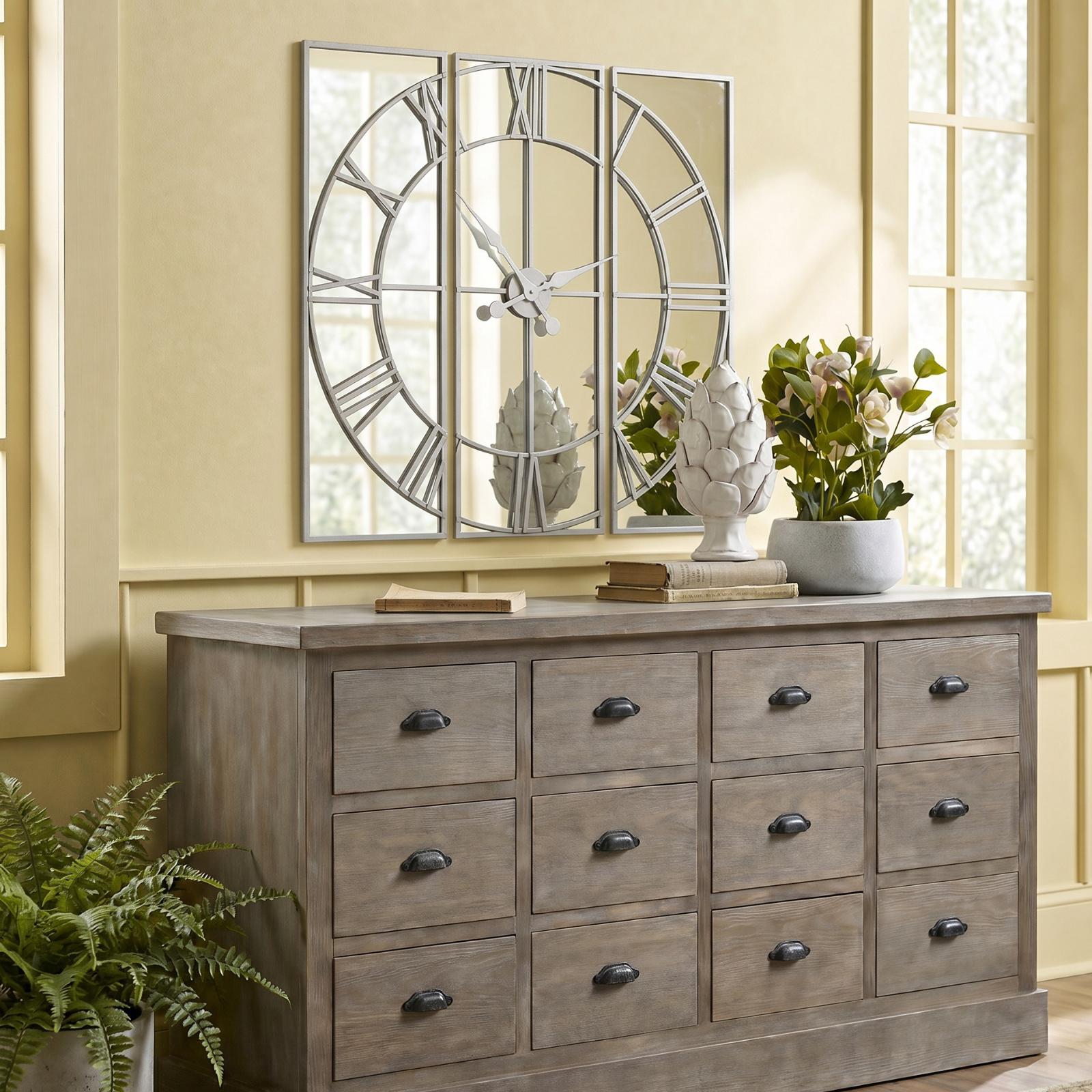
| Celina Mirrored Wall Clock | 112cm | 160–185cm wide | 225cm clear |
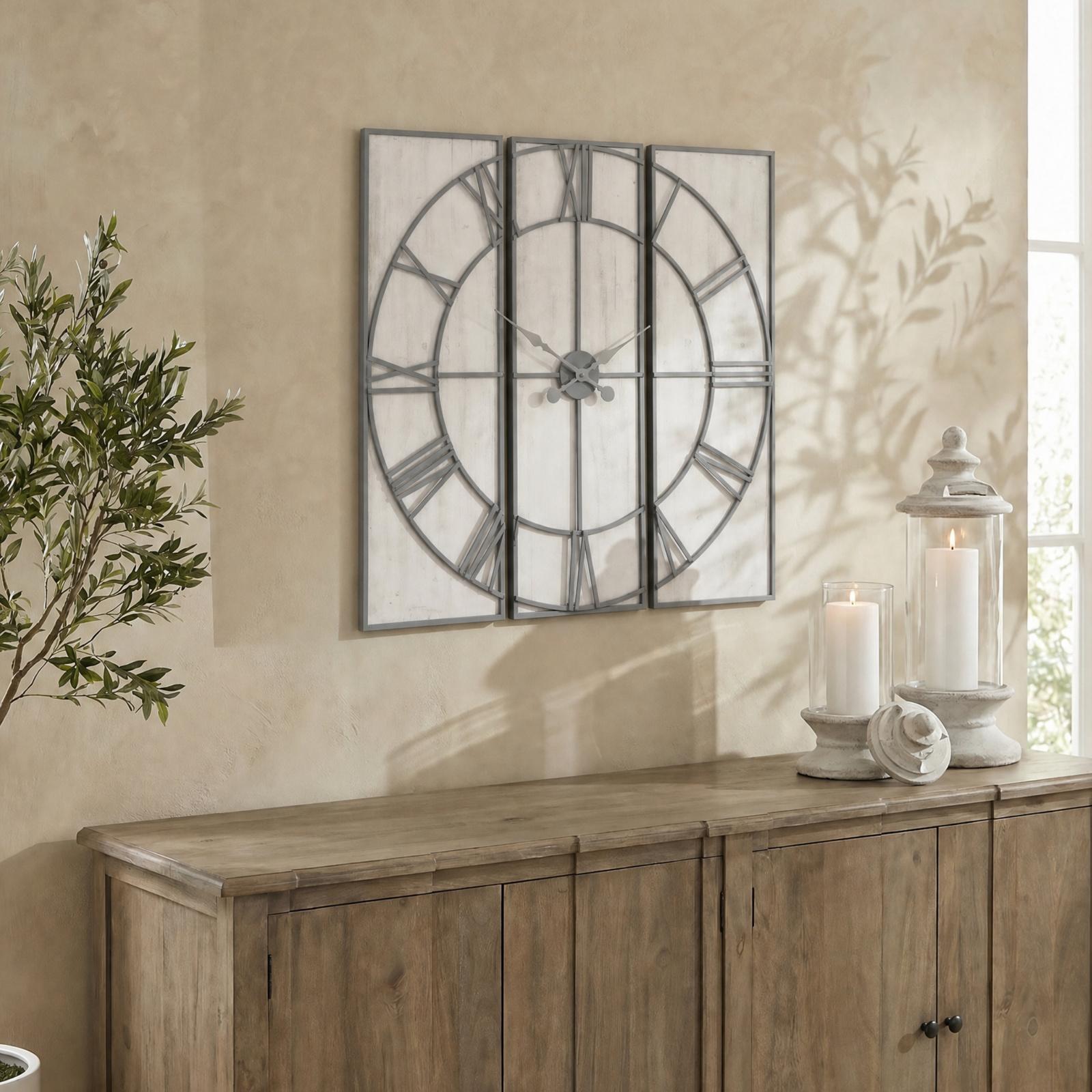
| Roza Panelled Wall Clock | 112cm | 160–185cm wide | 225cm clear |
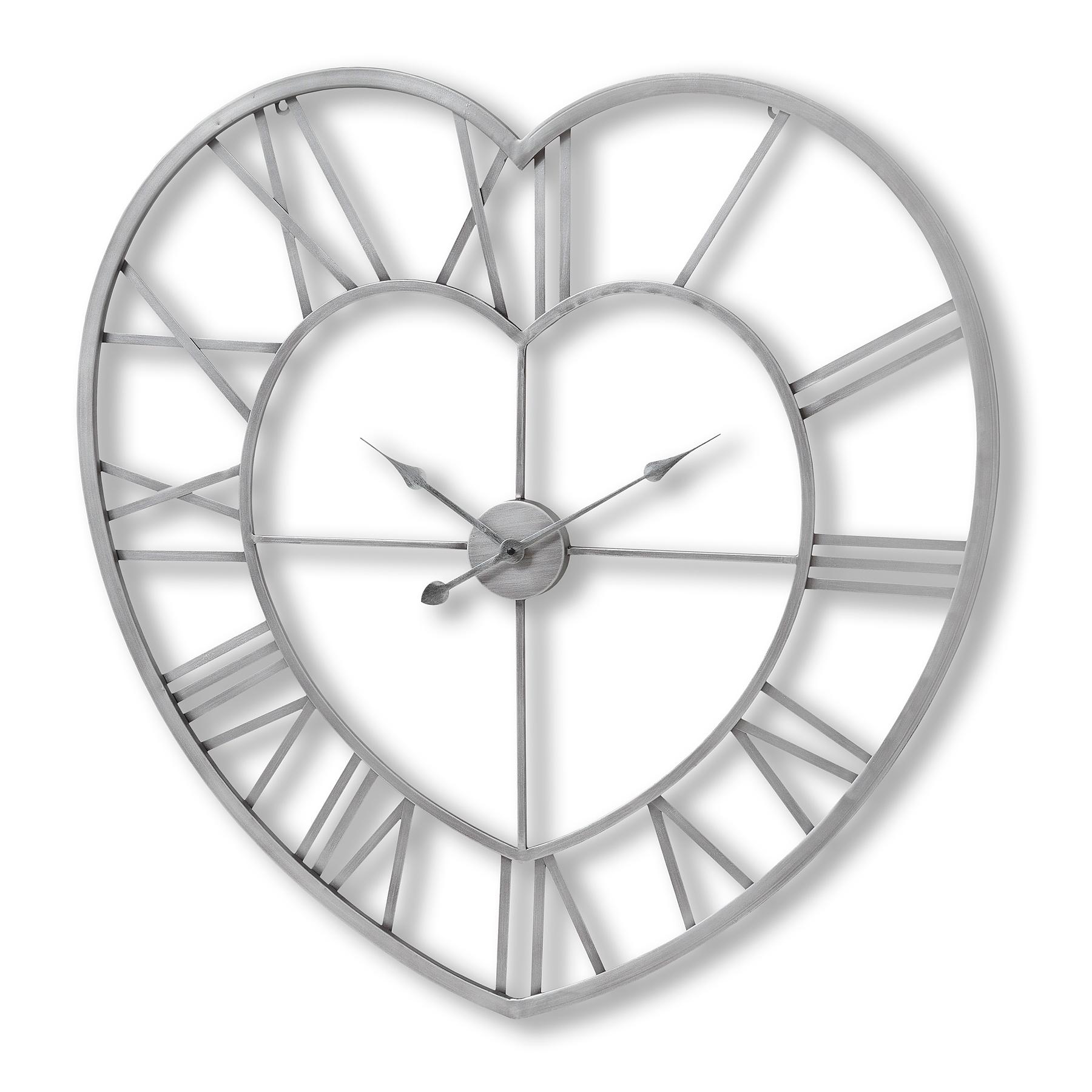
| Silver Heart Skeleton Wall Clock | 89cm | 125–150cm wide | 180cm clear |
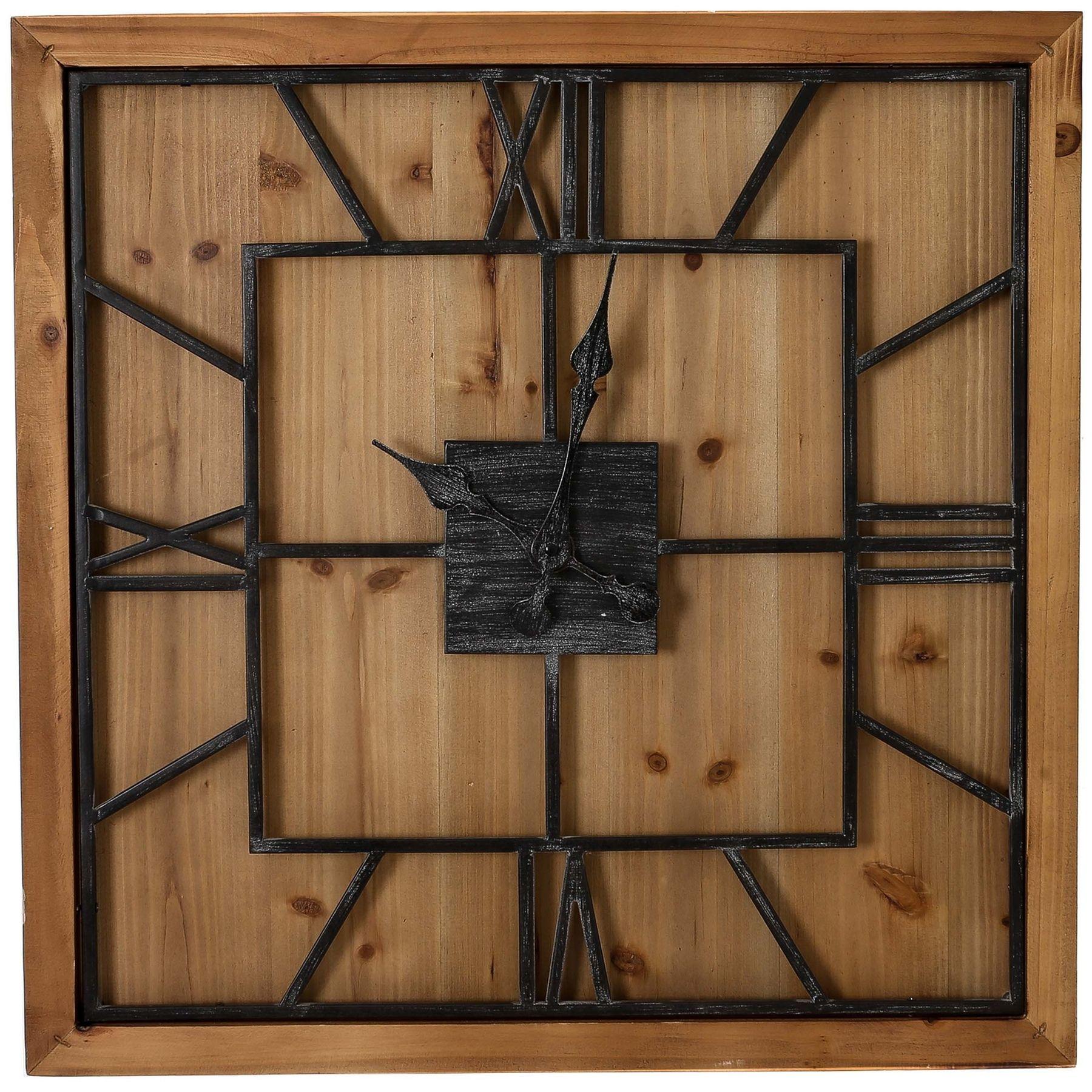
| Williston Square Wooden Wall Clock | 60cm | 85–100cm wide | 120cm clear |
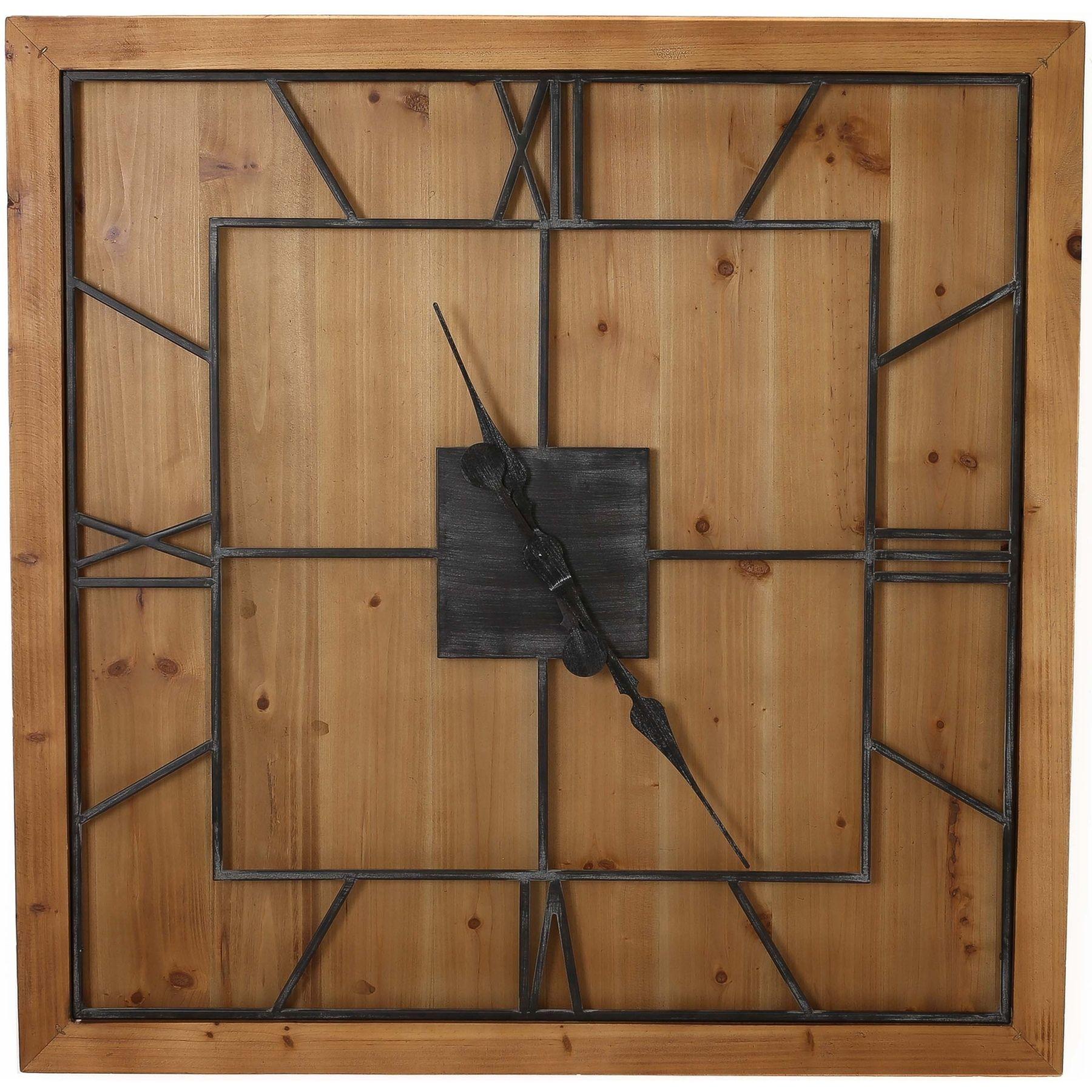
| Williston Square Large Wooden Wall Clock | 90cm | 130–150cm wide | 180cm clear |
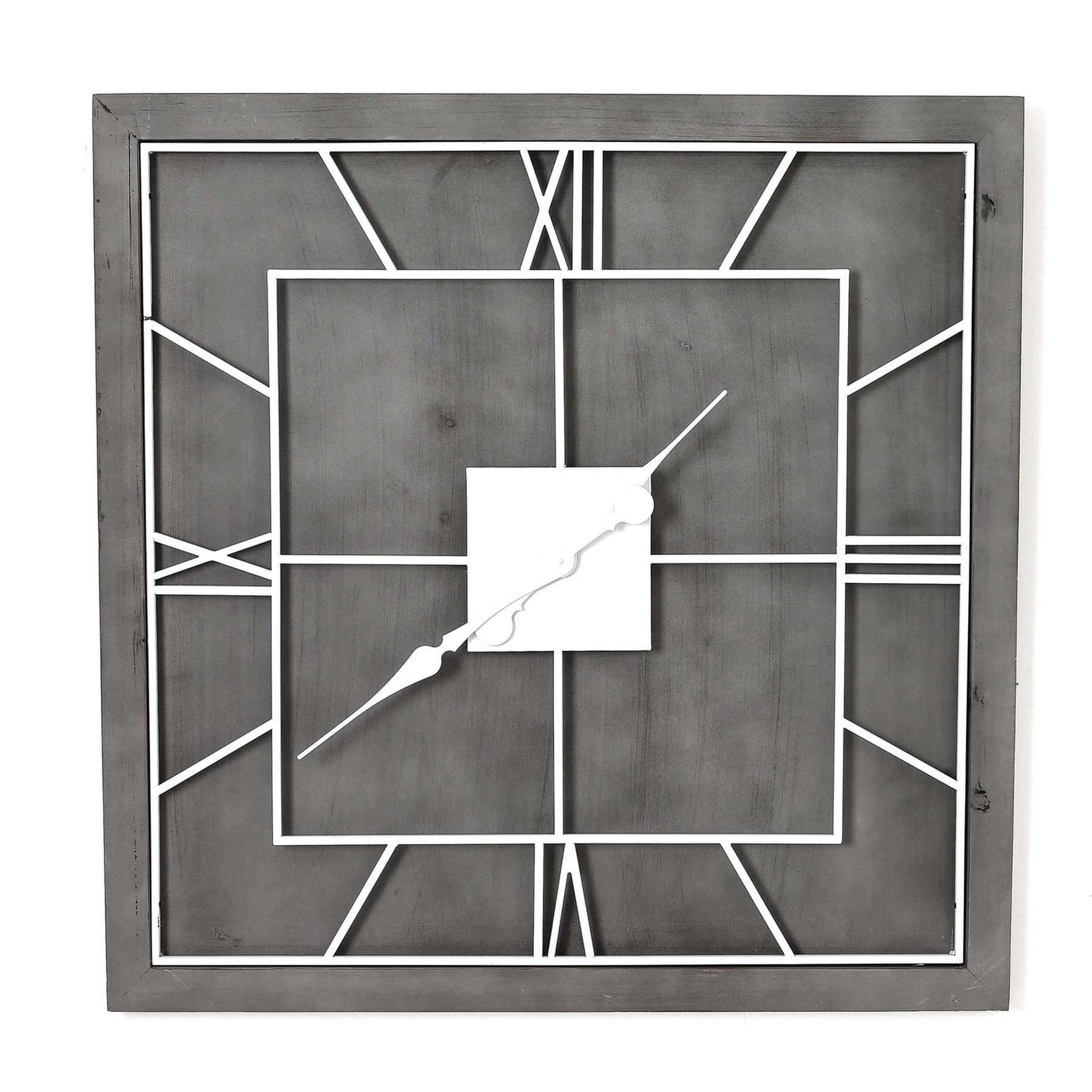
| Williston Grey Square Wall Clock | 60cm | 85–100cm wide | 120cm clear |
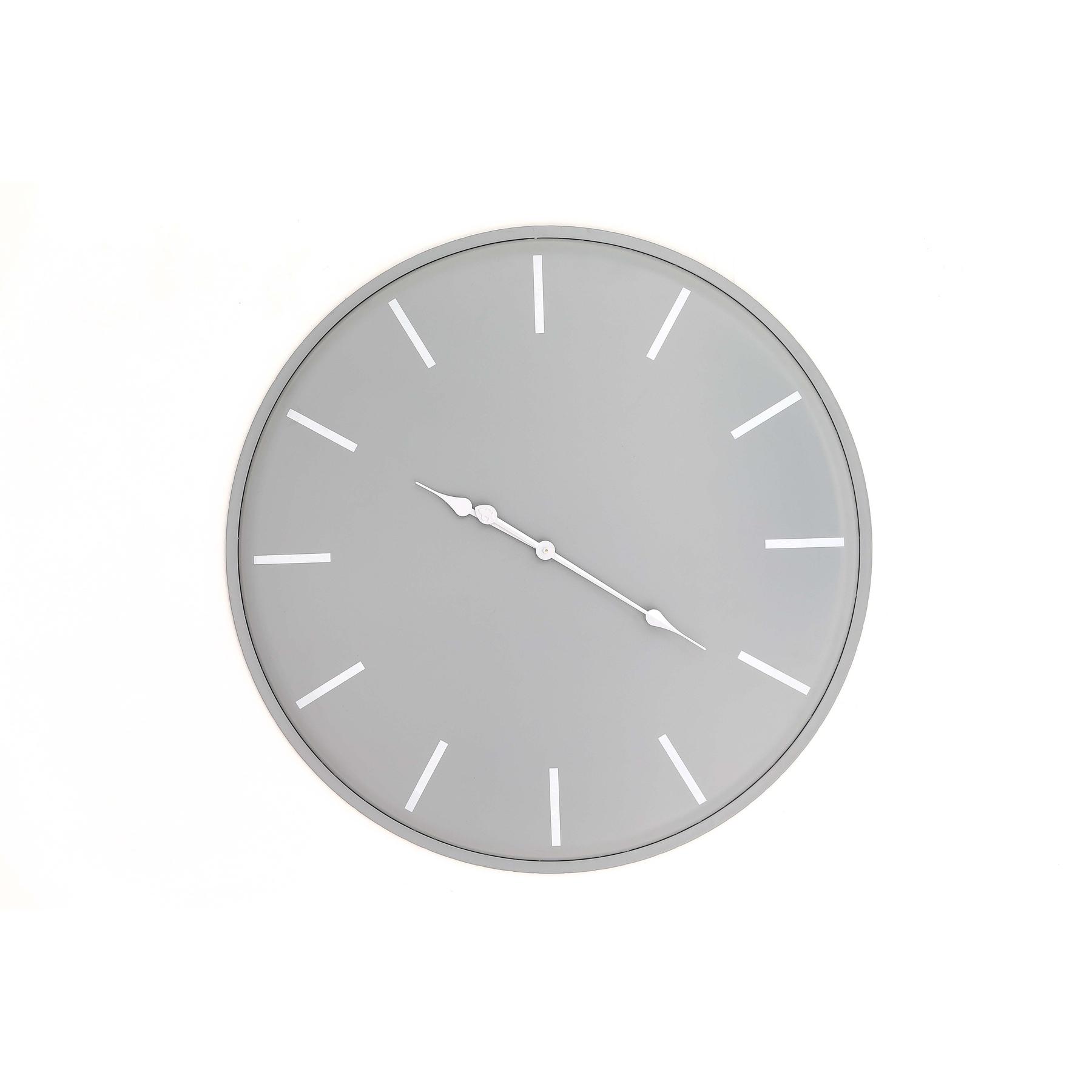
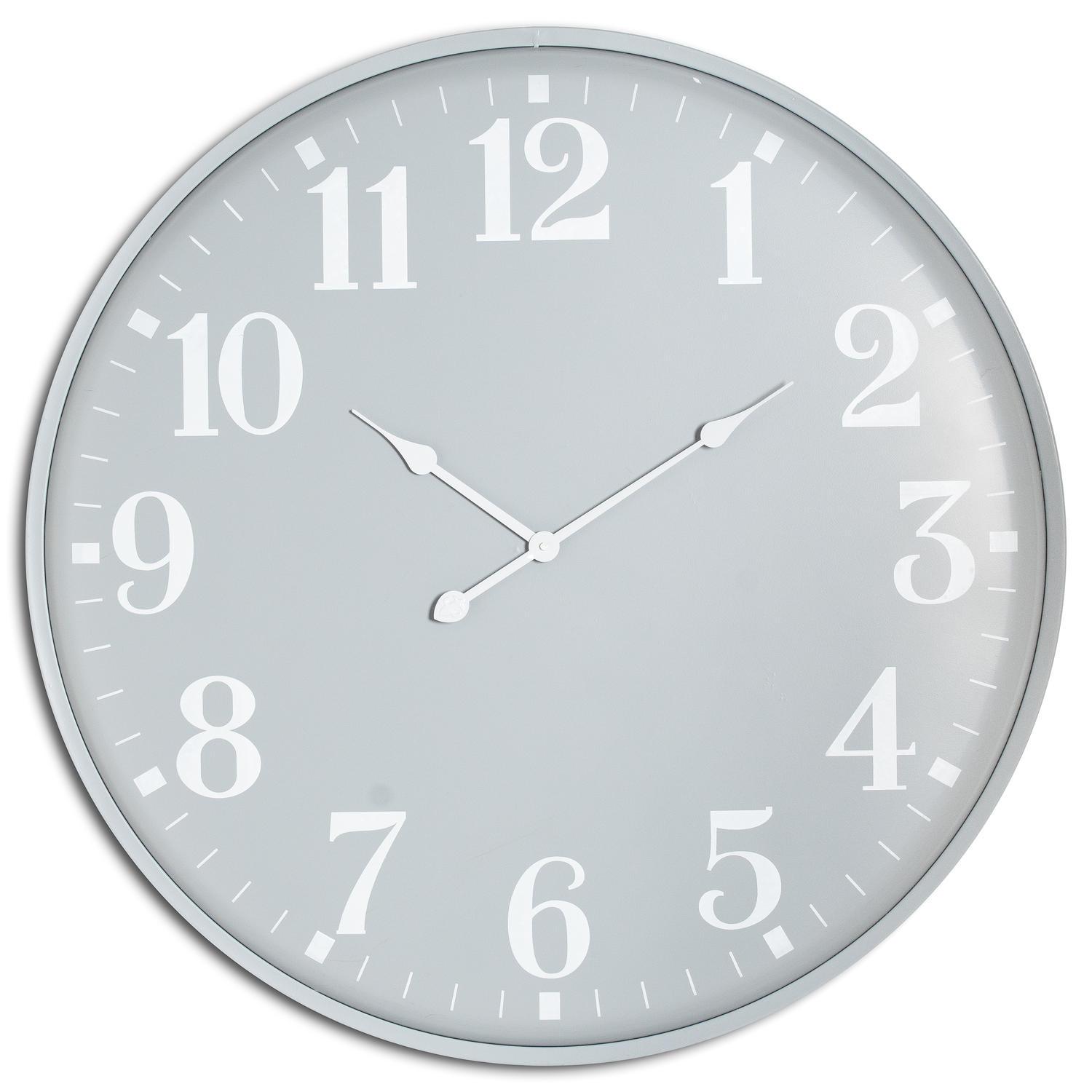
| Karlsson Large Wall Clock | 80cm | 115–135cm wide | 160cm clear |
| Ashmount Large Wall Clock | 80cm | 115–135cm wide | 160cm clear |
Read it the other way round if it helps: measure the sideboard, find the row whose middle column contains that number, and the clock in the first column is the one that fits.
The short version
Two-thirds the width of the furniture below. Centre at 150–170cm if you read it, 145cm if you do not. Half a diameter of clear wall each side. In a kitchen, measure the gap above the cabinets instead. And hang it facing the sofa, not the door.
Common questions
- How high should a wall clock be hung?
- Centre the face between 150cm and 170cm from the floor if you intend to read the clock, and at about 145cm if it is mainly decorative. The lower figure is standard gallery height, which is why a clock hung there sits comfortably alongside pictures.
- What size clock goes above a fireplace?
- Take about two-thirds of the mantel width. A 130cm mantel suits a clock of roughly 85cm. Leave at least 15cm between the top of the mantel and the bottom of the clock, and centre the clock on the chimney breast rather than on the room.
- Can a clock hang on the same wall as the television?
- It can, but not beside it at the same height — two round or rectangular objects competing on one wall makes the wall look unresolved. Put the clock on the adjacent wall, or high enough above the television that the two read as separate.
- Is a large clock too much in a small room?
- Usually the opposite. A single large clock on a small wall reads as one confident decision, where several small objects read as clutter. The limit is the wall run rather than the room: you need the clock's diameter plus about half of it again in clear wall.
- What fixing does a wall clock need?
- Most hang from a single point and weigh under 3kg, so on masonry a plug and screw is enough. On plasterboard use a proper hollow-wall anchor rather than the plug supplied in the box. Check for pipes and cables first — they run vertically above sockets and switches and horizontally near the ceiling, which is exactly where a clock tends to go.