The measurement that matters is the top of your mattress, not the height of the bed frame. A bedside table wants its surface within about 5cm of the mattress top, either way. Level is ideal, a little below is comfortable, and much above means reaching up and over for a glass of water in the dark.
So measure from the floor to the top of the mattress with the bedding on it. Most divans and upholstered beds land between 55cm and 65cm. Low platform beds can be 40cm; a deep mattress on a tall frame can be 70cm or more. Everything else in this guide follows from that one number.
The heights in the range, and the beds they suit
Kaiku's bedside tables run from 55cm to 66cm tall, which covers most of the beds sold in the UK but not all of them.
At the low end, the Broadway Oak Bedside Table is 55cm high, which sits well against a platform bed or a lower divan. The bulk of the range is 59cm to 60cm — the Serene Three Drawer, the Chilworth Grey, the Grafton Black, the Abberley White, the Charlton Ribbed Walnut, the Berkeley Black and both Hampton Ivory tables — and that is the height to choose if your mattress top is 60cm to 65cm.
The tallest is the Hampton Grey Bedside Table at 66cm, which is the one to pick against a tall frame with a deep mattress. The Bedside Table in Classic Recycled Wood is 65cm and does the same job in reclaimed timber.
Then check the walkway, not the wall
The second measurement people skip is the gap between the bed and whatever is beside it. Measure the space you actually have between the bed frame and the wall, wardrobe or radiator, then subtract the table's width.
You want a clear path past the bed. Below about 45cm of remaining walkway, getting in and out of bed becomes a shuffle. If the gap is tight, the Chilworth Grey Bedside Table is 35cm square — the narrowest in the range and the one that fits where nothing else will. The Abberley White, Grafton Black and Charlton Ribbed Walnut are 40cm deep. At the other end, the Hampton Grey is 56cm across and the Bedside Table in Classic Recycled Wood is 51cm, both of which want a proper gap either side of the bed.
Drawers need room in front of them, too
A drawer that cannot open fully is a shelf with a handle on it. Allow the drawer's own depth again in front of the table: a 40cm-deep table with a full-extension drawer wants 40cm of clear floor in front of it, and a bed frame that projects past the mattress eats into that.
Two drawers or one is a question about what you keep beside the bed rather than about size. One deep drawer takes a book, a charger and a pair of glasses without organising them. Two shallower drawers separate the things you reach for nightly from the things you do not, which is why the Abberley White, Charlton Ribbed Walnut and Serene Three Drawer tables exist alongside the single-drawer Berkeley and Broadway.
A pair, or two different tables
Matching pairs are the usual choice and the safe one. They also cost twice as much, and in a room where one side of the bed is against a wall and the other is open, a pair can be the wrong answer: the open side has room for a wider table with drawers, the wall side often only has room for something narrow.
If you are buying one table rather than two, buy for the side you use. If you are buying two, order them together — these are made in batches, and a piece bought six months later can differ slightly in finish even under the same name.
The pieces in this guide
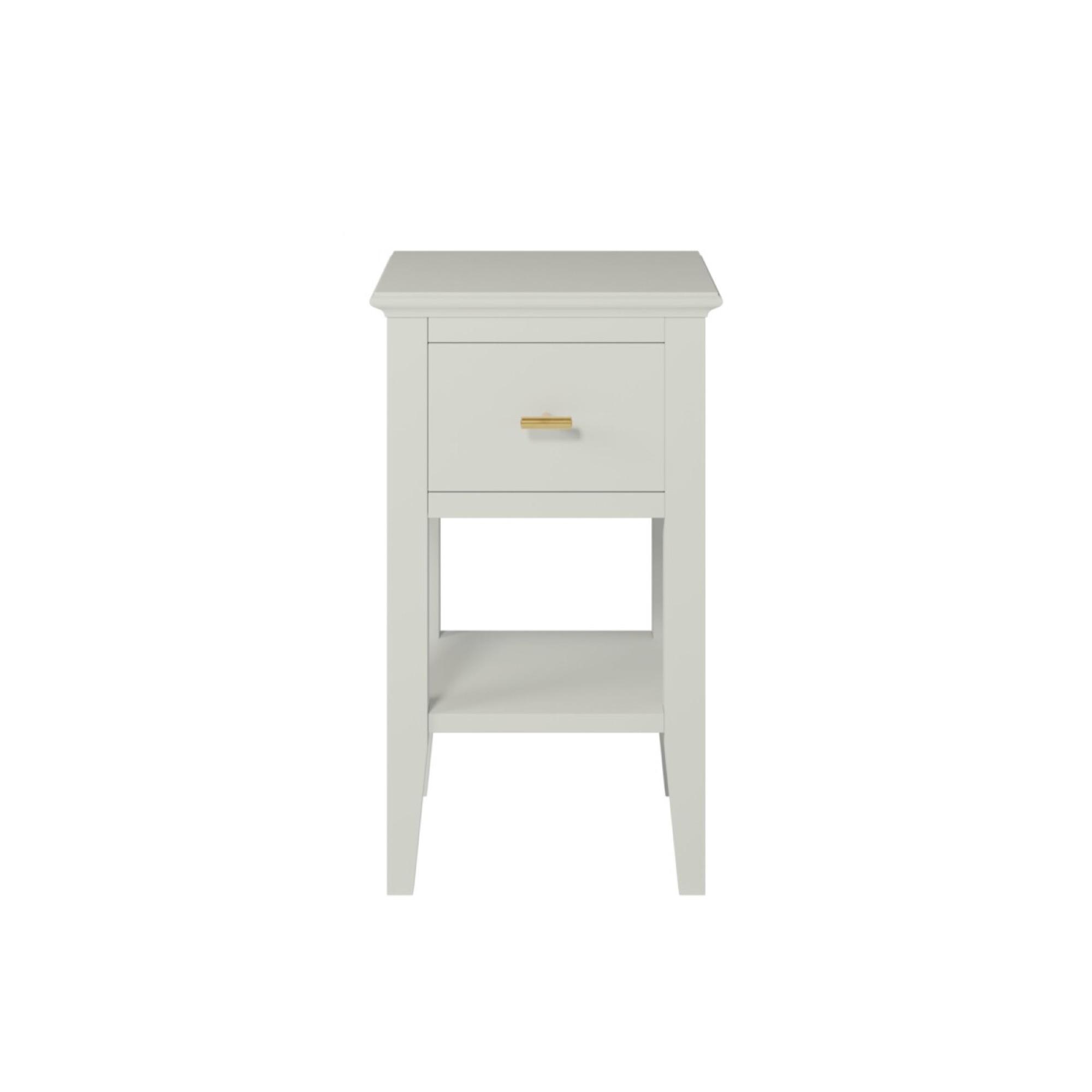
Chilworth Grey Bedside Table
£179
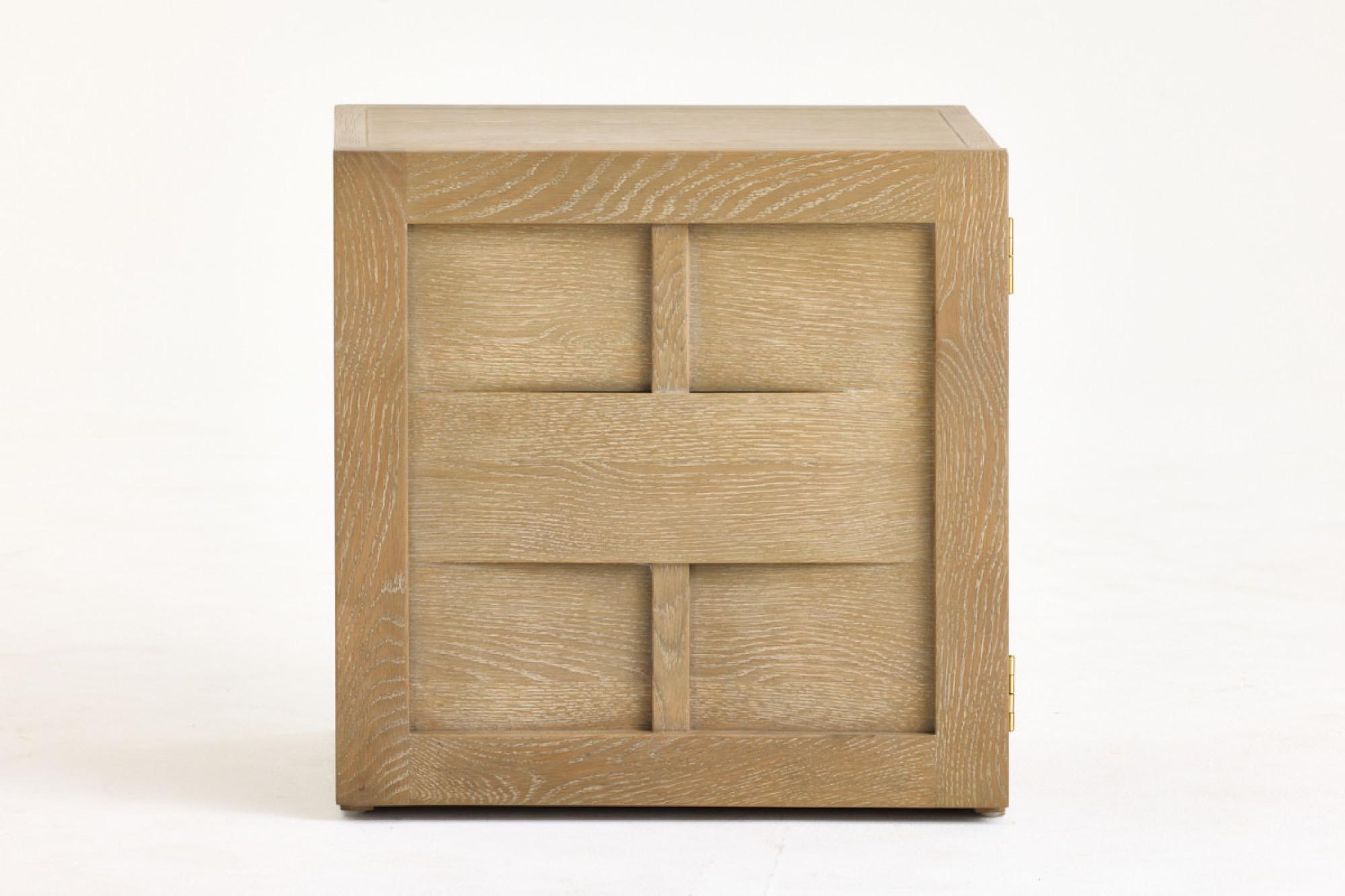
Broadway Oak Bedside Table
£495
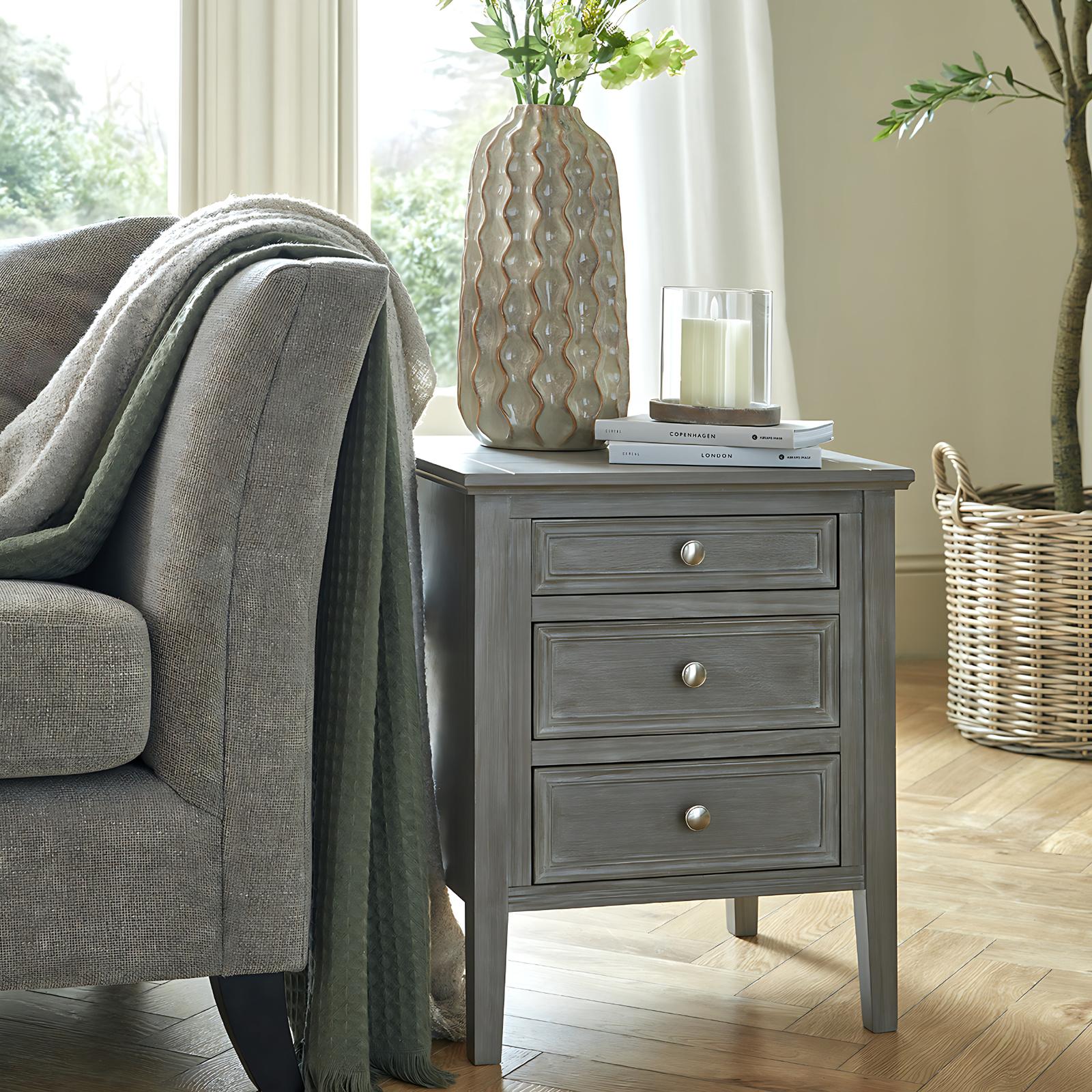
Serene Three Drawer Bedside Table
£233
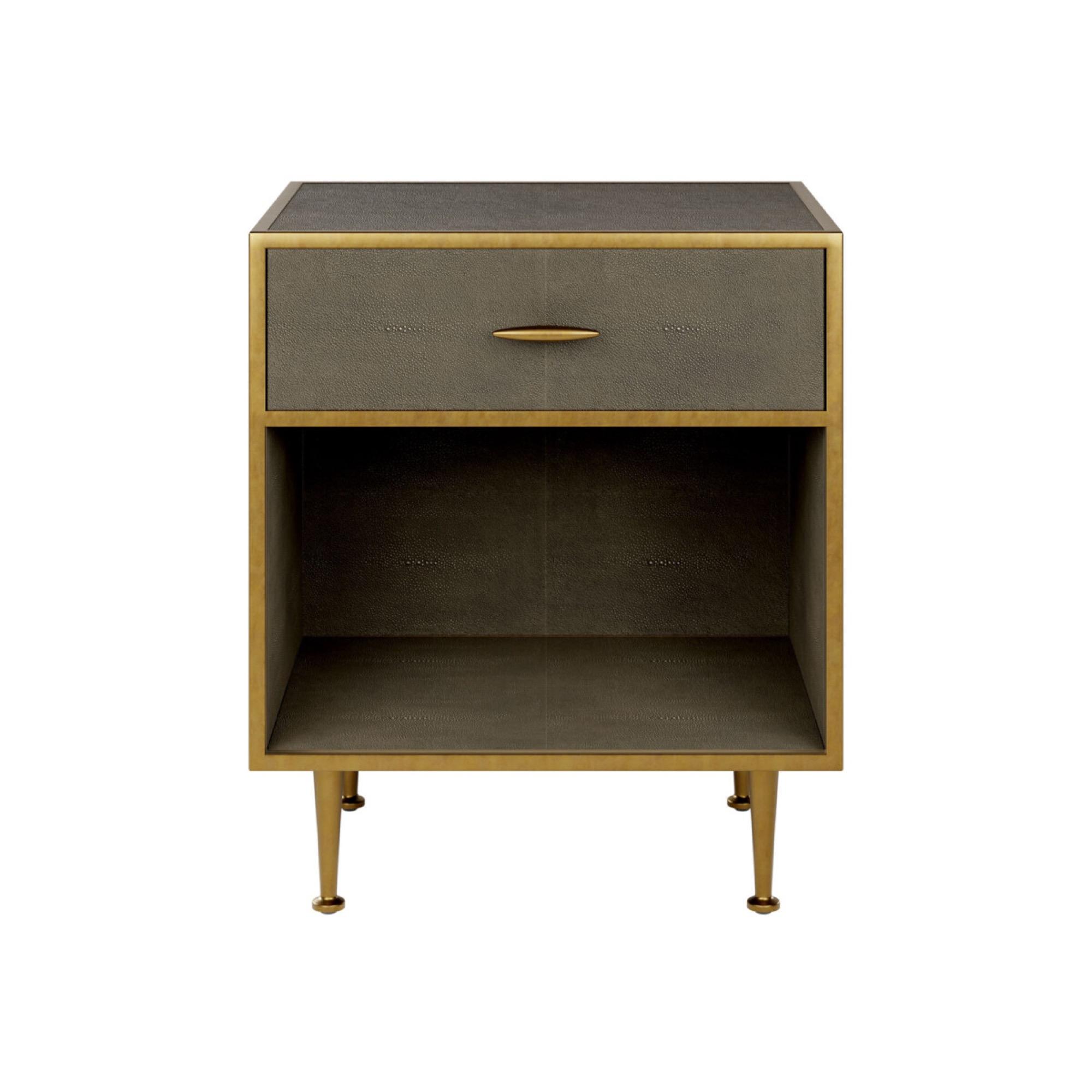
Hampton Grey Bedside Table
£593
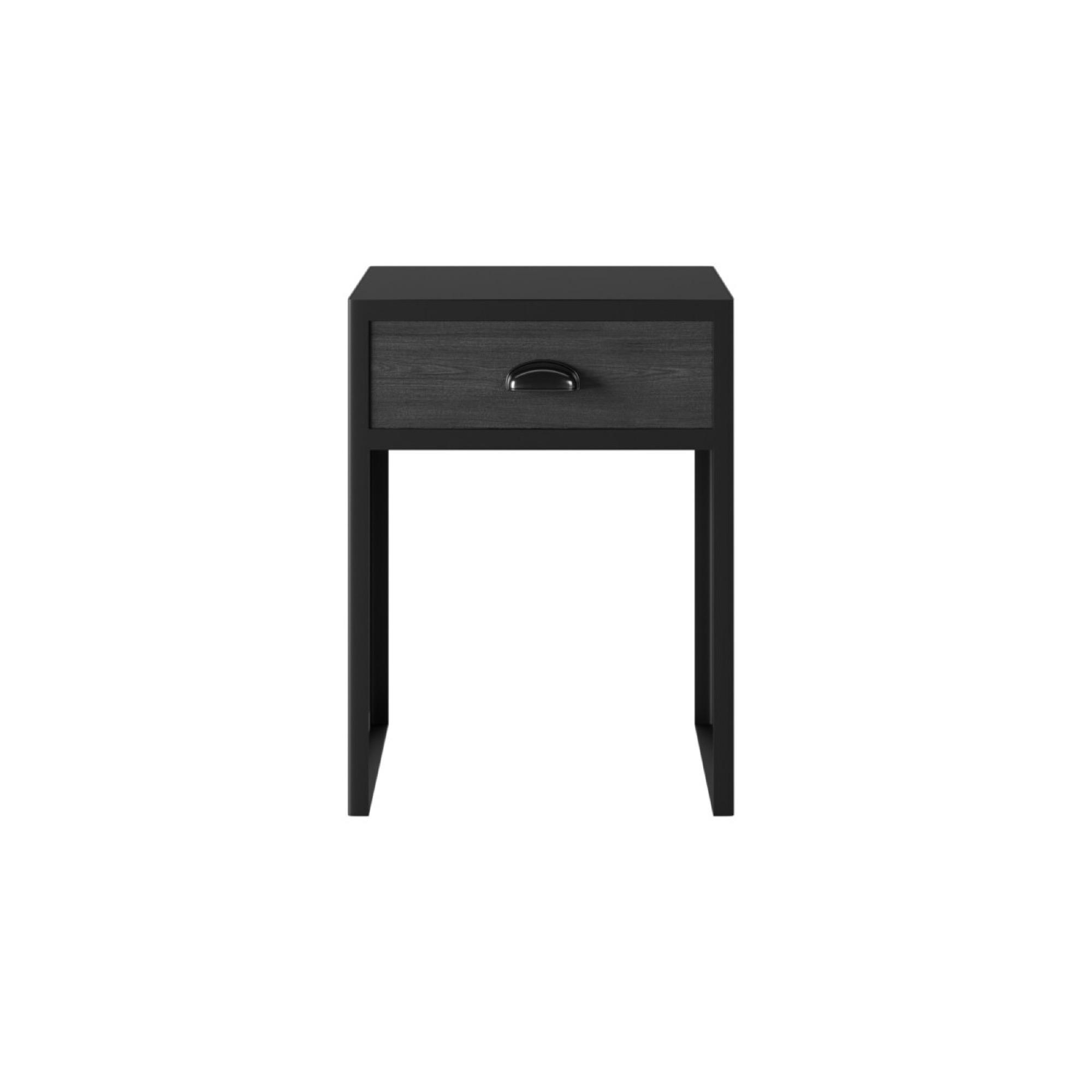
Grafton Black Bedside Table
£375
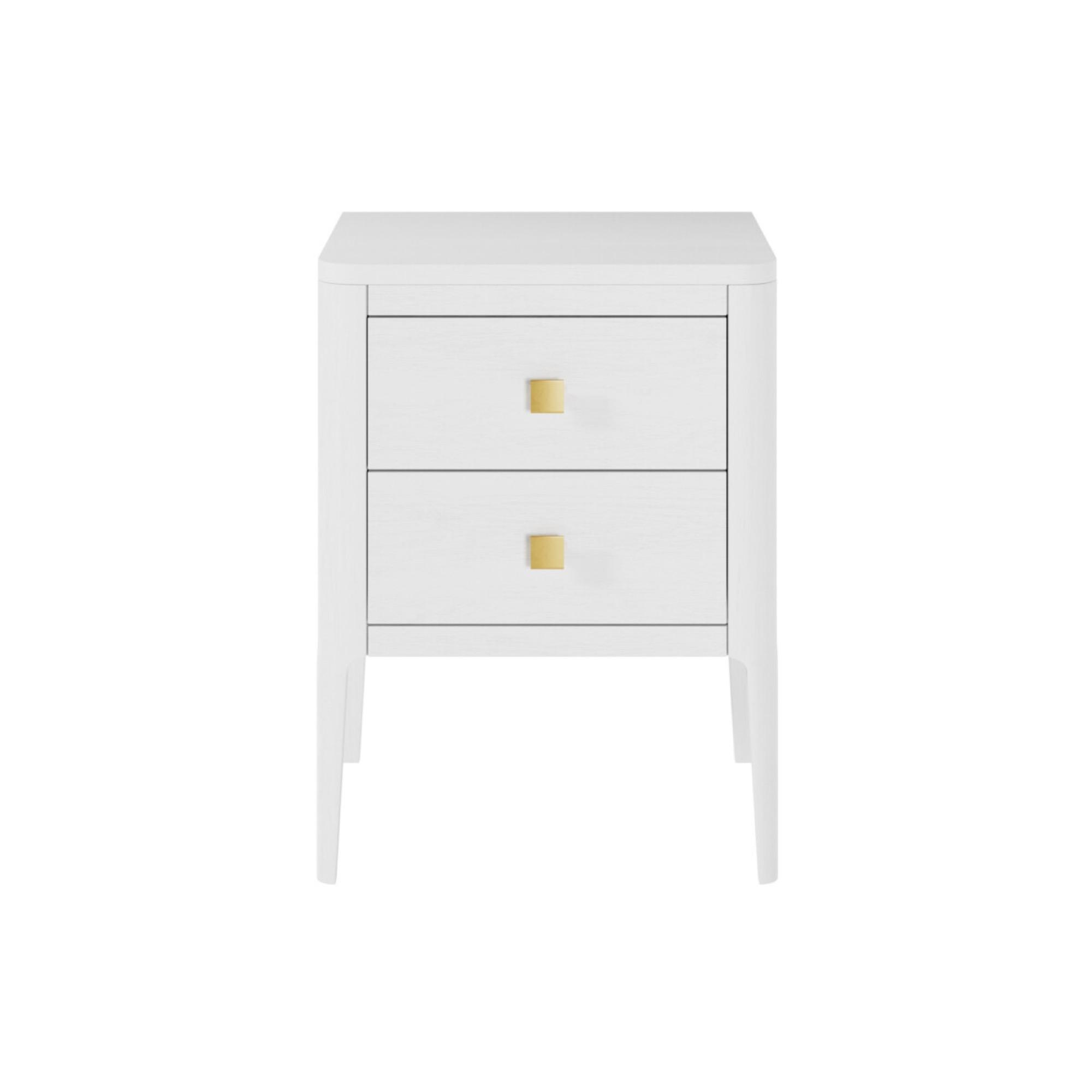
Abberley White Bedside Table
£399
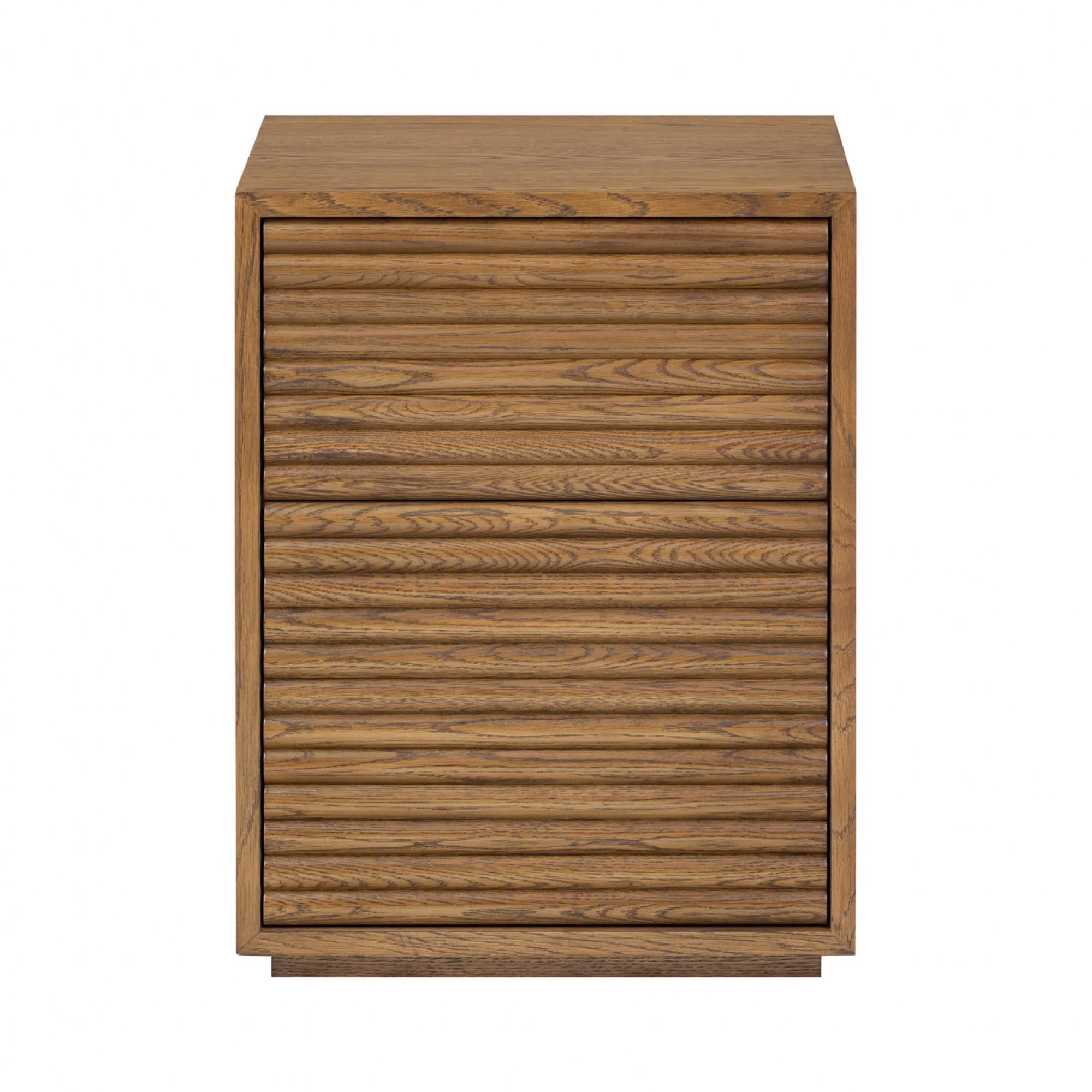
Charlton Ribbed Walnut 2 Drawer Bedside Table
£443
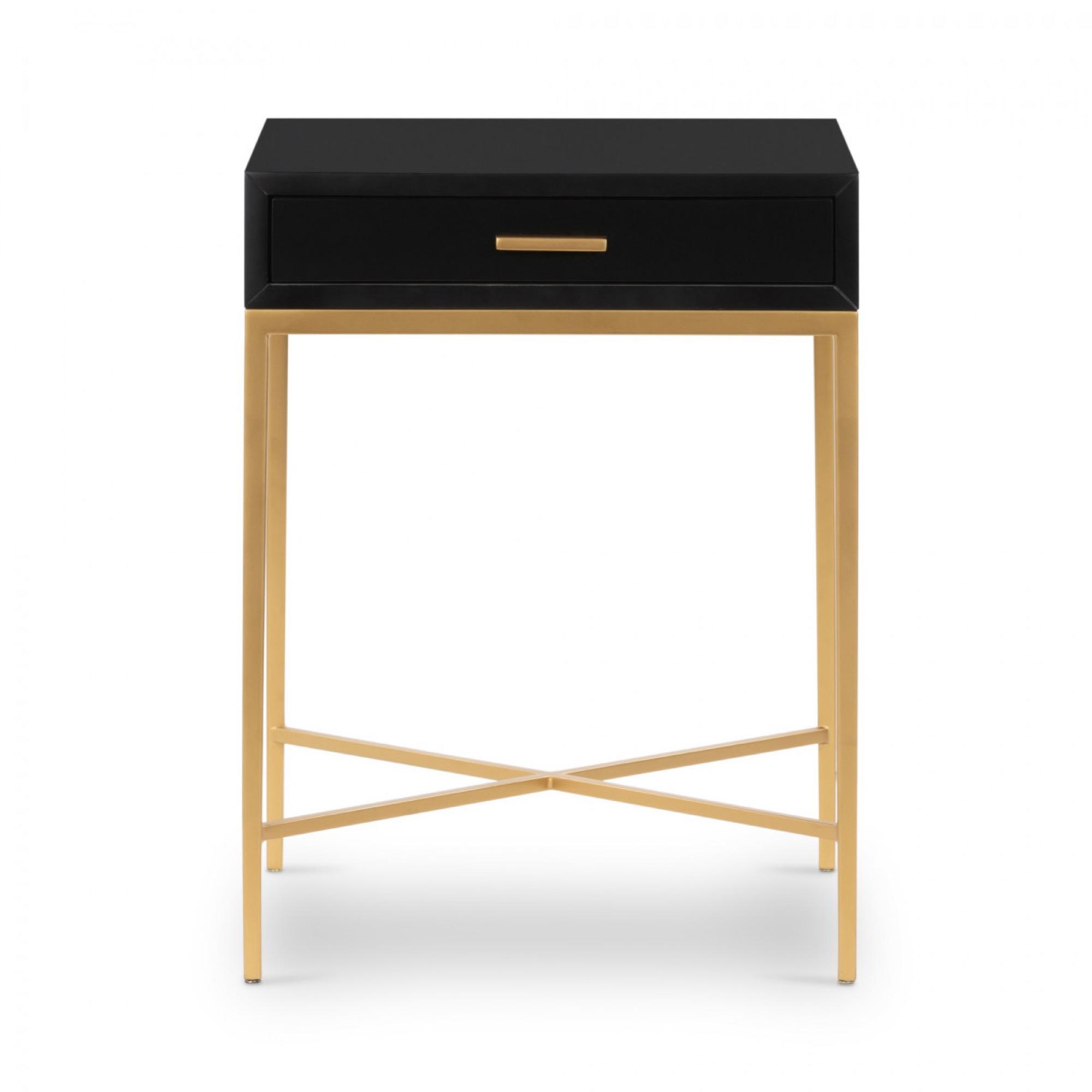
Berkeley Black 1 Drawer Bedside Table
£395
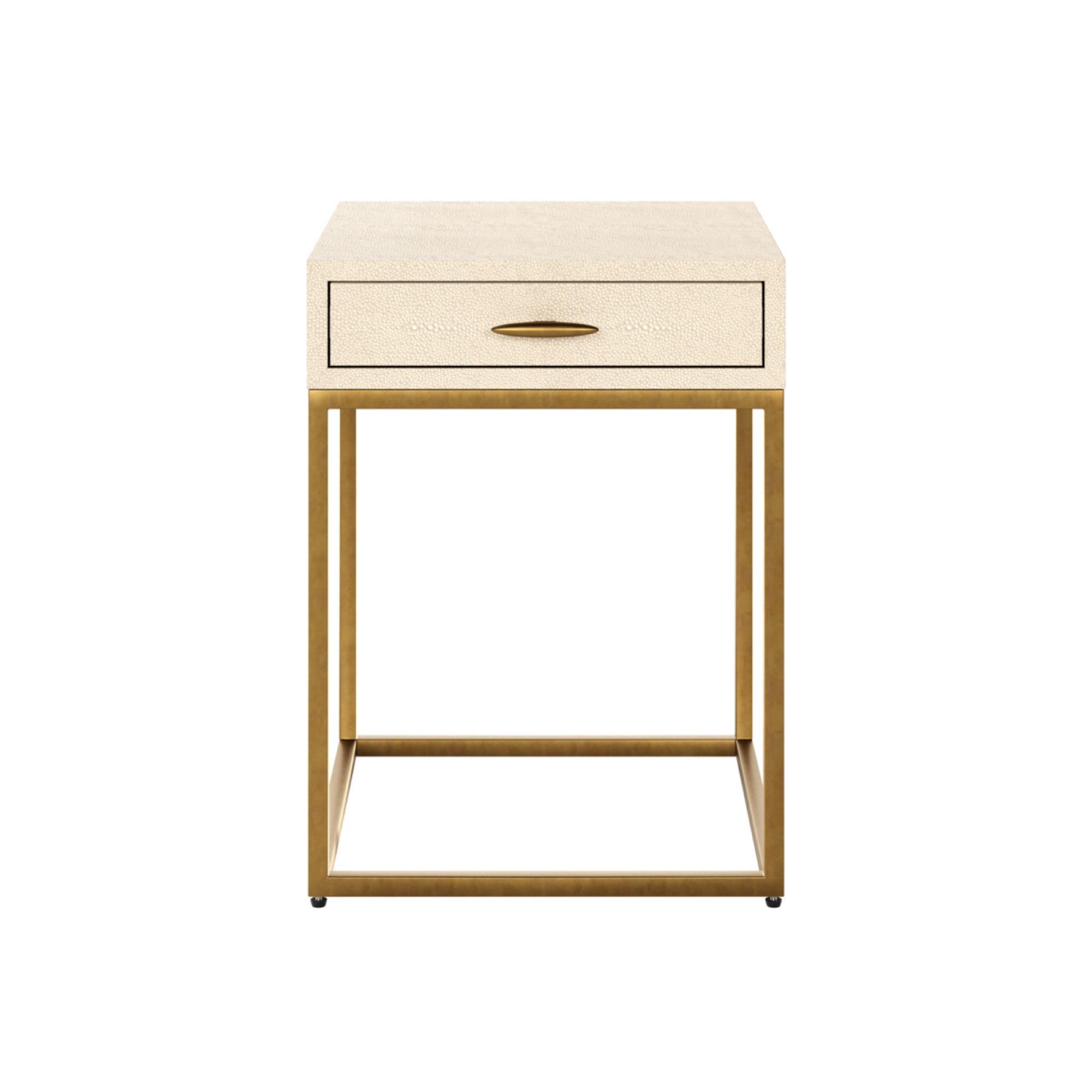
Hampton Ivory Square Bedside Table
£533
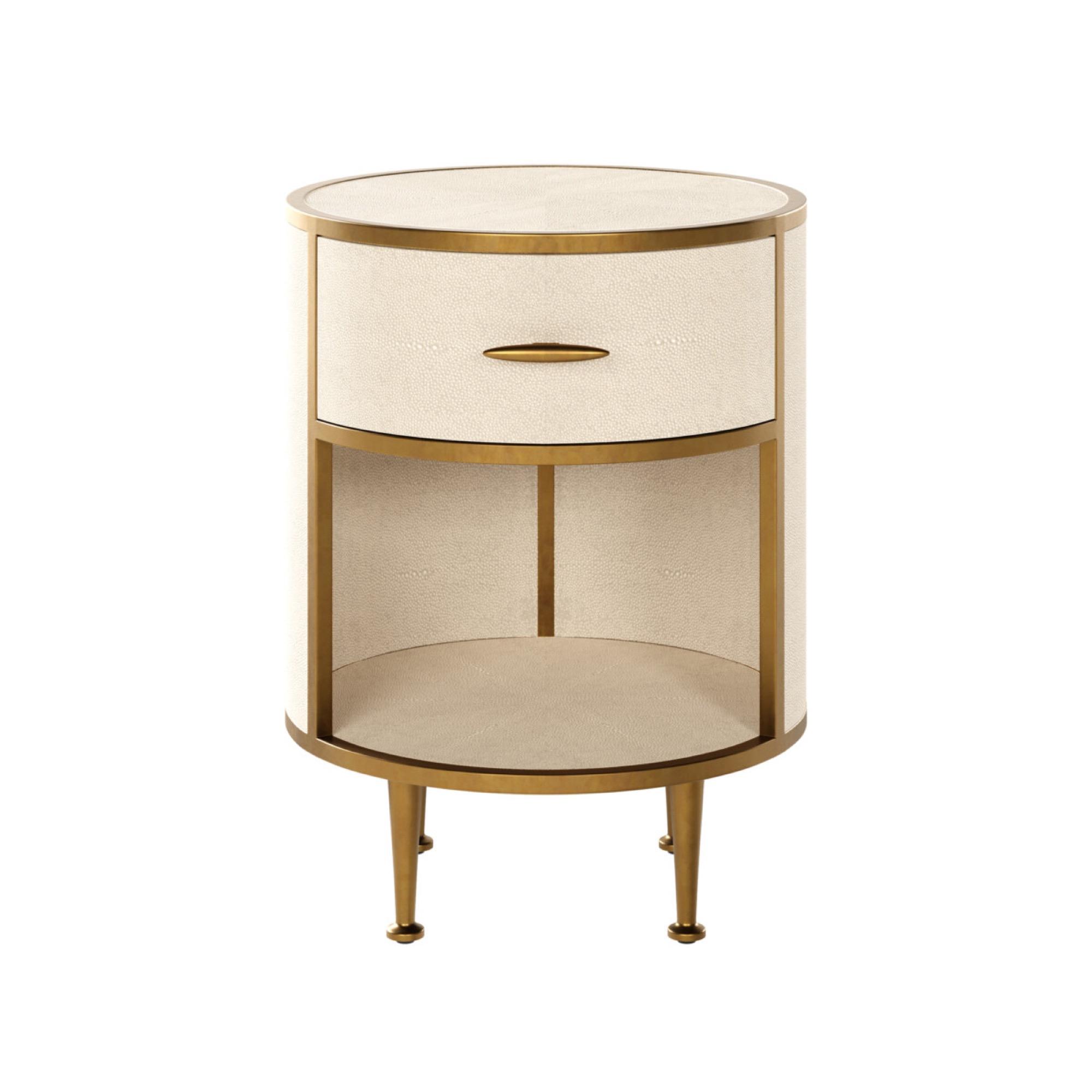
Hampton Ivory Round Bedside Table
£563
Bedside Table - Classic - Recycled Wood
£229