Cold plunge with a chiller — is it worth it over ice, and what temperature?
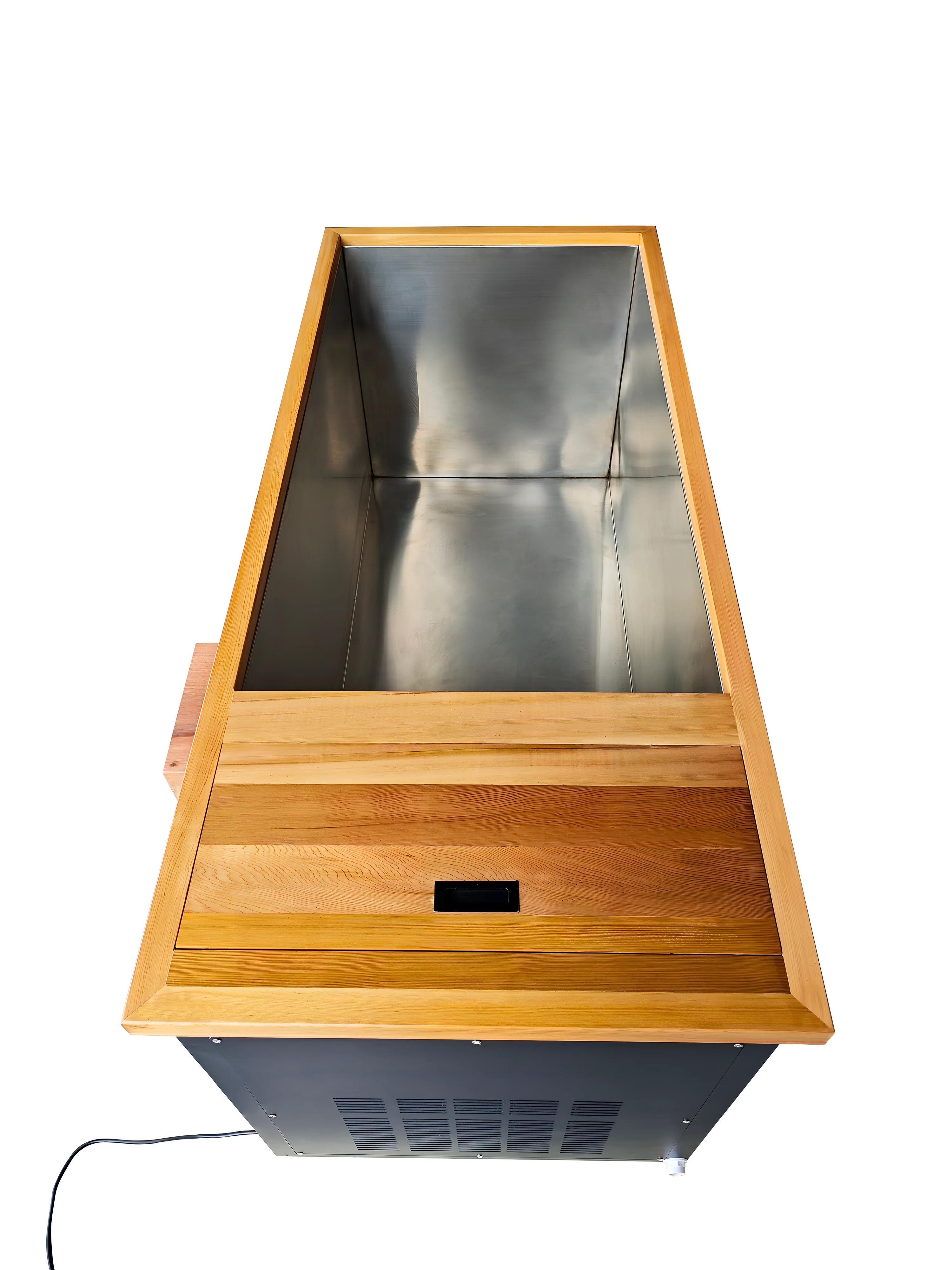
Straight answer first: we sell one cold plunge, the Peak Plunge Ice Bath with Chiller, and it's built with a chiller rather than sold as a bath you fill and top up with bags of ice. That's not us hiding a cheaper ice-only option — it's the only cold plunge in the range, and the chiller is why.
A chiller holds the water at a set temperature continuously rather than starting cold and gradually warming as ice melts, which matters for anyone using it regularly rather than as an occasional novelty. What follows is why that consistency earns its cost, and the temperature range cold plunging actually uses.
| Chiller | Ice bags | |
|---|---|---|
| Temperature consistency | Set and held automatically | Cold at first, warms as ice melts |
| Ongoing cost | Electricity only | Buying or making ice every session |
| Effort per session | None — already at temperature | Filling and emptying ice each time |
| Upfront cost | Higher | Lower, if you already own a tub |
Rule one. Ice cools a tub once; a chiller keeps it cold every time
Ice-cooled water starts at its coldest and warms steadily from the moment it's added — fine for one session, but it means every use starts with buying or making more ice, and the water's actual temperature drifts throughout the session rather than holding steady. A chiller removes that variability entirely: the water sits at a set point and stays there, session after session, with no prep beyond switching it on.
For occasional or one-off use, ice is the cheaper way to try cold plunging without committing to the equipment. For anyone doing it regularly — several times a week, which is what most cold-plunge protocols actually call for — the chiller's consistency and the ice's the recurring cost and effort both point the same direction.
Rule two. Ten to fifteen degrees is the range most cold-plunge protocols use
Most cold plunge protocols work in the 10-15°C range — cold enough to trigger the physiological response people are after, without the extra risk of genuinely ice-cold water, which is closer to 0-4°C and generally reserved for shorter, more experienced use. A chiller's real advantage here is holding a specific number in that range consistently, rather than guessing at how cold an ice-and-water mix currently is.
Contrast therapy — alternating hot and cold — typically uses a similar cold-side range, paired with a hot side well above it; the tool below builds a full protocol around both once you've picked a temperature.
Work it out here
Build a full hot-cold protocol
What are you trying to get out of it?
How experienced are you with this?
How much time do you have?
Rule three. It's usually bought alongside a sauna, not on its own
Cold plunging on its own is a real, complete use case, but the more common reason people buy one is contrast therapy — alternating a hot sauna session with a cold plunge, which is why this product tends to sell alongside our infrared saunas rather than in isolation. If that's the plan, sizing the sauna and the plunge together, and checking both fit the same space, is worth doing before buying either separately.
This site's cold plunge size calculator handles the plunge's own fit and water volume; the protocol builder above handles how long and how cold once both pieces are in place.
Our range
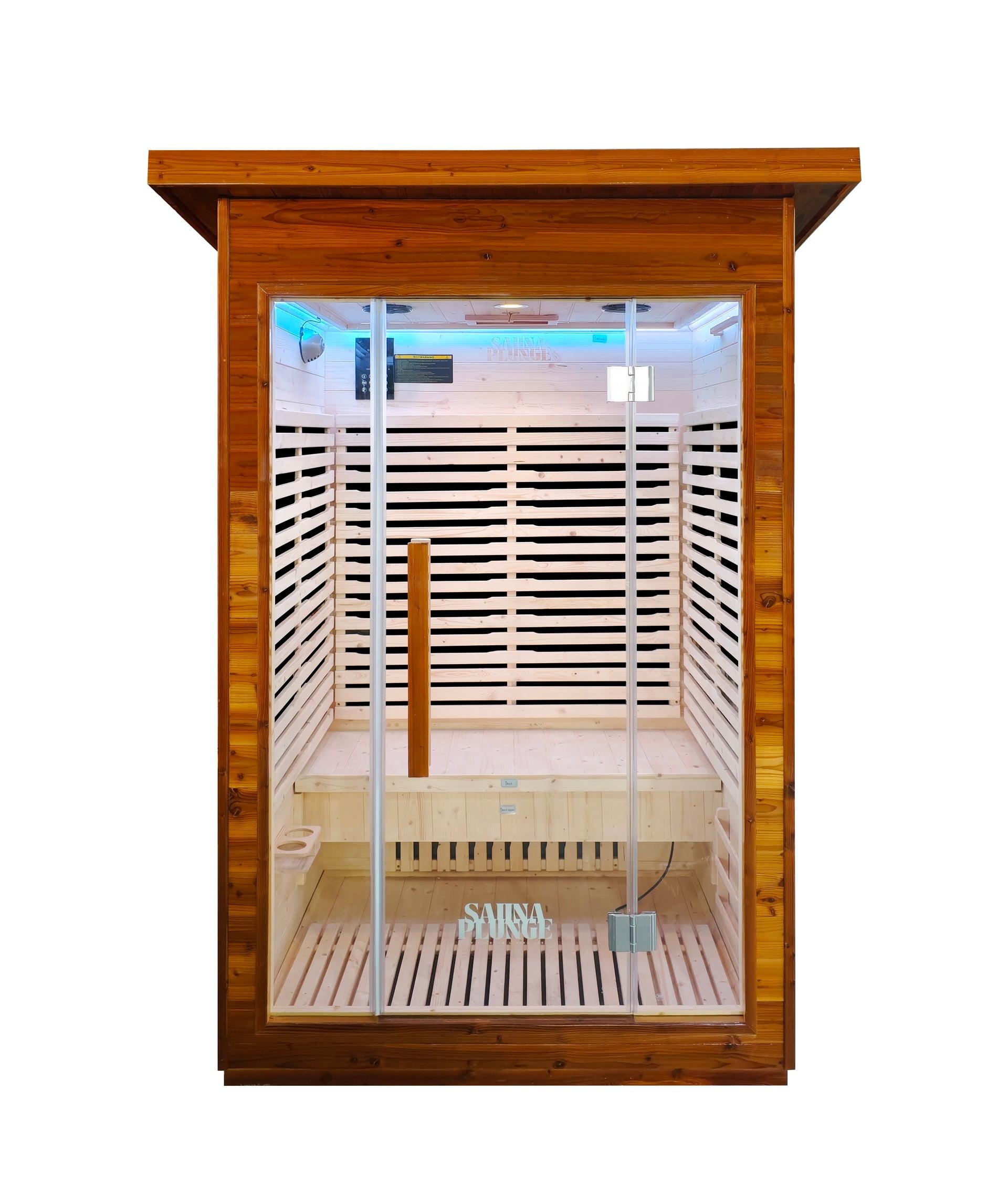
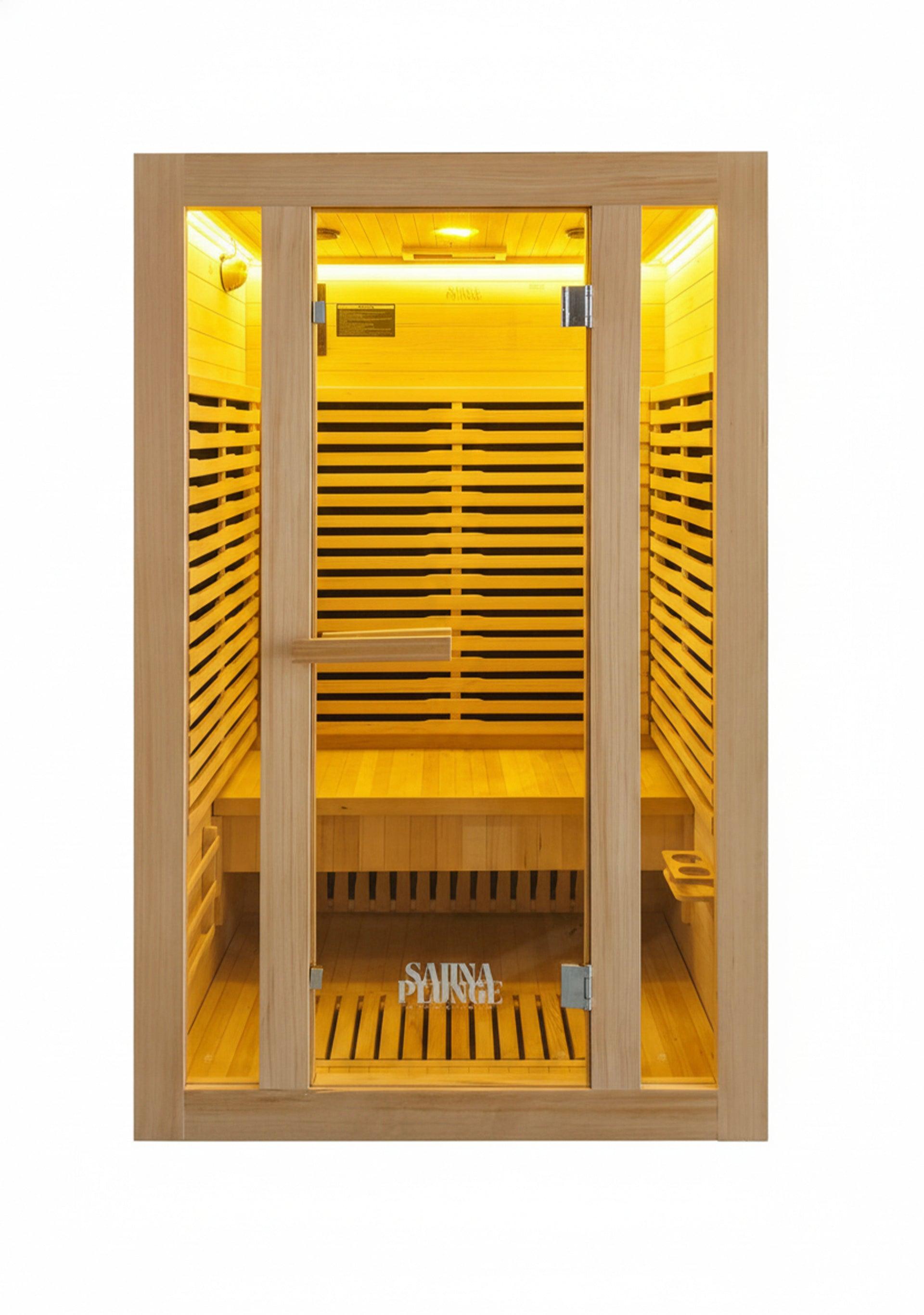
One cold plunge, shown with two of our infrared saunas it's commonly paired with for contrast therapy.
| Product | Role | Price |
|---|---|---|
| Peak Plunge Ice Bath with Chiller | Cold plunge — our only SKU | £4,725 |
| Yorkshire Cabin 2-Person Outdoor Infrared | Sauna — contrast-therapy pairing | £3,263 |
| Dales Glow 2-Person Indoor Infrared | Sauna — contrast-therapy pairing | £2,813 |
The short version
We sell one cold plunge, and it's chiller-equipped rather than ice-based — worth a plain statement rather than a false comparison. A chiller holds temperature consistently for regular use; ice is cheaper for a one-off. Most cold-plunge protocols run 10-15°C. It's most often bought alongside a sauna for contrast therapy, not on its own.
Common questions
- Does Kaiku sell a cold plunge without a chiller?
- No — we sell one cold plunge, and it comes with a chiller built in. There isn't an ice-only alternative in our current range.
- Is a cold plunge chiller worth the extra cost over ice?
- For regular use, generally yes — a chiller holds a set temperature automatically with no per-session effort, where ice needs buying or making fresh each time and the water's temperature drifts as it melts. For occasional use, ice is the cheaper way to try cold plunging first.
- What temperature should a cold plunge be?
- Most protocols use 10-15°C. Genuinely ice-cold water, closer to 0-4°C, is generally reserved for shorter sessions and more experienced use rather than a standard starting point.
- Do you need a sauna to use a cold plunge?
- No, cold plunging works as a standalone practice. It's commonly bought alongside a sauna for contrast therapy — alternating hot and cold — which is why the two are often sized and purchased together, but a cold plunge doesn't require one.
- How cold should contrast therapy be on the cold side?
- Similar to standalone cold plunging, typically 10-15°C, paired with a hot sauna session well above it. The exact split depends on experience level and session length — the protocol builder above works out a full routine around both.