Crystal ball water features: what the ball is actually for
A crystal ball in a water feature looks like ornament and is not. Water running over a smooth sphere clings to it, spreads into a film, and catches light in a way water falling down a flat face never does. The ball is there to make the water visible. Take it out and you have a pump making a noise.
That is also why these features work indoors, where a conventional fountain would be too loud or too wet. Ours run from £34 to £120, and the differences between them are worth understanding before you pick on looks alone.
The plain ball: water, stone and nothing else
The simplest versions put the ball on rock or in a pot and leave it at that. Our Water Pot and Crystal Ball at £34 has a handmade, reclaimed character, and the Pebble Wall version at £35 runs the water down a face of pebbles into the ball below.
These are the quietest of the range and the easiest to place. With nothing figurative in them they sit in a modern room without arguing with it, which the dragons and elephants do not.
The water wheel: movement you can watch
A water wheel turns under the flow, and that changes what the piece is for. A still feature is background; a turning wheel is something a person actually looks at. If the feature is going on a desk or a hall table where someone will see it close up, the wheel earns its place.
Ours pair the wheel with figures — Elephants and Crystal Ball with Water Wheel at £54, Dragons at £55, and the Purple Dragon version at £57. The dragon piece is 18 x 35 x 18cm, so it is a shelf-sized object rather than a table centrepiece.
Cascades and rock formations
A cascade runs water down several levels before it reaches the ball, which gives more sound than a single drop. The Silver Buddha Cascade at £52 is 35 x 25 x 20cm and weighs a little over two kilos — substantial enough not to move when the pump is running, which cheaper features often do.
The Slab Rocks Formation at £54 does the same thing without the figure, if a Buddha is not the note you want in the room. Both produce more audible water than the plain pot versions, which is either the point or the problem depending on where it is going.
Colour-changing: the grand versions
The two at £120 are a different class of object. Both are floor or console pieces rather than tabletop, and both light the ball from within with a colour that cycles — one set into rock, the other into a Greek urn standing in a woven basket.
Lit from inside, the film of water over the ball becomes the thing you see rather than the thing you have to look for, and in a dim room the effect is considerable. It is also, unavoidably, a feature that draws attention. These are not quiet background pieces and are not meant to be.
Figures: dragons, elephants and Buddhas
A large part of this range is figurative, and it is worth being honest that this is the thing that dates fastest in a room. A plain ball on rock will look the same in ten years. A purple dragon is a decision.
That said, the figures are doing something structural as well as decorative — an elephant's trunk or a dragon's body is what the water runs down before it reaches the ball, so the shape determines how the water falls and how much noise it makes. The Elephants in Love piece at £55 and the Silver Buddha Cascade at £52 are both built around that.
Noise: how much water you are letting into the room
This is the thing people get wrong. All of these make sound, and how much depends on the drop — how far the water falls before it lands. A pot feature where water wells up and slips over the rim is nearly silent. A cascade running down three levels of slate is not.
Think about the room before the look. In a hallway or a home office, more sound is usually welcome, because it masks other noise. In a bedroom or beside a television it becomes the only thing you can hear within about twenty minutes. If you are unsure, the quieter pot and pebble versions at £34 and £35 are the safer starting point.
The pump, and what actually goes wrong
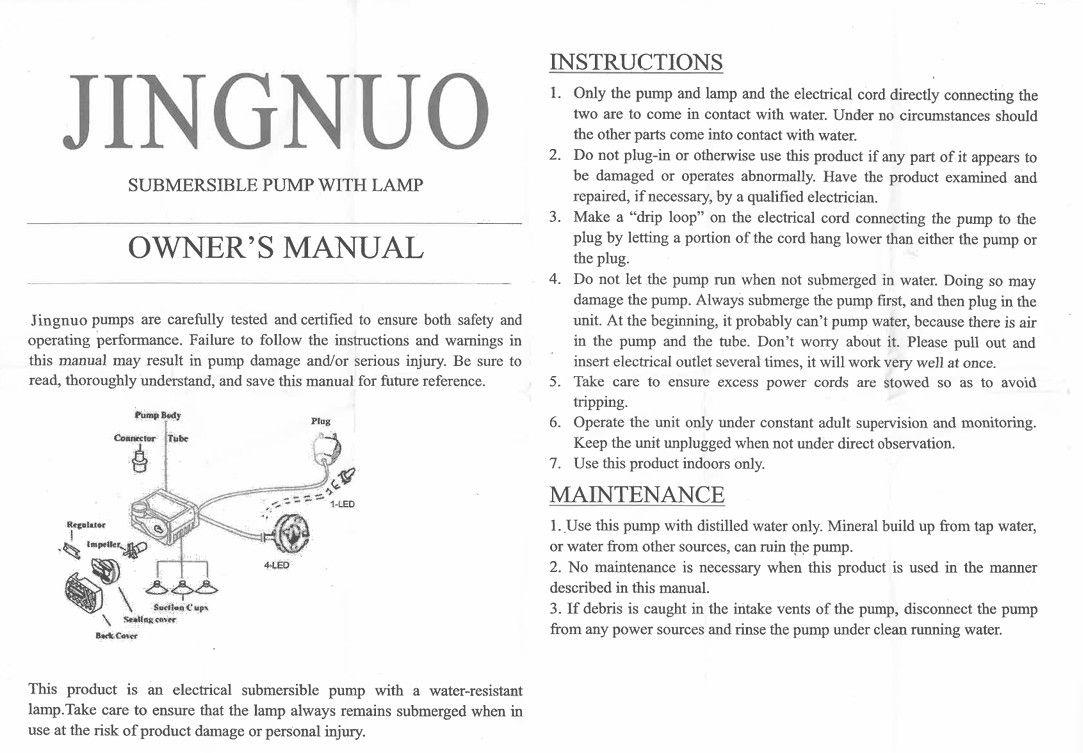
Every one of these has a small submersible pump sitting in the reservoir, and that pump is the part that fails. Almost always for one of two reasons: it was run dry when the water got low, or it silted up because nobody cleaned it.
Both are avoidable. Top the water up weekly and lift the pump out every couple of months to rinse the inlet under a tap. Use filtered or previously boiled water if you are in a hard-water area, because limescale on the ball is more visible than it sounds — a chalky film on a clear sphere is exactly what you do not want.
Tabletop or floor standing: what the size really means
Tabletop here means genuinely small. The dragon piece is 18 x 35 x 18cm, and the Silver Buddha Cascade is 35 x 25 x 20cm — objects that sit on a console or a desk rather than furniture in their own right.
The two grand versions at £120 are a different proposition. One sets the ball into rock, the other into a Greek urn standing in a woven basket, and both are designed to be seen from across a room rather than examined close up. If you want something that reads as a feature rather than an ornament, that is the jump, and it is a large one from £57.
Where to put one, and what to expect
All of these recirculate the same water, so they need topping up as it evaporates — more often in a heated room than you would expect, and running a pump dry is what kills these features. Check the level weekly.
On placement: tabletop versions want to be somewhere you pass regularly rather than somewhere you sit for hours, because moving water is pleasant in passing and can become insistent over an evening. Hallways, landings and desks suit them better than the spot beside the sofa.
Common questions
- What is the crystal ball in a water feature for?
- It makes the water visible. Water clings to a smooth sphere and spreads into a film that catches the light, which water running down a flat face does not. Without the ball you have a pump making a noise.
- Are crystal ball water features suitable indoors?
- Yes, and that is mostly what they are for. They recirculate a small amount of water quietly, unlike a garden fountain. Ours run from £34 for a tabletop piece to £120 for a floor-standing colour-changing one.
- What does the colour-changing version actually do?
- It lights the ball from inside with a colour that cycles, so the film of water over the sphere becomes the thing you see rather than something you have to look for. The effect is strong in a dim room, and these are deliberately not background pieces.
- Do water features need topping up?
- Yes. They recirculate the same water and it evaporates, faster in a heated room than most people expect. Check the level weekly — running the pump dry is the usual way these fail.
- What is the difference between a cascade and a water wheel feature?
- A cascade runs water down several levels before the ball, which gives more sound. A water wheel turns under the flow and gives something to watch. A cascade suits a room you want sound in; a wheel suits a desk or hall table someone passes close to.
The pieces in this guide
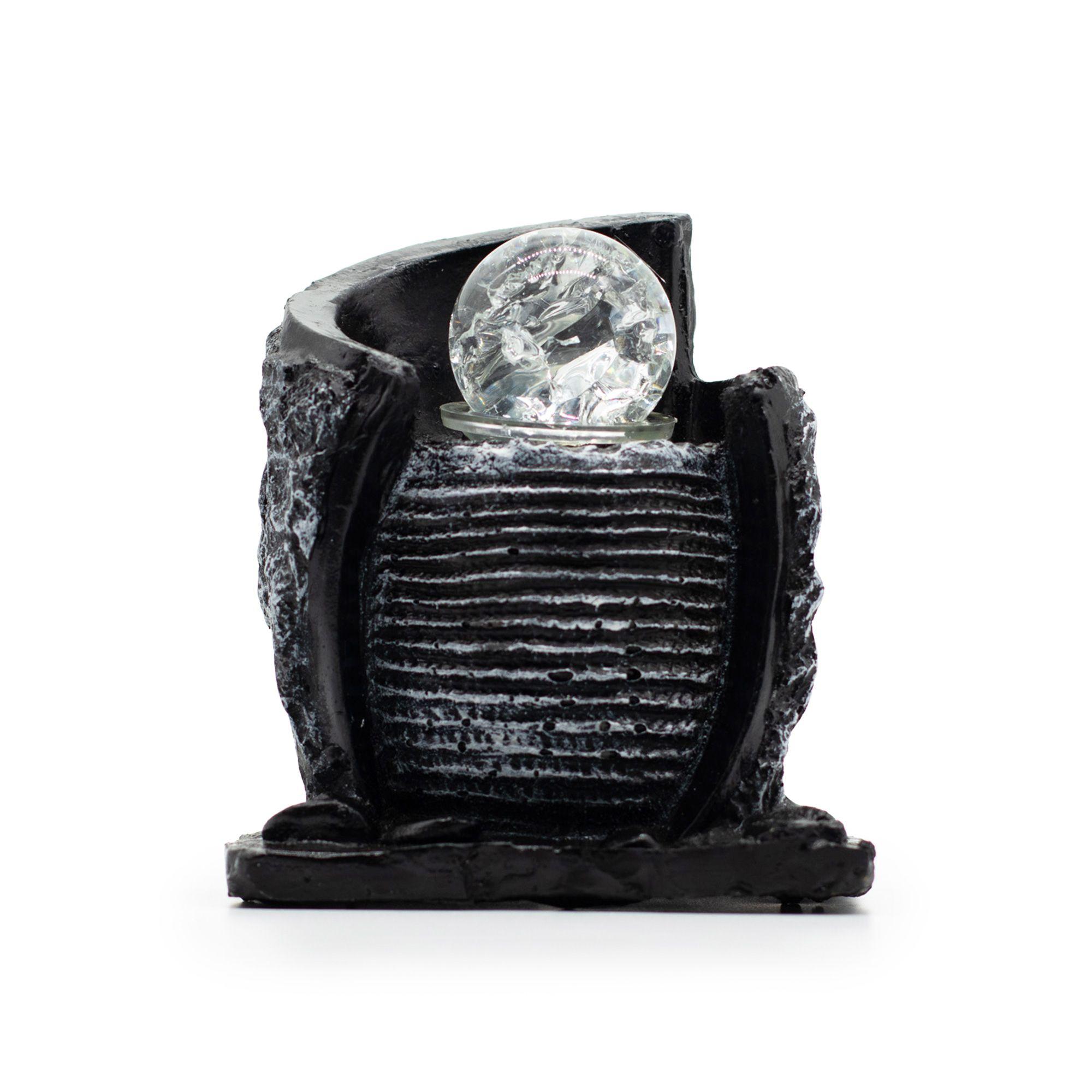
Tabletop Water Feature - Water Pot & Crystal Ball
£34
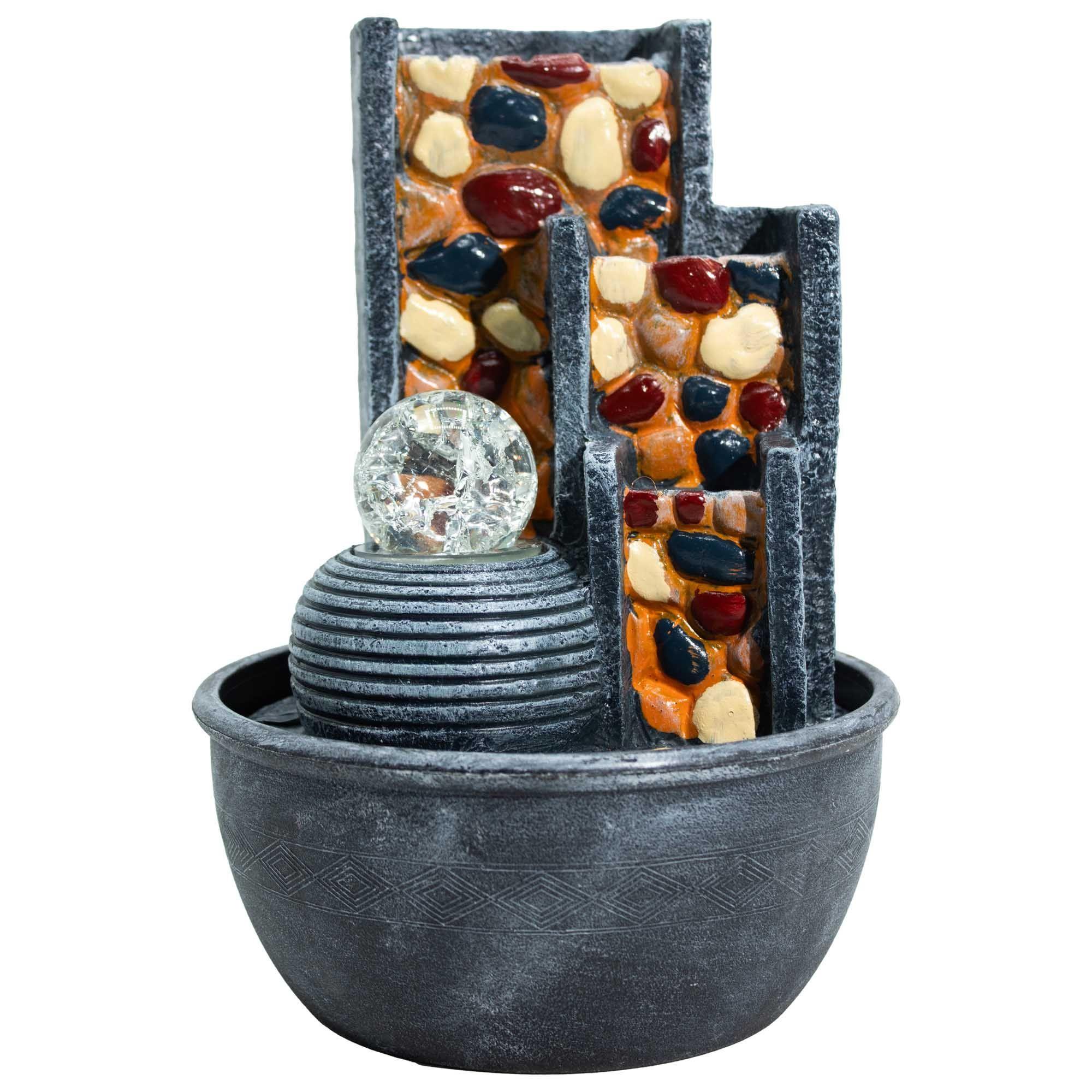
Pebble Wall Tabletop Water Feature with Crystal Ball
£35
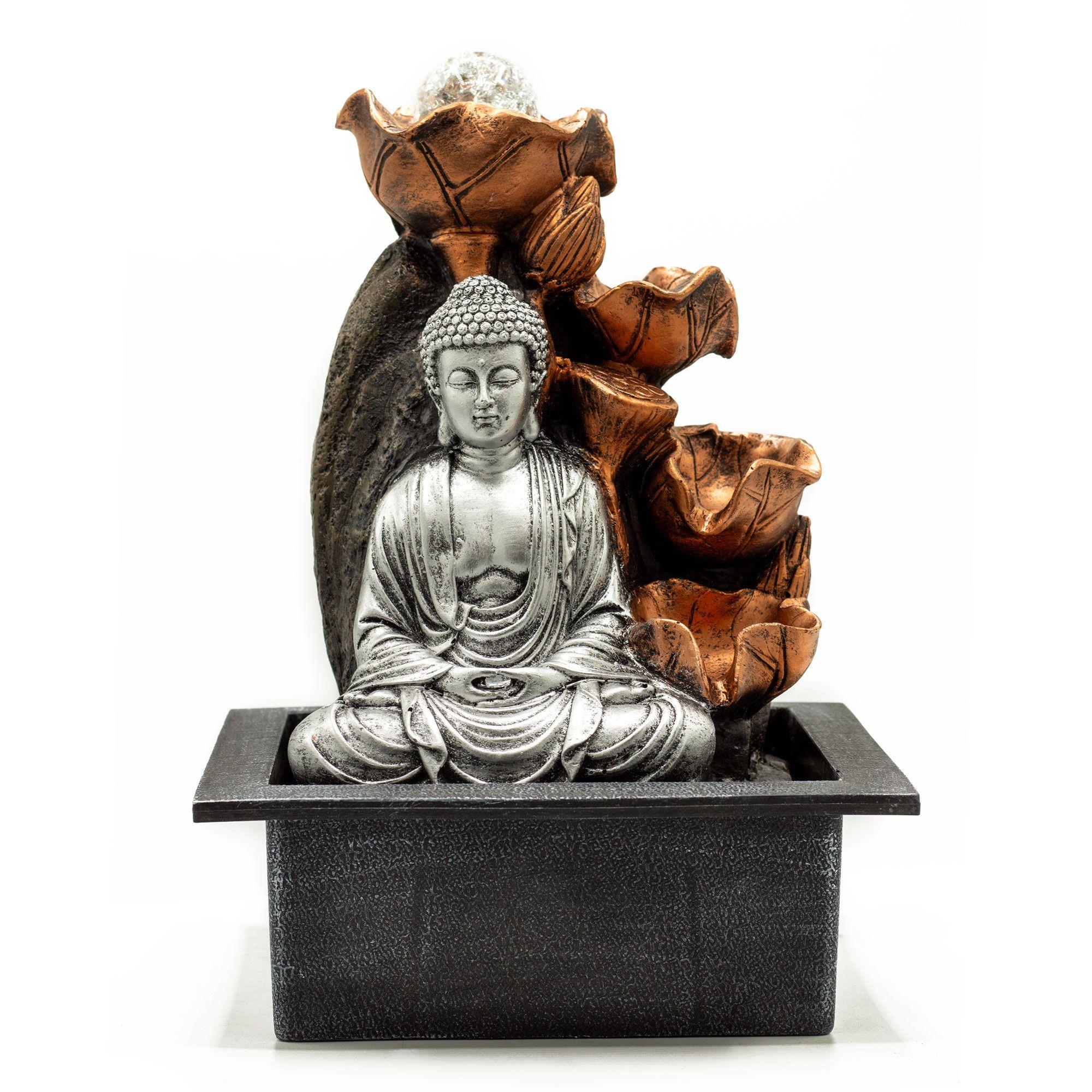
Tabletop Water Feature - Silver Buddha Cascade & Crystal Ball
£52
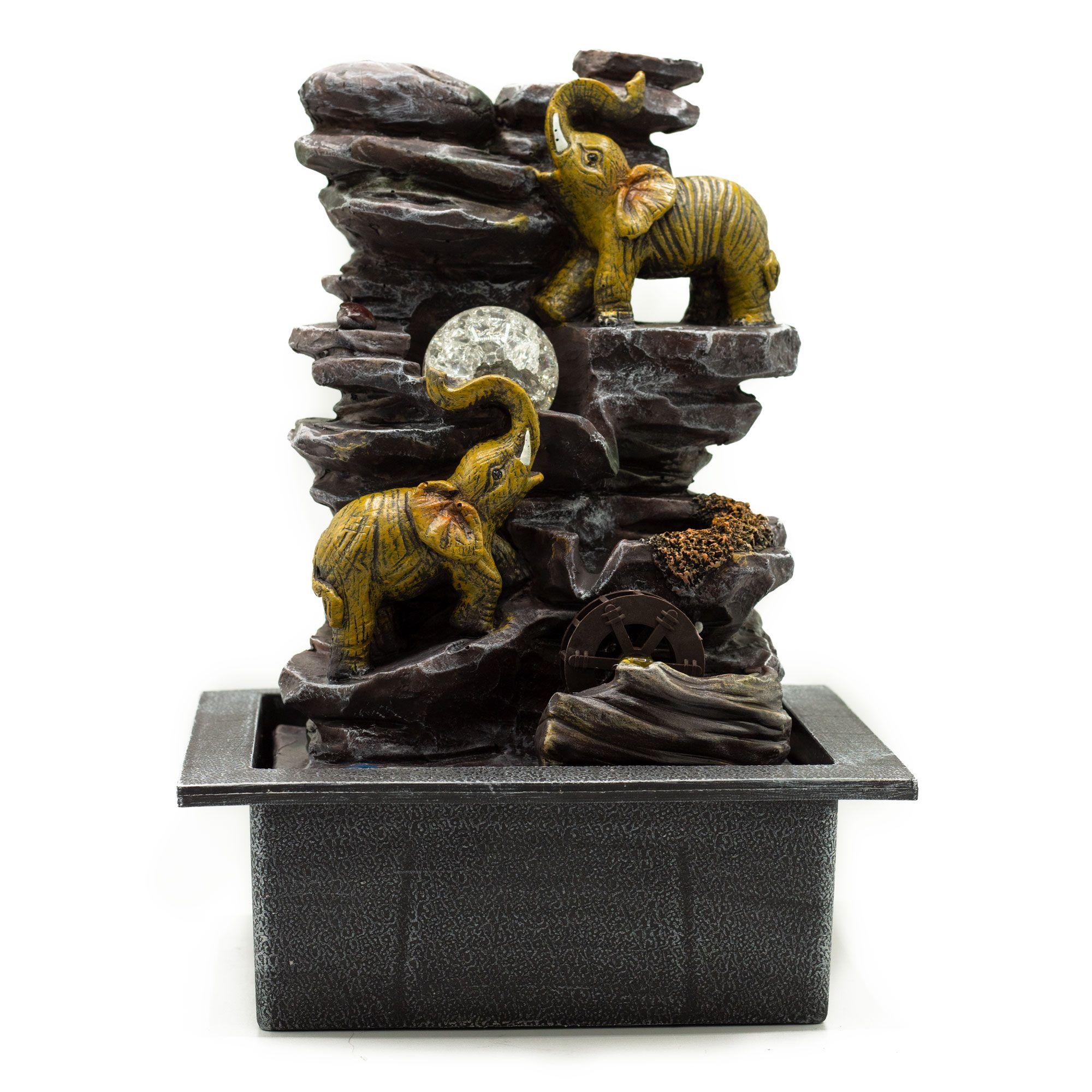
Tabletop Water Feature - Elephants, Crystal Ball & Water Wheel
£54
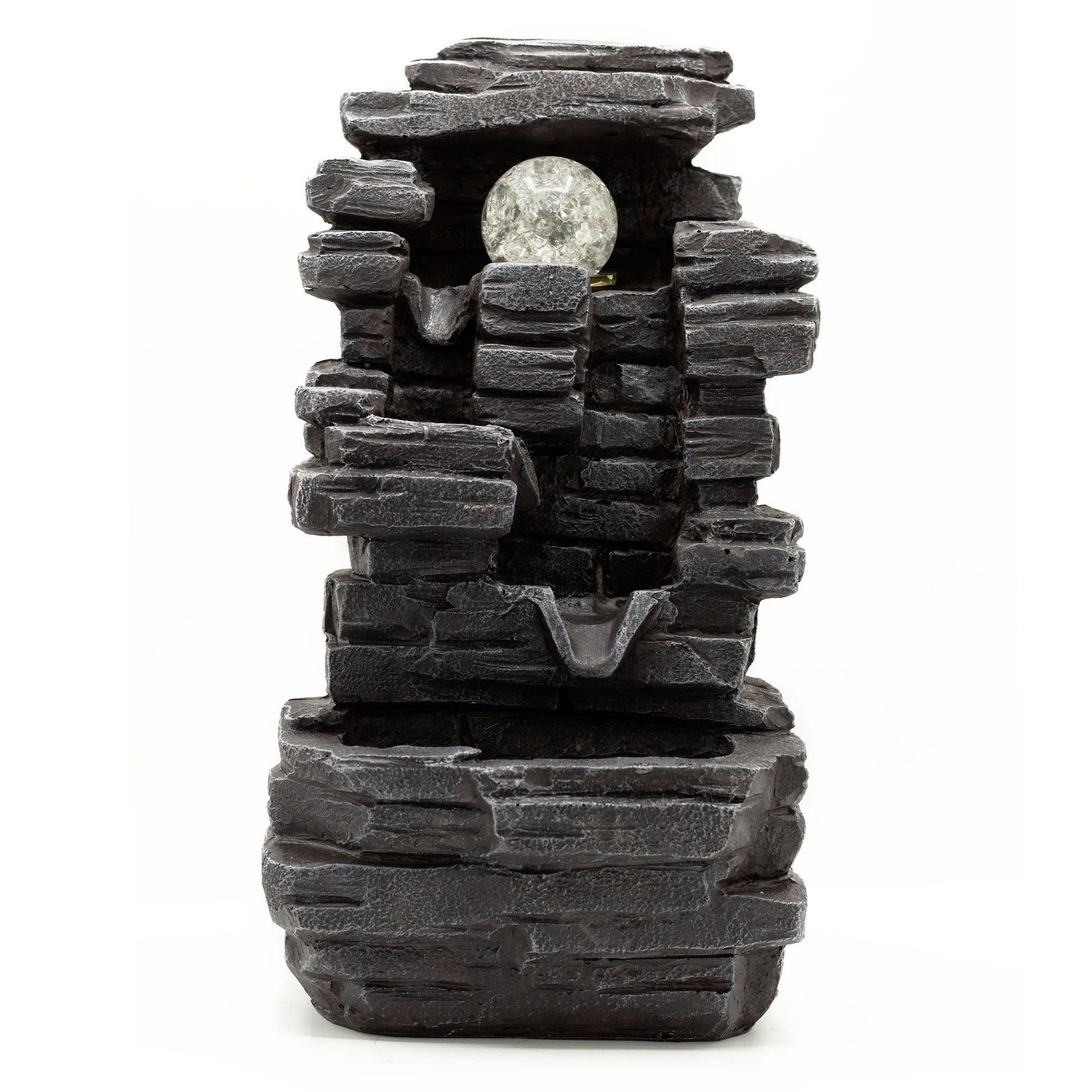
Tabletop Water Feature - Slab Rocks Formation & Crystal Ball
£54
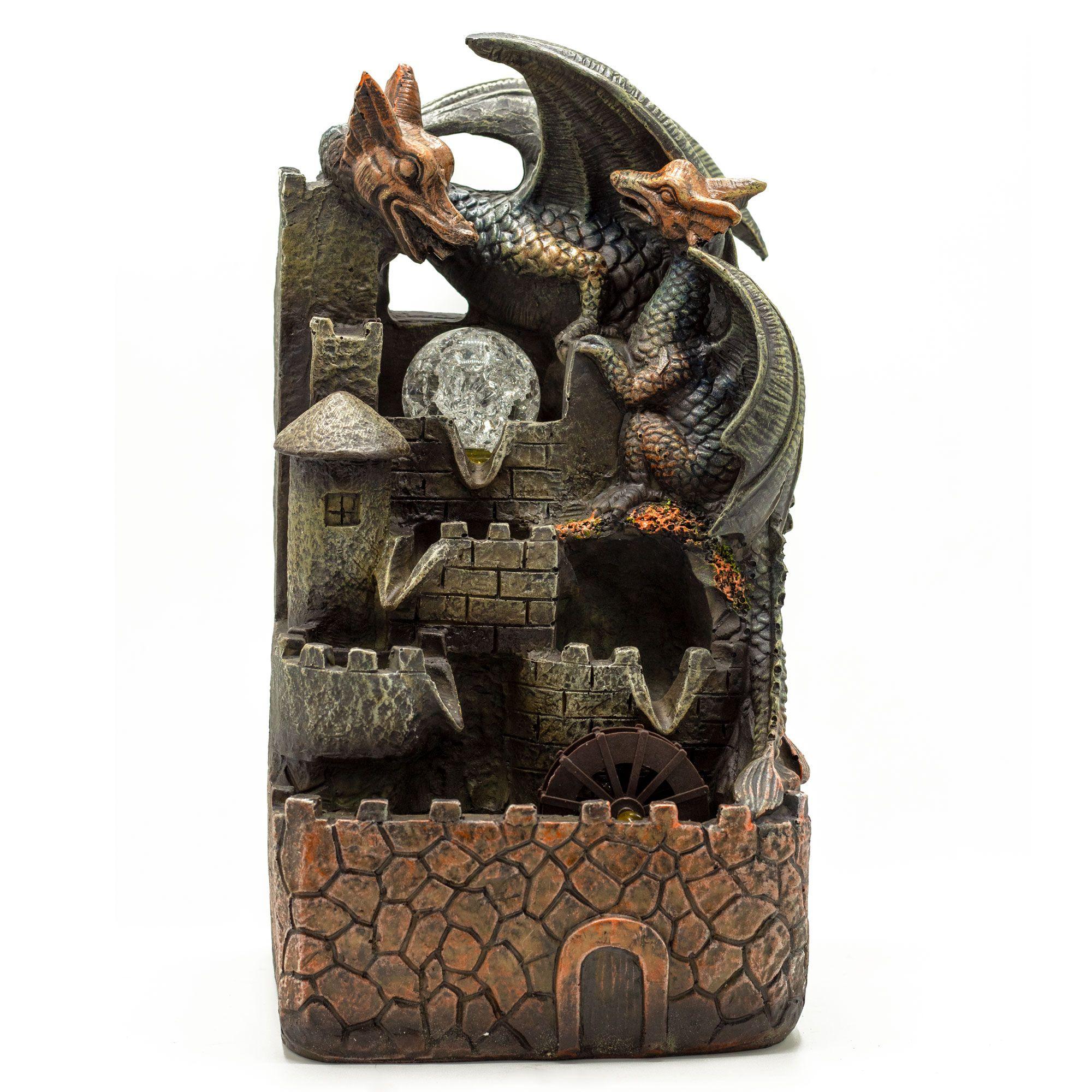
Tabletop Water Feature - Dragons, Crystal Ball & Water Wheel
£55
Tabletop Water Feature - Purple Dragon, Crystal Ball & Water Wheel
£57
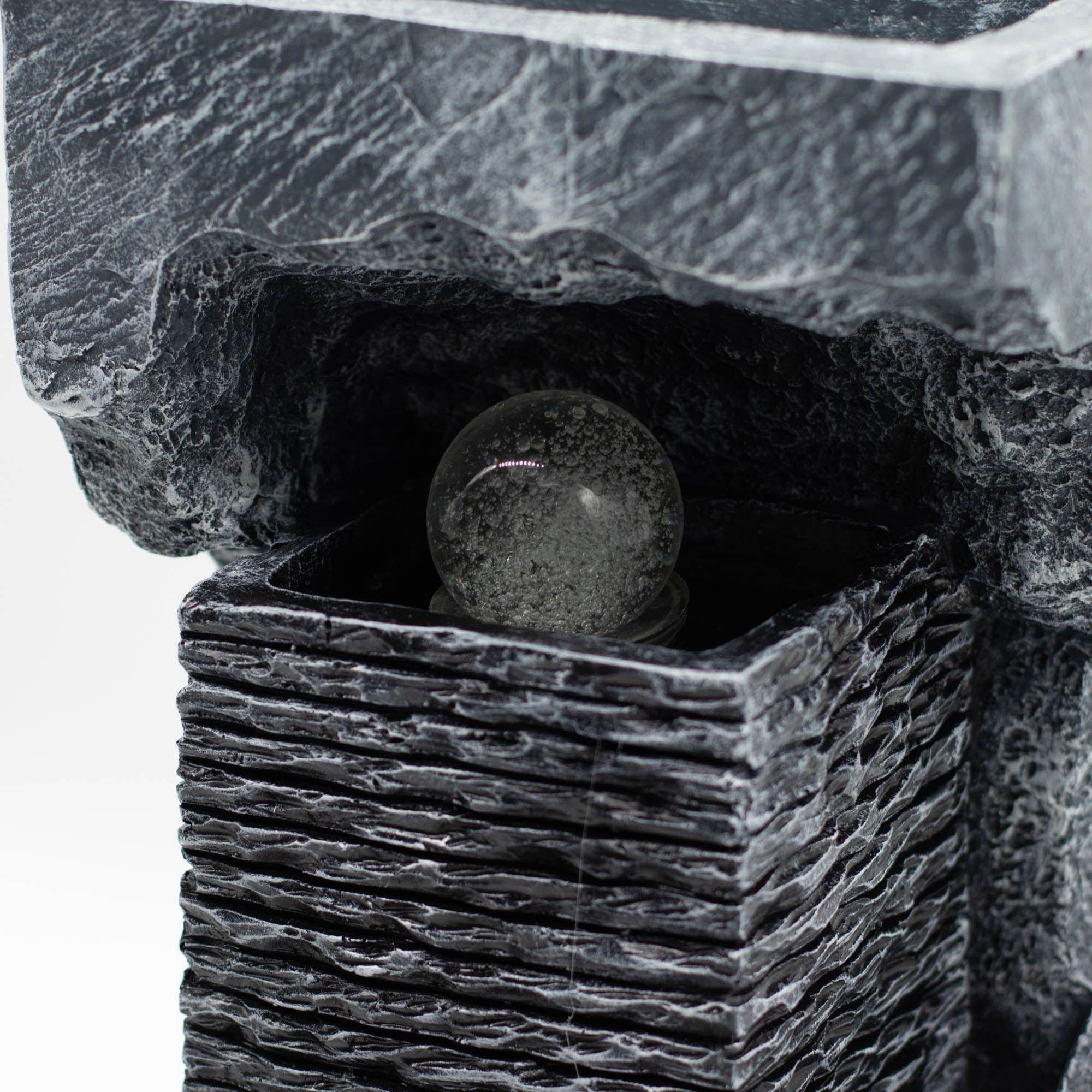
Grand Water Feature - Colour Changing Crystal Ball in Rock
£120
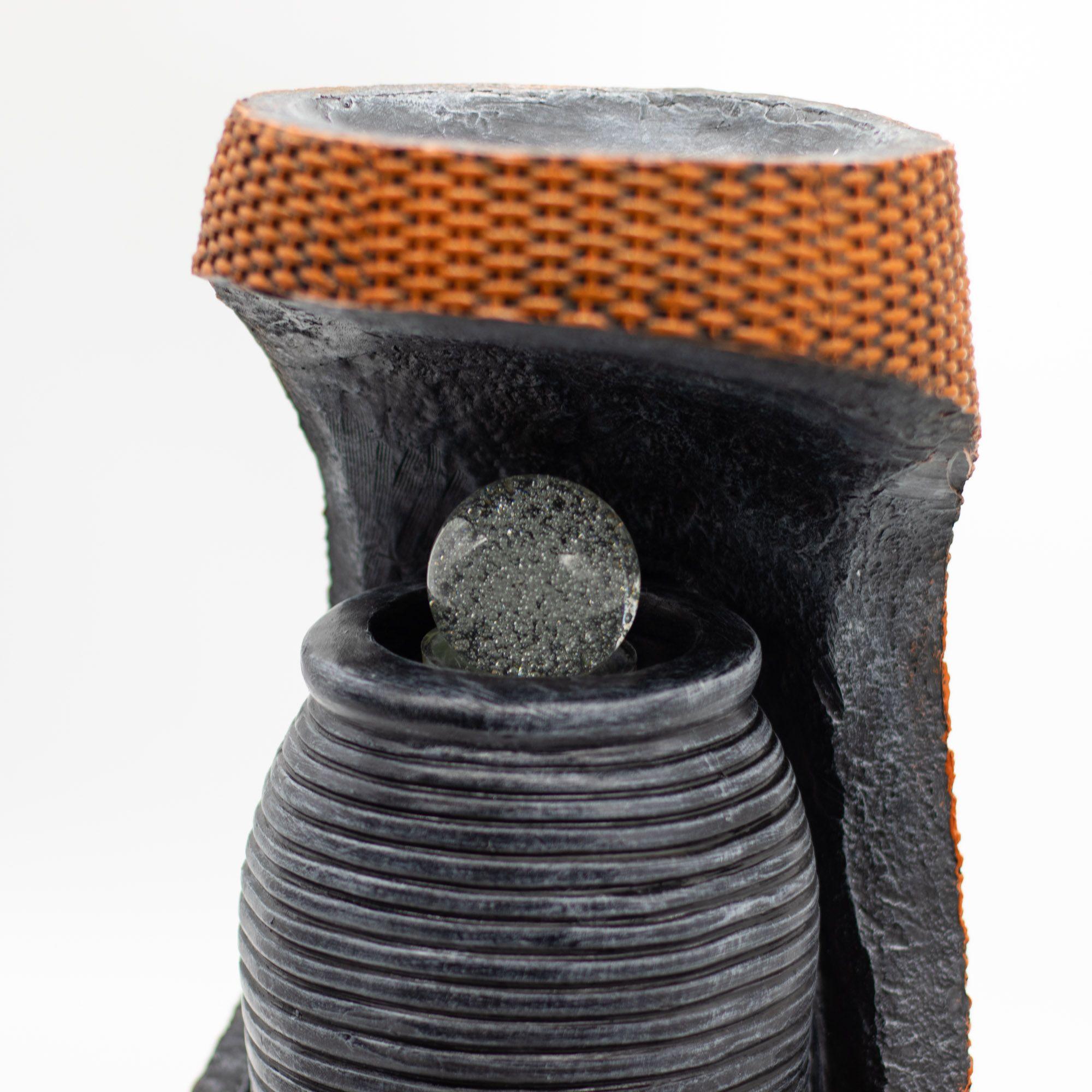
Grand Water Feature - Colour Changing Crystal Ball in Greek Urn in Basket
£120