A rectangular dining table needs about 60cm of length per seat, plus roughly 90cm of clear floor on every side so a chair can pull out and someone can walk past a seated guest without climbing over them.
A round table works differently: seating scales with the diameter rather than a straight per-person number, because everyone shares the same edge and there are no corners to lose. What follows is the seat count by length and diameter, the round-versus-rectangular question properly answered, and eight of our own tables measured against real dining chairs rather than a rule of thumb.
| Seats | Rectangular length | Round diameter |
|---|---|---|
| 2 | 90–110cm | 70–80cm |
| 4 | 120–150cm | 100–120cm |
| 6 | 150–200cm | 130–150cm |
| 8 | 220–240cm | 180cm+ — rare; most 8-seaters are rectangular |
Work it out here
Your room, your table, your seat count
The space
A table you are considering (optional)
Enter the space you have, a table you are considering, or both.
Rule one. Sixty centimetres of edge, not width
Each seat wants about 60cm of table edge to itself — enough for a place setting without touching elbows with the next chair. Fifty-five centimetres is workable for a family who don't mind sitting close; below 50cm it stops being dinner and starts being a queue.
Width doesn't add seats on its own. A table that's 100cm wide instead of 90cm doesn't seat more people — it just puts more space between the two facing rows. Extra width earns its keep for serving dishes down the middle, not for headcount.
Rule two. Rectangular tables lose their corners
A published seat count often assumes the full length is usable, and it isn't. The last 20cm at each end of a long side collides with whoever sits at the head of the table, so a 180cm table has roughly 140cm of usable edge per side, not 180cm — two settings a side at 60cm, plus the two ends.
That's the gap between a table ‘sold as seating eight’ and one that comfortably does. Measure the usable length, not the advertised one, before counting on a seat you might not get.
Rule three. Round tables scale by circumference, not addition
A round table shares its edge among everyone at once, so a jump from 100cm to 120cm can be the difference between four people sitting elbow to elbow and four people with room to spare — it doesn't add a fifth seat the way the same 20cm might on a rectangular table.
Round tables also rarely go much past 150–160cm in practice. Past that point the middle of the table is too far to reach comfortably, which is why an 8-seat table is almost always rectangular or oval rather than round.
Rule four. Leave 90cm on every side that isn't a wall
A seated diner needs about 90cm of clearance behind their chair so someone can walk past without brushing them — measured from the table edge, not the chair back. Where nobody needs to pass behind a seated guest, such as one long side pushed against a wall, 75cm is workable.
That 90cm figure is what actually decides whether a table fits a room, more often than the table's own length. A generously sized table with only 60cm to the nearest wall will feel cramped in use even though the tape measure says it fits.
Round or rectangular, for a small room
Round wins in most small or square rooms. It needs less clearance because there are no corners to walk around, everyone can reach the middle without stretching, and it seats the same number in a smaller footprint than the equivalent rectangular table.
Rectangular wins the moment one long side can sit against a wall — the shape that was a disadvantage in the middle of a room becomes an advantage against a wall, because that side then needs no pull-out clearance at all.
Eight of our tables, measured against the rules
The same arithmetic, run over our own stock. Seat count follows the rules above — length or diameter, minus the corner allowance on rectangular tables — checked where we could against the chair sets sold alongside them.
| Table | Size | Seats |
|---|---|---|
| Azalea Round White Marble Top | 80cm round | 2–4 |
| Imperia Ceramic Marble Effect Round | 100cm round | 4 |
| Vermont White Wash Round (sold with 4 chairs) | 120cm round | 4 |
| Parkside Dark Oak Round | 152cm round | 6 |
| Imperia Ceramic Marble Effect Rectangular | 150 x 90cm | 6 |
| Weston Marble Effect (sold with 6 chairs) | 160 x 88cm | 6 |
| Lyon Whitewash | 220 x 100cm | 8 |
| Saronno Grey Marble | 240 x 100cm | 8–10 |
Read it the other way round if it helps: measure your room against the clearance rule above, find the table length or diameter that fits, and this table tells you what it will actually seat — not what a generic listing promises.
The short version
Sixty centimetres of edge per seat, minus the corners on a rectangular table. Round tables scale by diameter, not a straight per-person count, and rarely go past 150–160cm. Leave 90cm of clearance on any side someone needs to walk past a seated guest — 75cm where one side sits against a wall. Round suits a small or square room; rectangular wins against a wall.
Common questions
- How many people does a 150cm dining table seat?
- Six, if it's rectangular — 60cm a side for two settings, plus one at each end, once the last 20cm of each long side is discounted for the corner. A 150cm round table seats the same six with less floor space, because there are no corners to lose.
- What size table do I need for 6 people?
- A rectangular table of 150–200cm, or a round table of 130–150cm diameter. The round version fits a smaller room for the same headcount; the rectangular version can go longer if one side sits against a wall.
- Is a round or rectangular table better for a small dining room?
- Round, in most cases — no corners to walk around, everyone reaches the middle, and it seats the same number in less floor space. Rectangular wins the moment one long side can sit flush against a wall, since that side then needs no pull-out clearance at all.
- How much space do you need around a dining table?
- About 90cm from the table edge to the nearest wall or piece of furniture, so a chair can pull out and someone can walk behind a seated guest. Where nobody needs to pass behind — one side against a wall, say — 75cm is workable.
- Do dining chairs need extra clearance beyond the table's own footprint?
- Yes — the 90cm clearance figure is measured from the table edge, not the chair back, precisely because a chair pulled out and someone standing behind it both eat into that space. A table that fits a room on paper can still feel tight if the clearance was only measured to the chair.
The pieces in this guide
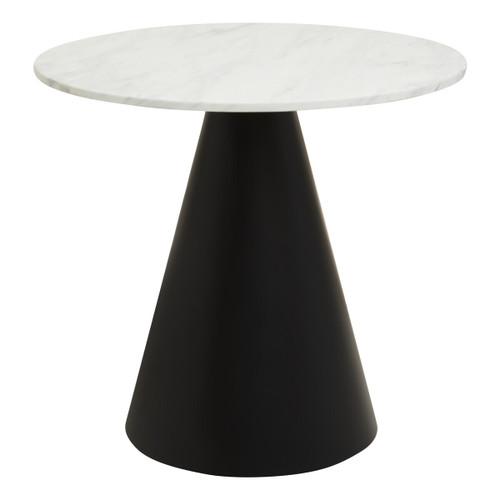
Azalea Round White Marble Top Dining Table
£487
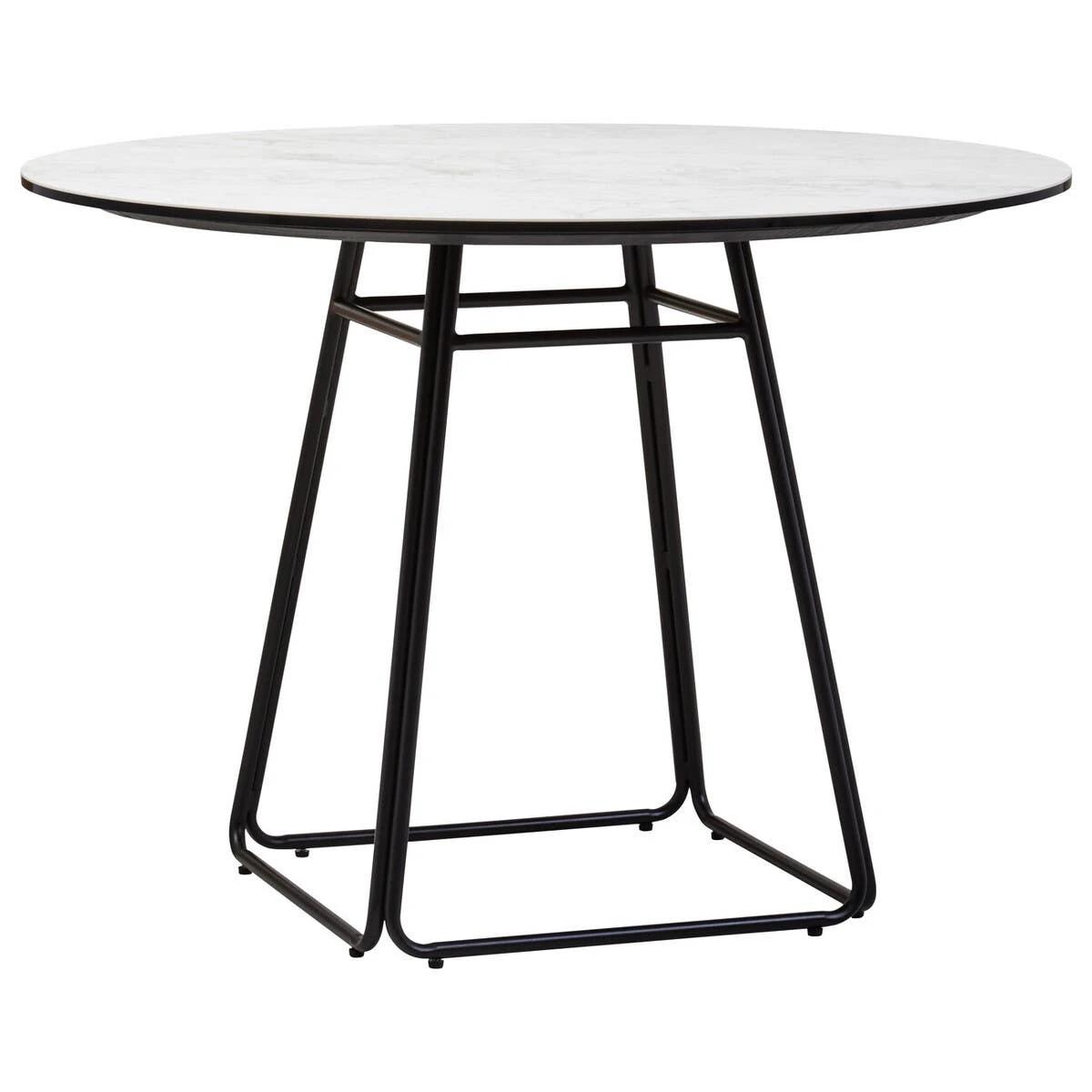
Imperia Ceramic Marble Effect Round Dining Table
£589
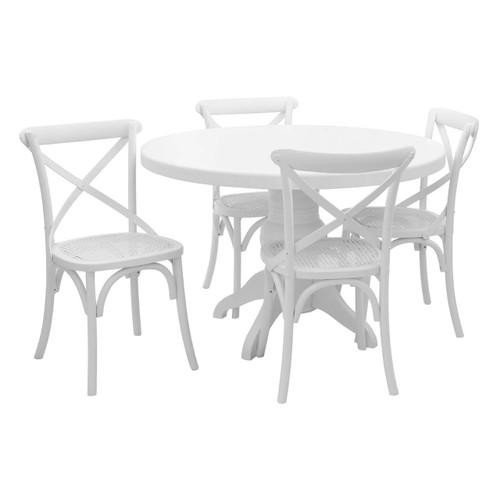
Vermont White Wash Round Dining Table with 4 Chairs Set
£751
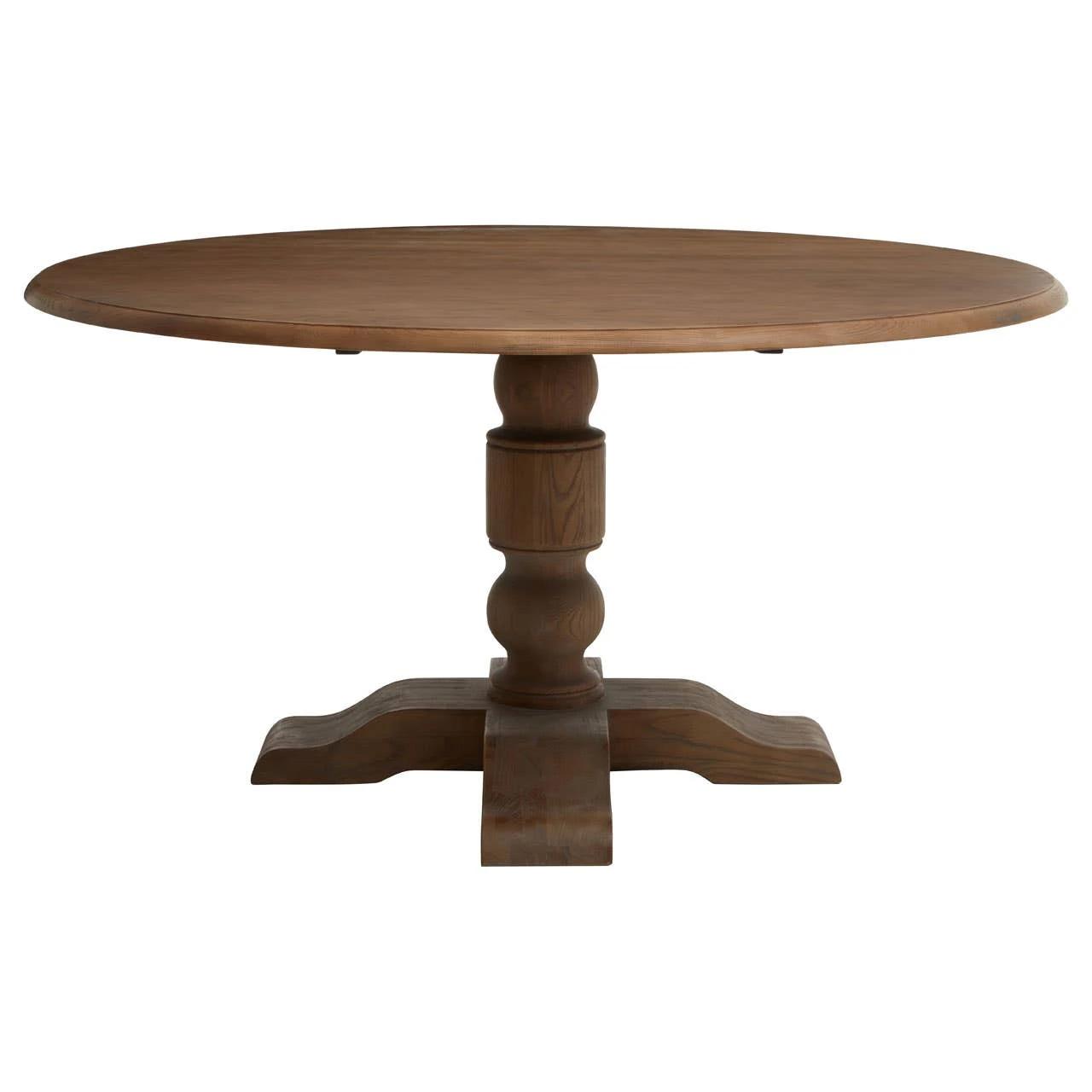
Parkside Dark Oak Wood Round Dining Table
£1,030
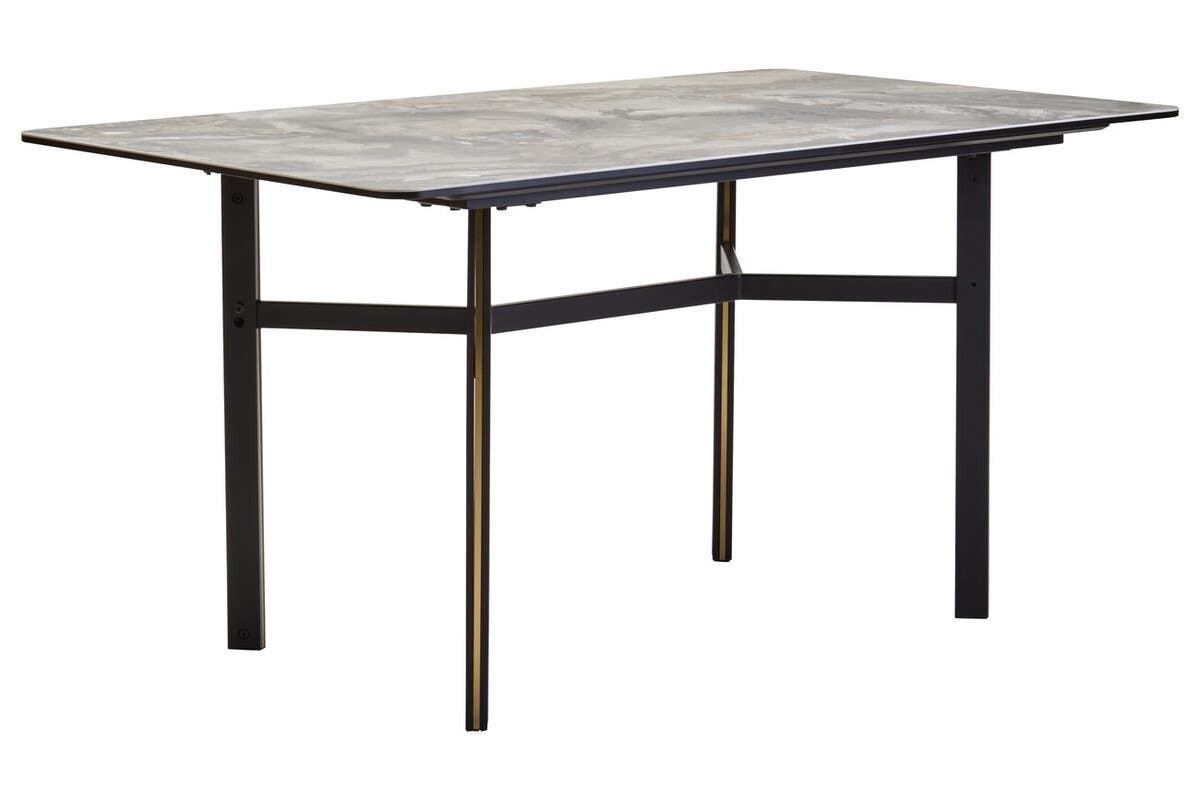
Imperia Ceramic Marble Effect Rectangular Dining Table
£791
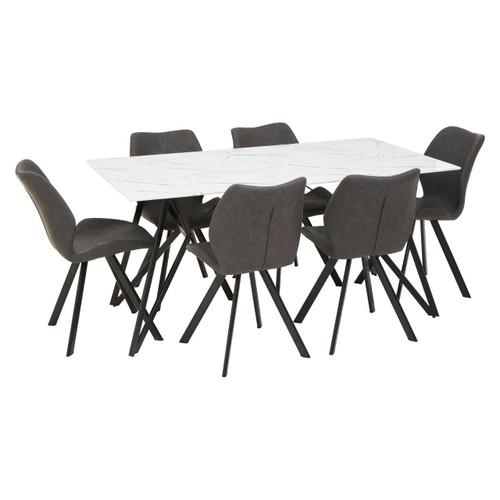
Weston Marble Effect Dining Table with 6 Chairs Set
£885
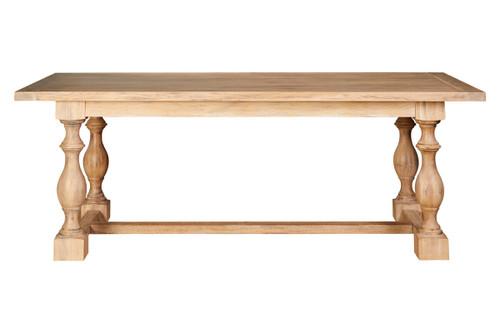
Lyon Whitewash Dining Table
£1,424
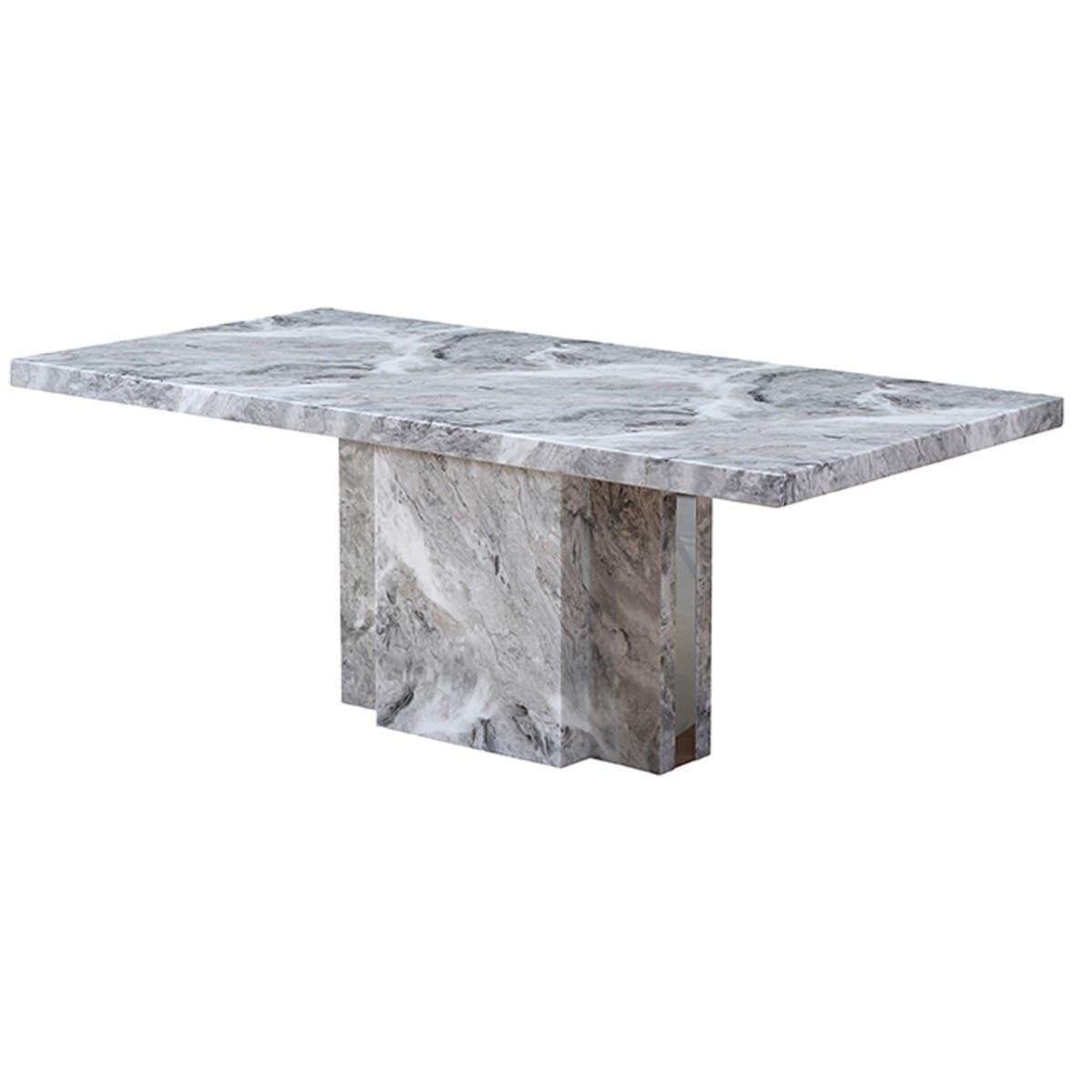
Saronno Grey Marble Dining Table
£2,745