Every gas fire pit table is sold on one number, and almost nobody explains what it means. BTU — British Thermal Units per hour — is the rate at which the burner turns gas into heat. A higher figure means a bigger flame and a wider circle of warmth. It does not mean a better table, and past a point it mainly means a faster empty gas bottle.
In a British garden the useful range sits between 40,000 and 50,000 BTU. Below that you have an ornament; above it you are heating the sky. The tables here run from 40,000 at £149 to 50,000 at £249, and the honest answer to which you need is that it depends less on the number than on where the table stands and whether it has a screen.
40,000 BTU: enough for a sheltered patio
Forty thousand is the sensible choice for a patio with walls or fencing close by, or for a table that mostly gets used on mild evenings in spring and autumn. The flame is generous, it takes the edge off, and a standard propane bottle lasts noticeably longer than it would on a bigger burner.
Our 40,000 BTU table at £149 is 71 x 71 x 62cm, which is a four-seat footprint rather than a dining table. The dark grey version at £189 carries UKCA and CE certification under the gas appliance regulations, which is worth checking on any gas product before you buy — it is not a given at this price.
50,000 BTU: for open gardens and colder months
Ten thousand extra BTU sounds marginal and is not. In an open garden with nothing to hold the heat, wind carries a 40,000 flame away faster than you would expect, and the difference between the two is the difference between sitting out in October and going back inside.
The 50,000 tables here start at £179 for a 71cm square and £187 for the larger 81cm. The 81cm is the one to look at if the table is doing double duty, because 71cm seats four around the flame but leaves nowhere to put a glass down once everyone has one.
What a glass screen actually changes
A glass wind screen sits around the flame and does two things. It stops the flame guttering in a breeze, which is the main reason a fire pit feels weak on the evening you most want it. And it keeps the flame away from sleeves and hands, which matters more if children are anywhere near it.
It costs about £50 over the same table without one. The screened 50,000 BTU tables are £229 and £249 against £179 and £189 unscreened. If your garden is open, or the table sits anywhere near a path people walk down, the screen is the upgrade to spend on before the extra BTU.
Size: fire pit or dining table?
The 71cm tables are fire pits with a rim. The 81cm ones are dining tables with a fire in the middle. Our 50,000 BTU table with glass screen at £249 seats four to six people around it as a dining table, which is a different piece of furniture from the 71cm model at £179 even though the burner is identical.
Weight is worth a glance too. The 71cm screened table is 24kg and rated to hold 30kg on its surface, which is plates and glasses rather than anything heavy. None of these is a table to stand on or lean against.
Propane or butane, and why it matters in winter
Most gas fire pit tables in the UK, ours included, run on propane rather than butane, and the reason is temperature. Butane stops vaporising properly at around freezing, so a butane bottle on a cold January evening gives a weak flame or none at all — exactly when you want the thing working. Propane keeps going well below zero.
You will see propane bottles described as patio gas, usually in a red or green bottle with a clip-on regulator rather than a screw fitting. If you already have a bottle for a barbecue, check which it is before assuming it will work. The regulator type has to match as well as the gas.
How long a bottle actually lasts
This is the question nobody answers on a product page, and the arithmetic is simple enough to do yourself. A 13kg propane bottle holds roughly 250,000 BTU of usable energy. At 50,000 BTU an hour, run flat out, that is about five hours. At 40,000 it is nearer six.
In practice nobody runs one flat out. Turned down to a comfortable flame you will get two or three evenings out of a bottle rather than one, and the gap between a 40,000 and a 50,000 burner narrows considerably. If you are choosing between them on running cost alone, it is not the deciding factor it looks like.
Lava rocks, fire glass, and what comes in the box
The burner needs something over it to spread the flame and hide the metal, and that is either lava rock or tempered fire glass. Lava rock is the traditional option, cheap and matte. Fire glass is the reflective one, and it throws light around in a way lava rock does not — particularly after dark, which is when these tables are used.
Check what is included before you buy, because it is often not. Replacing it is not expensive but it is annoying to discover on the evening you wanted to light it. And whichever you have, it needs to stay dry: water trapped underneath can spit when the burner heats it.
Where it can stand
On something non-combustible, with clear sky above it, and away from anything that will catch. Decking is the usual mistake — a gas table on timber decking wants a heat-resistant mat under it, and most people find that out afterwards.
Clearance matters more than people expect. Keep a metre clear above the flame and a metre around it from fencing, furniture cushions and overhanging planting. The 81cm tables need more room around them than the 71cm ones, not because of the flame but because people need space to get past a table that size with chairs round it.
What to check before you buy any of them
Three things, in order. First, certification — look for UKCA or CE under the gas appliance rules, because a gas burner sold without it is not worth the saving. Second, whether a cover is included; ours at £189 comes with one and a cover bought separately is rarely under £25. Third, the gas bottle, which is never included with any of them and will add around £30 for the bottle plus refills.
And one that is not on any spec sheet: a gas fire pit table must never be used indoors, in a conservatory, or under a closed gazebo. It produces carbon monoxide. Outdoors with open sky above it, or not at all.
Common questions
- Is 40,000 BTU enough for a fire pit table?
- For a sheltered patio with walls or fencing nearby, yes. Forty thousand gives a generous flame and uses less gas. In an open garden with wind, 50,000 is noticeably better, and it is the difference between sitting out in October and not.
- What does BTU mean on a fire pit?
- British Thermal Units per hour — the rate the burner converts gas into heat. Higher means a bigger flame and a wider warm circle. It does not mean a better-made table, and above 50,000 it mainly means refilling the bottle more often.
- Is a glass screen on a fire pit table worth it?
- Usually yes, and before extra BTU. It stops the flame guttering in a breeze, which is the commonest reason a fire pit disappoints, and it keeps the flame away from hands and sleeves. It adds about £50.
- Can you use a gas fire pit table under a gazebo?
- No. Gas burners produce carbon monoxide and need open sky above them. Not indoors, not in a conservatory, and not under a closed canopy or gazebo.
- Does a gas fire pit table come with a gas bottle?
- No, and none of ours do. Budget around £30 for the bottle itself plus the cost of refills. A 40,000 BTU burner will go through it more slowly than a 50,000.
The pieces in this guide
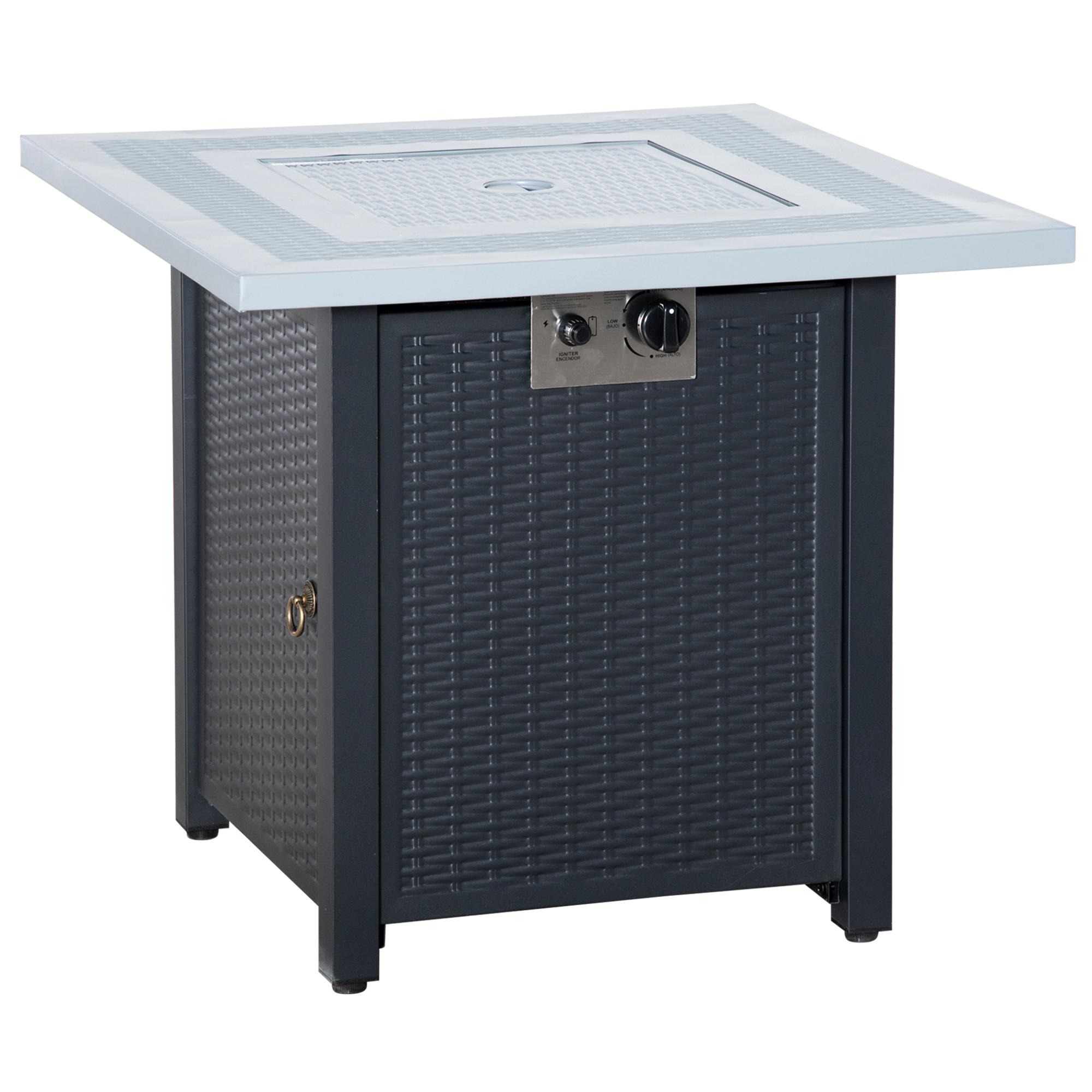
40,000 BTU Gas Fire Pit Table 71cm, Grey
£149
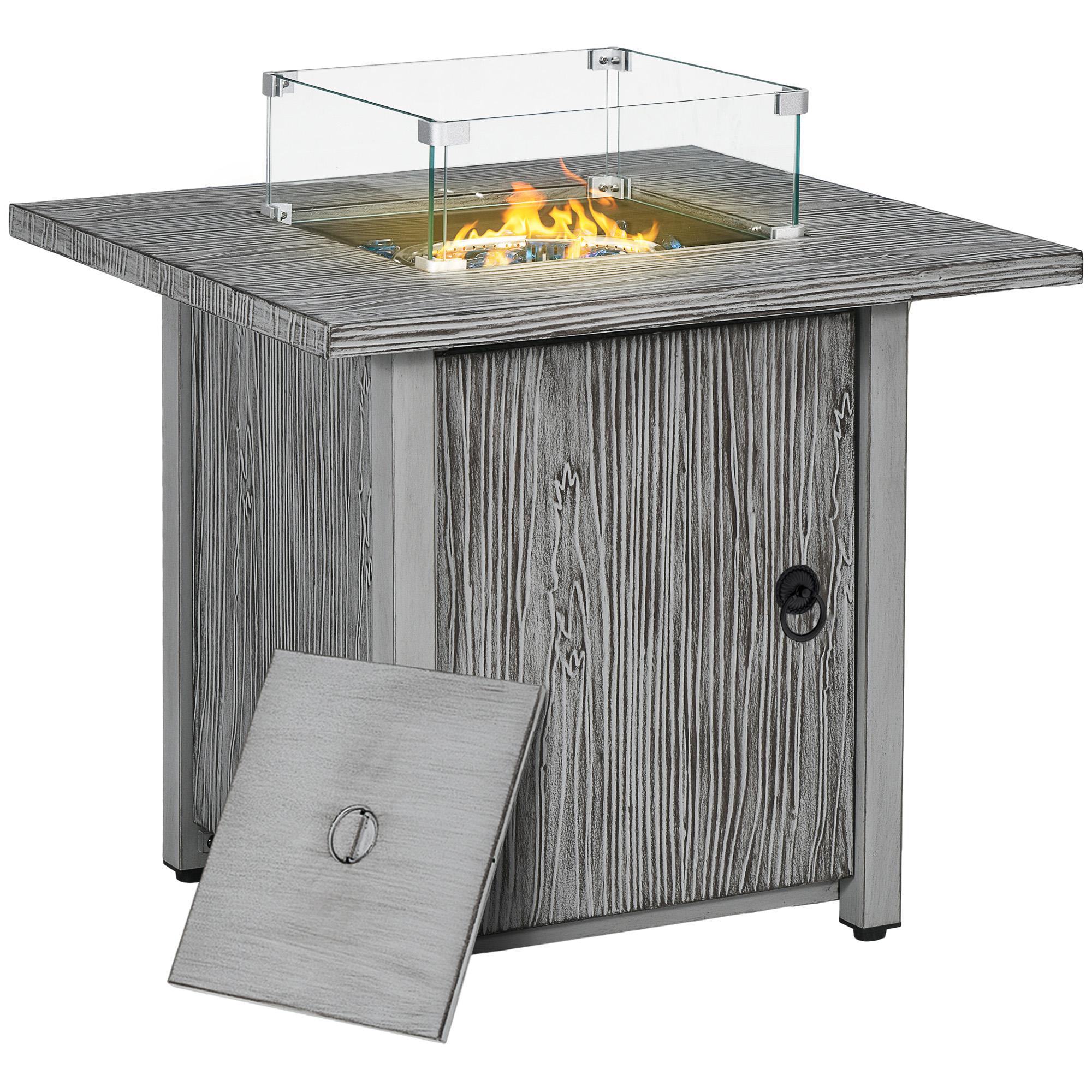
50,000 BTU Gas Fire Pit Table 71cm with Glass Screen, Grey
£179
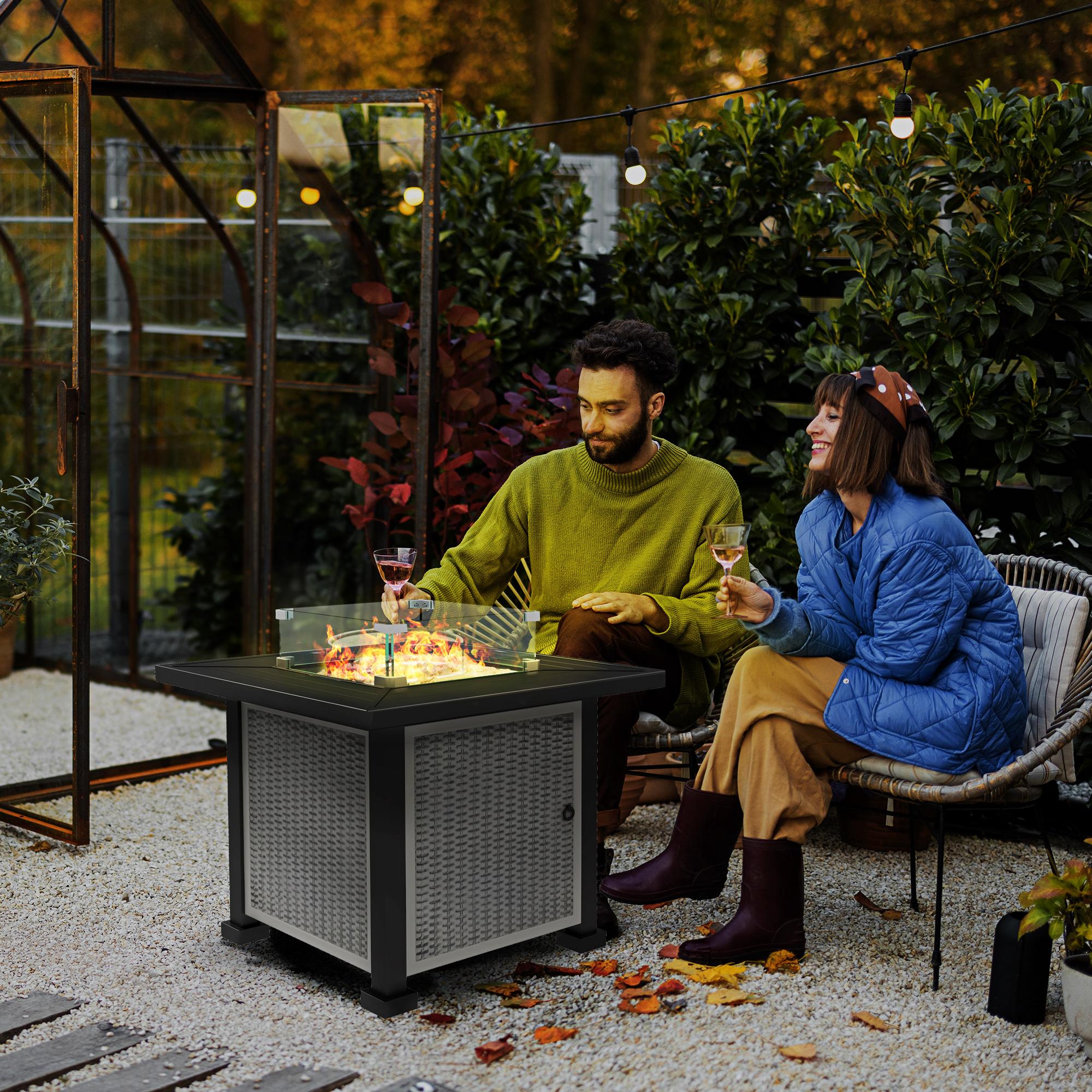
50,000 BTU Gas Fire Pit Table 81cm, Black
£187
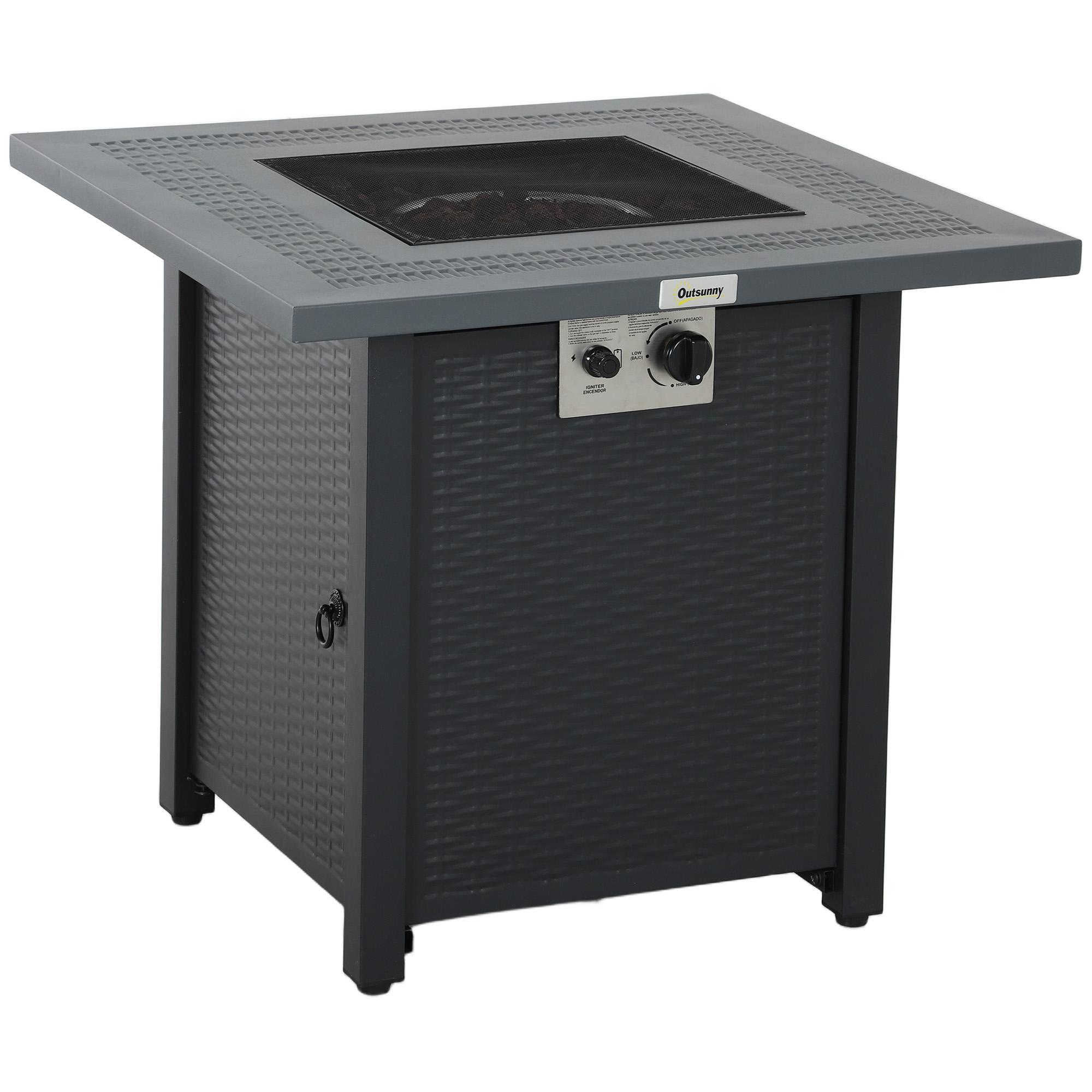
40,000 BTU Gas Fire Pit Table, Dark Grey
£189
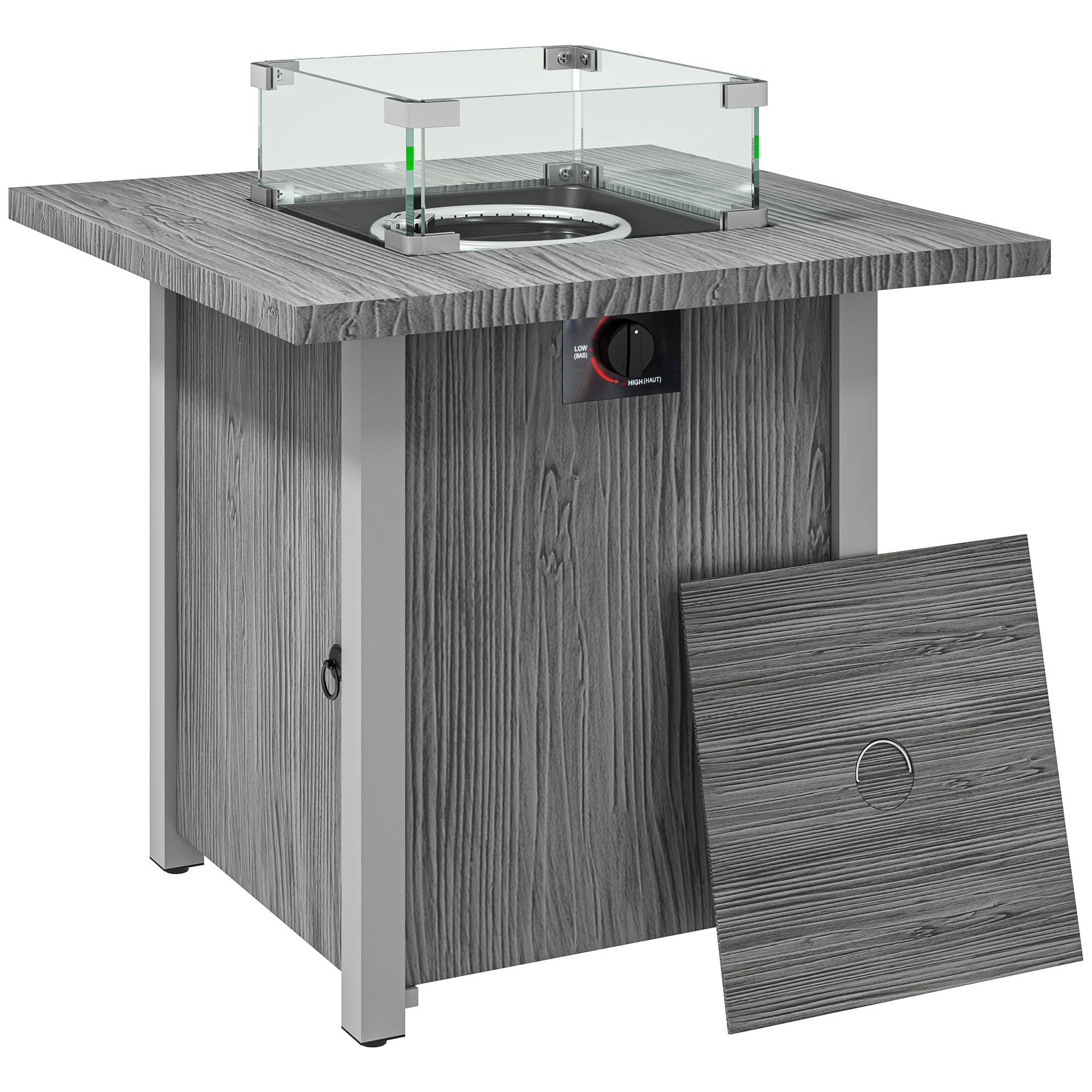
50,000 BTU Gas Fire Pit Table with Cover, Dark Grey
£189
50,000 BTU Gas Fire Pit Table 81cm, Grey
£198
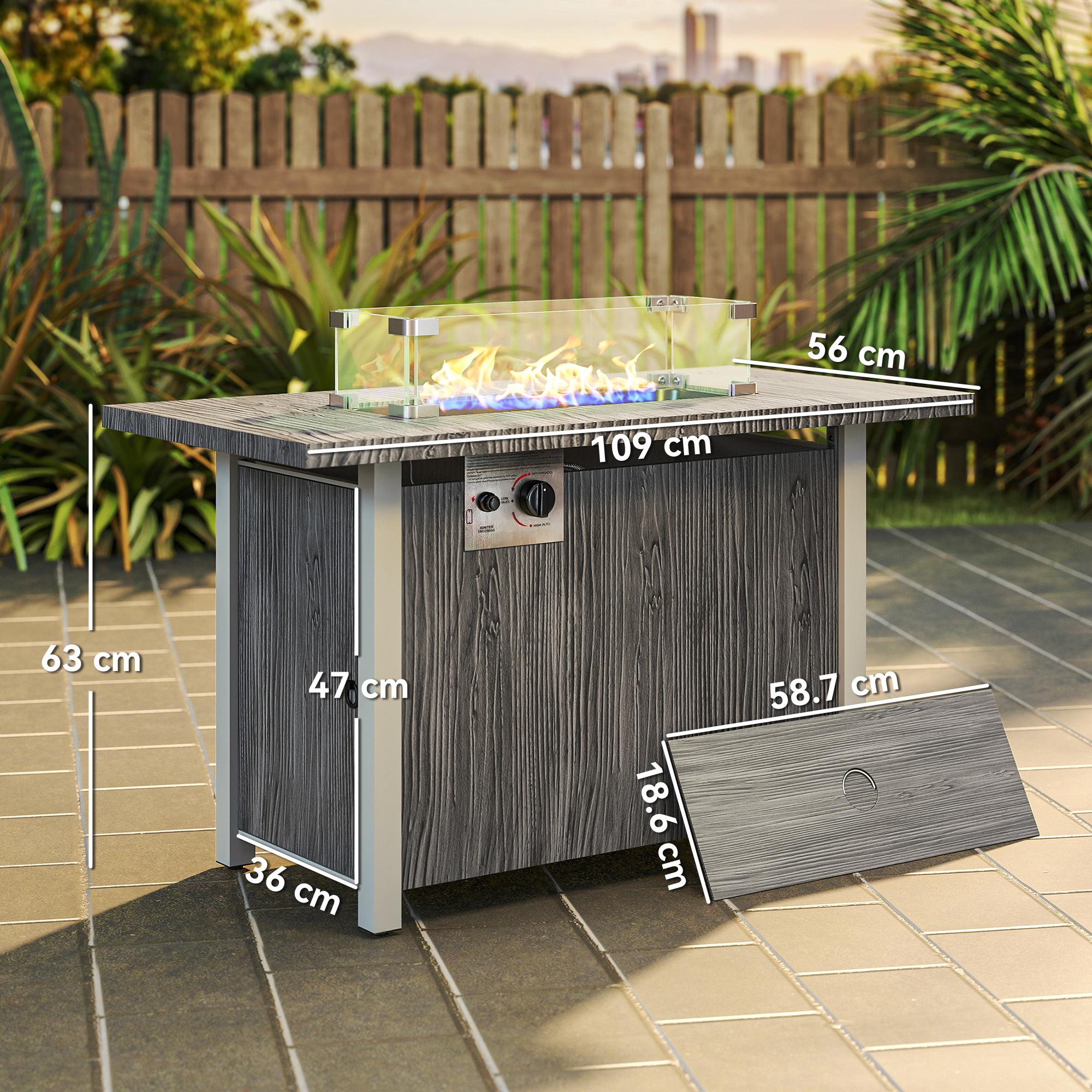
50,000 BTU Gas Fire Pit Table with Glass Screen, Dark Grey
£229
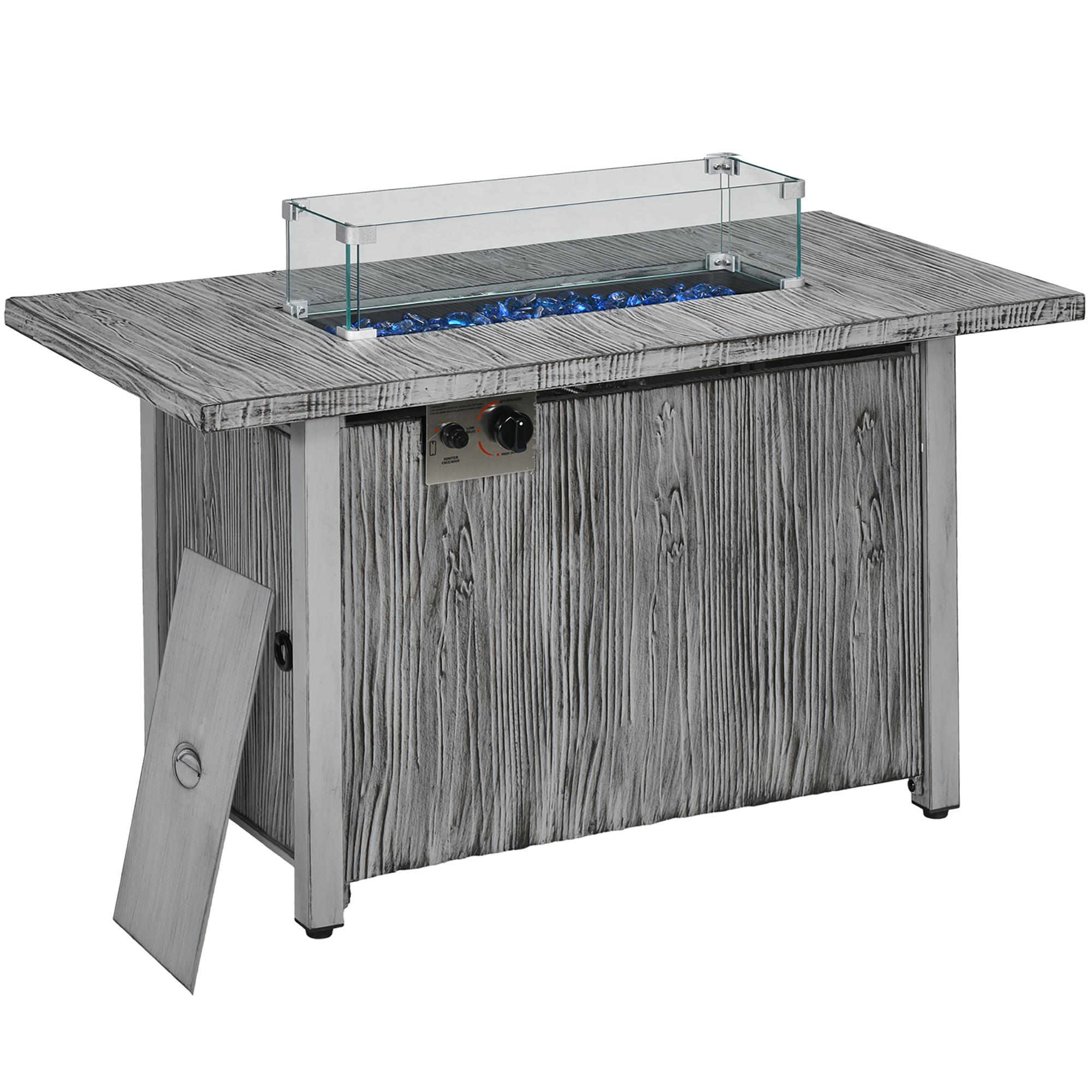
50,000 BTU Gas Fire Pit Table with Glass Screen, Grey
£249