At least three light sources per room, at three different heights, and about 100–150 lumens per square metre for general living. A 4m by 4m sitting room therefore wants somewhere between 1,600 and 2,400 lumens in total, spread across four or five fittings — not concentrated in one 2,000-lumen ceiling light.
The distinction is the whole point. A room lit by a single overhead fixture looks flat at every hour of the day, and no amount of money spent on that one fixture fixes it, because the problem is that there is only one of it. Light arriving from one angle removes the shadows that give a room depth.
| Room | Lumens per m² | Sources | Total in a 16m² room |
|---|---|---|---|
| Living room | 100–150 | 4–6 | 1,600–2,400 lm |
| Bedroom | 75–100 | 3–4 | 1,200–1,600 lm |
| Kitchen, general | 200–250 | 3–5 | 3,200–4,000 lm |
| Kitchen worktop | 400–500 at the surface | Under-cabinet | Task, not ambient |
| Hallway | 100 | 2–3 | Two sources minimum |
| Desk | 400–500 at the desk | One task lamp | Task, not ambient |
Rule one. Three sources, three heights
Overhead, mid-level, and low. A pendant or ceiling light; a table lamp or wall light at around eye level when seated; and something low — a floor lamp's pool of light, a lamp on a low table, a candle.
Three is a minimum rather than a target. A large living room comfortably takes five or six. What matters is not the count but that they sit at different heights, because the height difference is what creates the shadows.
Rule two. Count lumens, not watts and not fittings
Watts measure what a bulb costs to run, which stopped being a proxy for brightness when LEDs arrived. Lumens measure the light. A traditional 60W bulb is about 800 lumens, and that is the number to plan with.
Fittings are an even worse proxy. A five-bulb pendant is five bulbs' worth of light from one point on the ceiling, which counts as one source under rule one no matter how many lamps are in it.
Rule three. Every seat gets its own light
Start from where people sit rather than from the middle of the ceiling. Every seat wants light within reach of it — a side table with a lamp on it, or a floor lamp behind the shoulder. An armchair with no light of its own is a chair nobody chooses in the evening.
Sitting in the room after dark and noting which seats are in shadow is more useful than any lighting plan drawn on paper.
Rule four. One colour temperature per room
Mixing warm and cool white in one space is visible and unpleasant in a way that is hard to place until you know what you are looking at. The room reads as slightly wrong rather than obviously mismatched, and people redecorate over problems that were only ever the bulbs.
2700K is the warm domestic standard for living rooms and bedrooms. Kitchens and bathrooms can take 3000K, which is crisper without being clinical. Anything above 4000K belongs in a garage.
Rule five. Dimmers on everything you can
One fitting at three different levels is functionally three fittings. Dimming is the cheapest upgrade available to a room that already has lights in it, and it is the difference between a ceiling light being the enemy and being useful.
Check the bulb is dimmable and the dimmer is rated for LED. A non-dimmable LED on a dimmer buzzes, flickers, and eventually fails.
Rule six. Light the corners
A dark corner shrinks a room. A single lamp in one is the cheapest way to make a space feel larger, and it is the usual reason a room feels smaller in the evening than it does in daylight.
It does not need to be bright. A low-output lamp in a corner is doing a job of geometry, not of illumination.
Room by room
Living room. Four to six sources. A pendant on a dimmer, a table lamp at each end of the seating, a floor lamp behind a reading chair, and something in the darkest corner. This is the room where the three-source minimum is genuinely a minimum.
Bedroom. Three or four. Both sides of the bed want their own light that can be turned off from the bed, which is the one non-negotiable. Keep the overhead dim and warm.
Kitchen. Ambient overhead, then task light at the worktop, and that task light needs to come from in front of you rather than behind — a downlight behind your shoulder puts your own shadow on the chopping board. Under-cabinet lighting solves this completely.
Dining room. A pendant over the table, hung 70–90cm above the tabletop so it lights the table without sitting in the eyeline of the people around it. Then at least one other source in the room, or the table becomes a stage.
Hallway. Two sources minimum, because a hallway lit by one overhead fitting is a corridor. A console lamp does more for a hall than a brighter ceiling light does.
Work it out here
The overhead layer: what diameter, and how far down
Optional
Enter the width of the table to get a size.
Eight of our lights, and the layer each one fills
Rule one is about heights, so the useful thing to know about a fitting is which of the three it occupies. These are our own, with the measurements they are listed at.
| Light | Size | Layer | Where it goes |
|---|---|---|---|
| Yara Matt Black 12 Bulb Statement Pendant Light | 104cm × 122cm drop | Overhead | Needs 330cm ceiling to clear a head, or hang it over a table |
| Abira Black Marble and Brass 5 Bulb Floor Lamp | 39cm × 190cm | Low and mid | Beside a chair or in a dark corner |
| Solara Orb Pendant Ceiling Light | 42cm × 52cm drop | Overhead | Needs 260cm ceiling to clear a head, or hang it over a table |
| Carta Black and White Stripe Papier Mache Domed Floor Lamp | 41cm × 105cm | Low and mid | Beside a chair or in a dark corner |
| Abira Brass Finish Three Bulb Floor Lamp | 90cm × 200cm | Low and mid | Beside a chair or in a dark corner |
| Large Round Gesso Table Lamp | Luxury Designer Lighting | 46cm × 88cm | Mid-level | Console or sideboard of 60–75cm |
| Abira Bronze Finish 7 Light Statement Pendant Light | 80cm × 100cm drop | Overhead | Needs 310cm ceiling to clear a head, or hang it over a table |
| Large Ribbed Gesso Table Lamp | Luxury Designer Table Lamp | 41cm × 81cm | Mid-level | Console or sideboard of 70–85cm |
A room with one from each of the three rows is a room that follows rule one. A room with three from the same row is still a flat room, however much light is in it.
The short version
Three sources minimum, at three different heights. Plan in lumens — roughly 100–150 per square metre in a living room, double that in a kitchen. Give every seat its own light, keep one colour temperature per room at 2700K, put everything you can on a dimmer, and put a lamp in the darkest corner.
Common questions
- How many lumens does a living room need?
- Around 100–150 lumens per square metre, so a 16m² room wants 1,600–2,400 lumens in total. Spread that across four to six fittings rather than putting it all in the ceiling — the total matters far less than the number of directions it arrives from.
- Is one ceiling light ever enough?
- Only in a room you pass through rather than sit in, such as a utility room or a small landing. Anywhere people spend time, a single overhead source flattens the room because every surface is lit from the same angle and nothing casts a shadow.
- What colour temperature should I use at home?
- 2700K for living rooms and bedrooms, 3000K for kitchens and bathrooms. The important part is consistency within a single room — mixing temperatures is noticeable even when people cannot say what they are noticing.
- How high should a pendant hang over a dining table?
- 70–90cm above the tabletop. That lights the table properly while staying above the eyeline of people sitting across from each other. Over an island or a walkway, measure from the floor instead and leave at least 210cm of clearance.
- Do table lamps at each end of a sofa need to match?
- They need to match in height and in colour temperature, not in design. Two lamps of noticeably different heights either side of a seating group unbalance it; two different designs at the same height read as considered.
The pieces in this guide
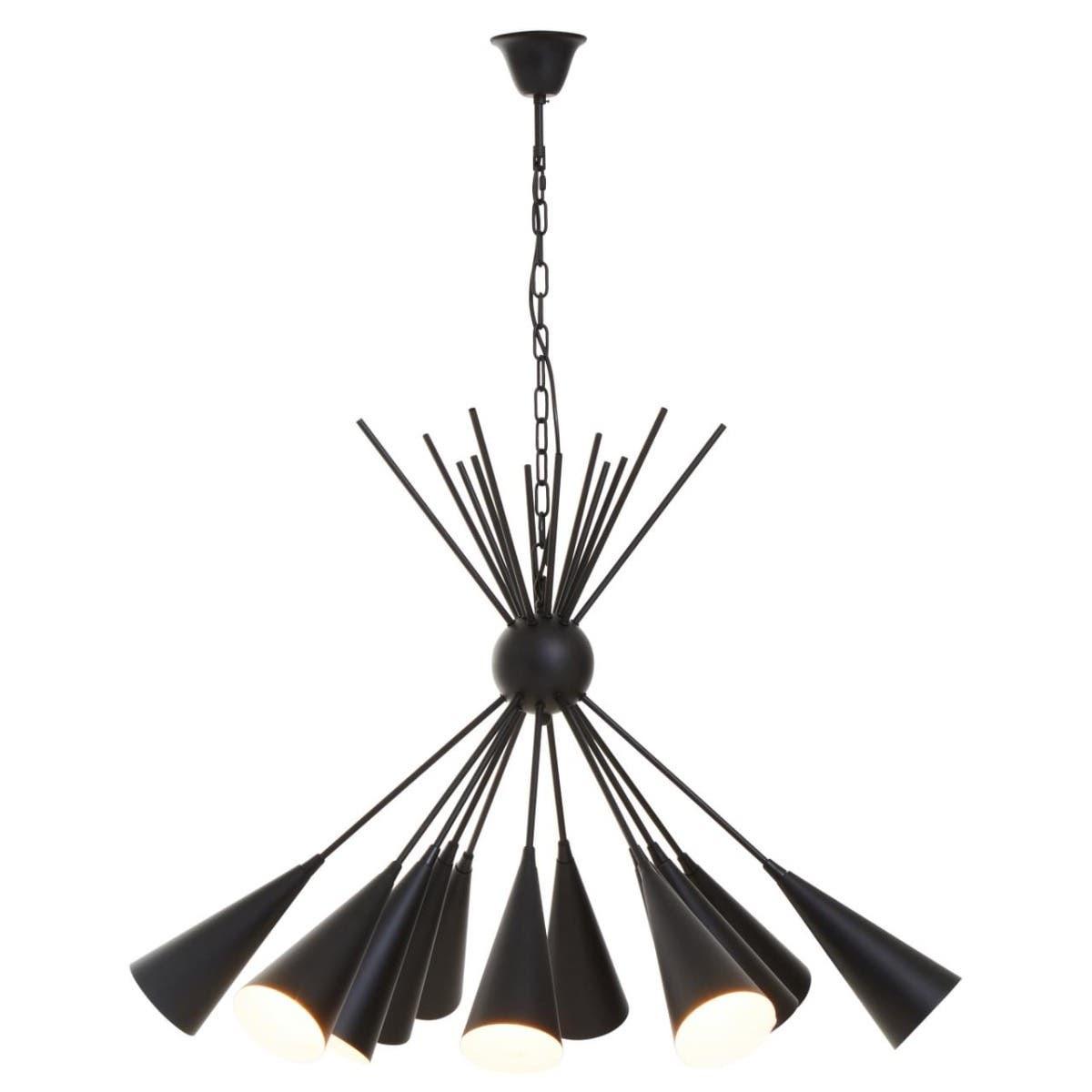
Yara Matt Black 12 Bulb Statement Pendant Light
£712
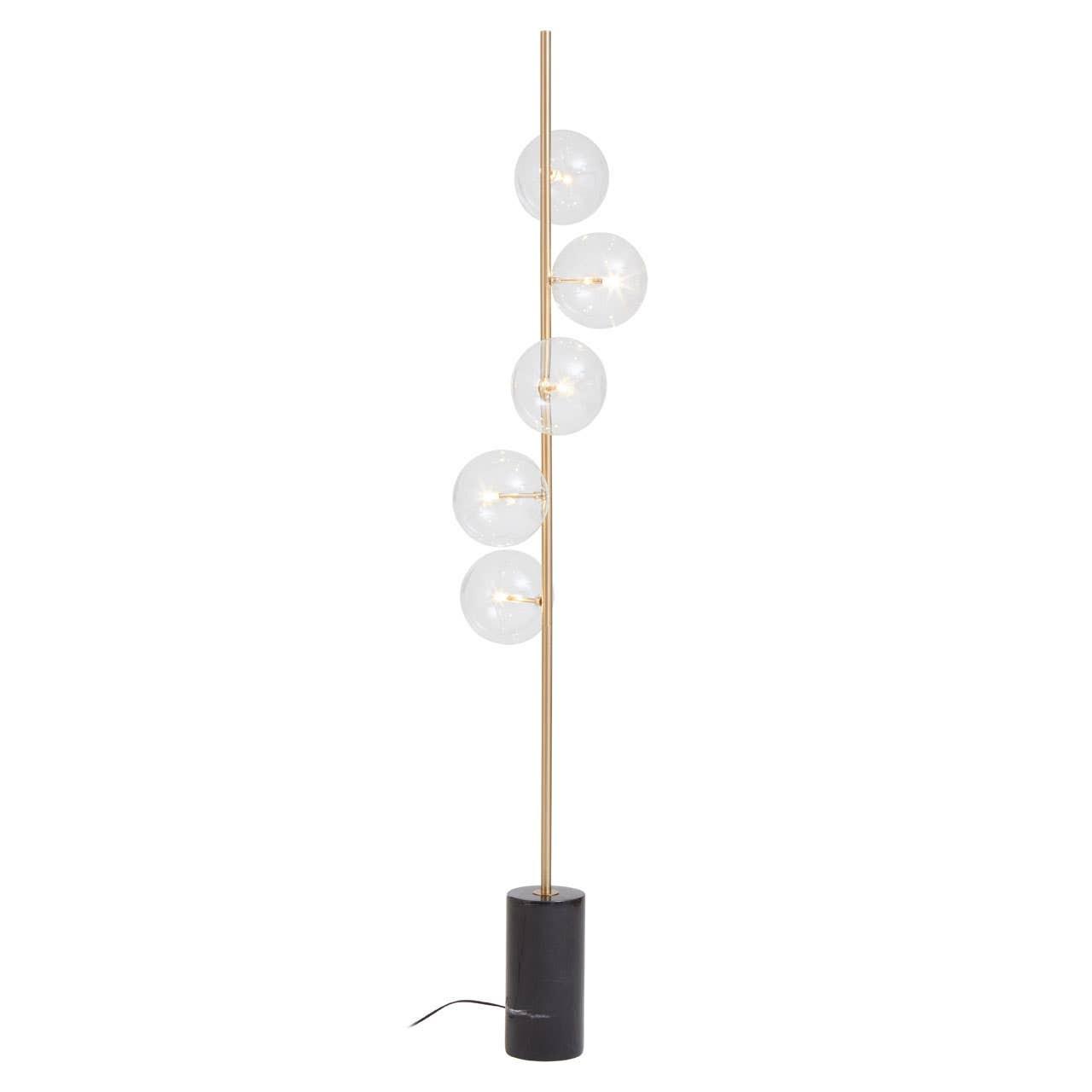
Abira Black Marble and Brass 5 Bulb Floor Lamp
£396
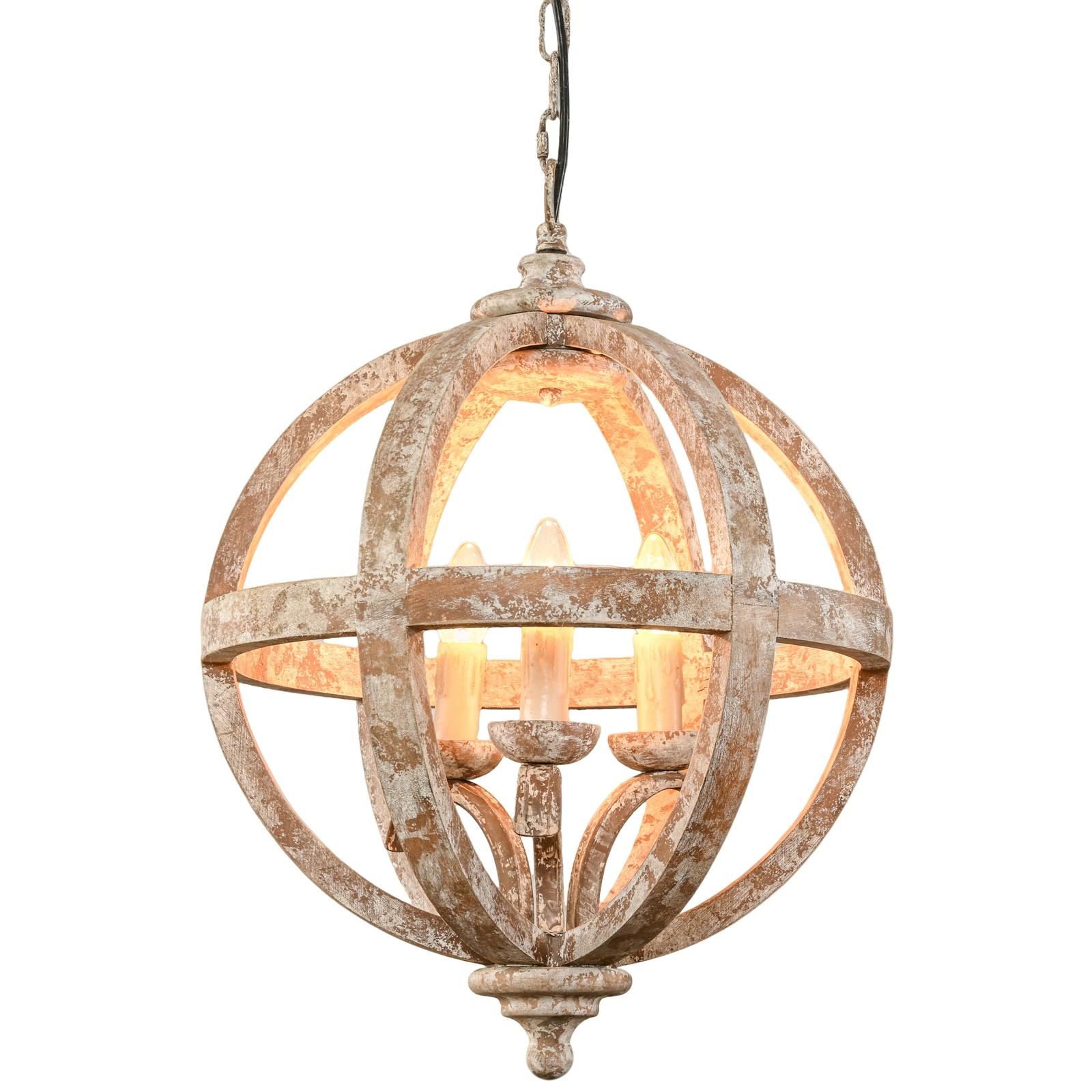
Solara Orb Pendant Ceiling Light
£299
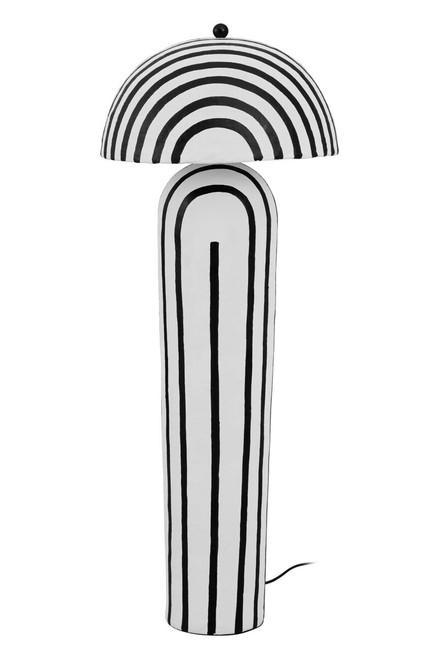
Carta Black and White Stripe Papier Mache Domed Floor Lamp
£335
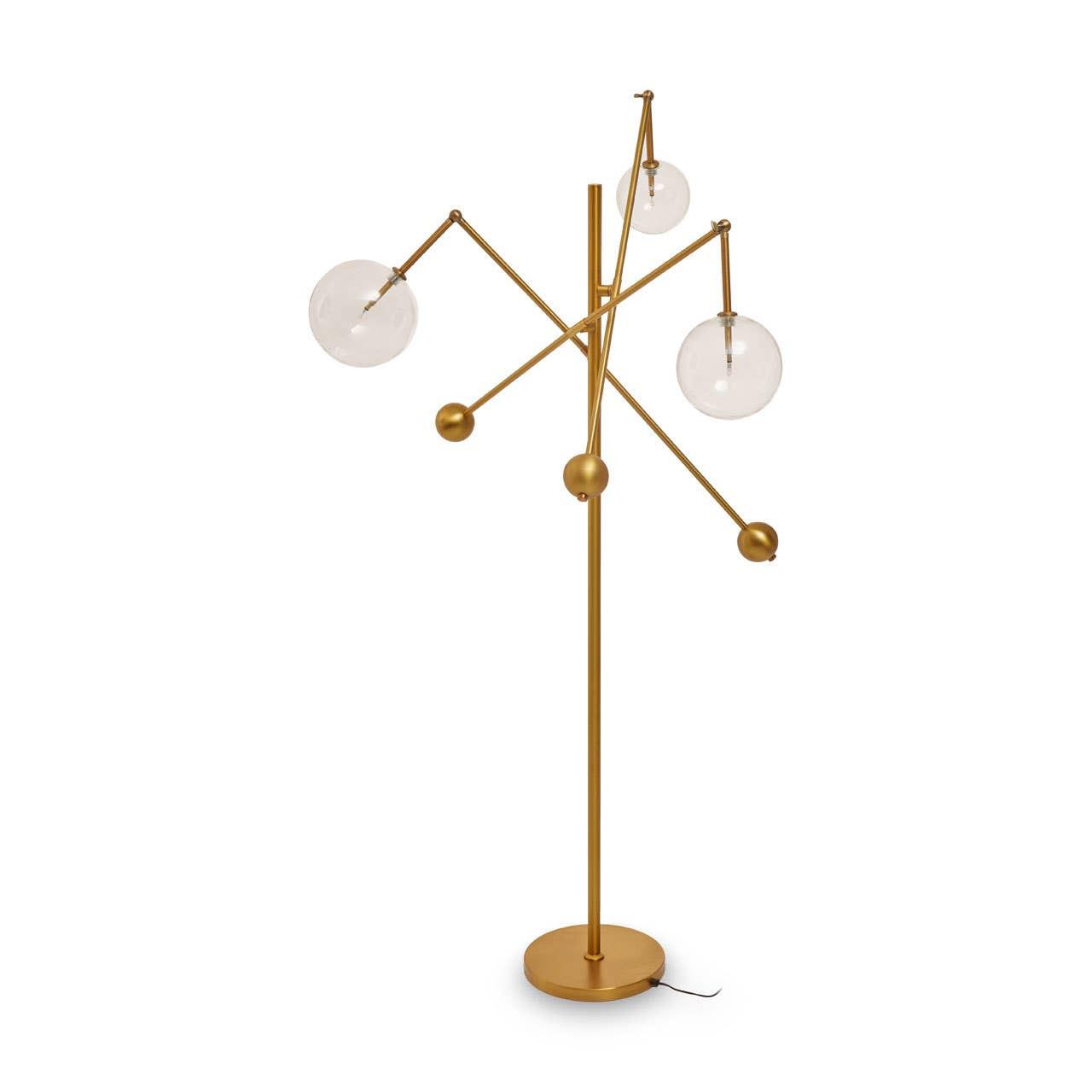
Abira Brass Finish Three Bulb Floor Lamp
£353
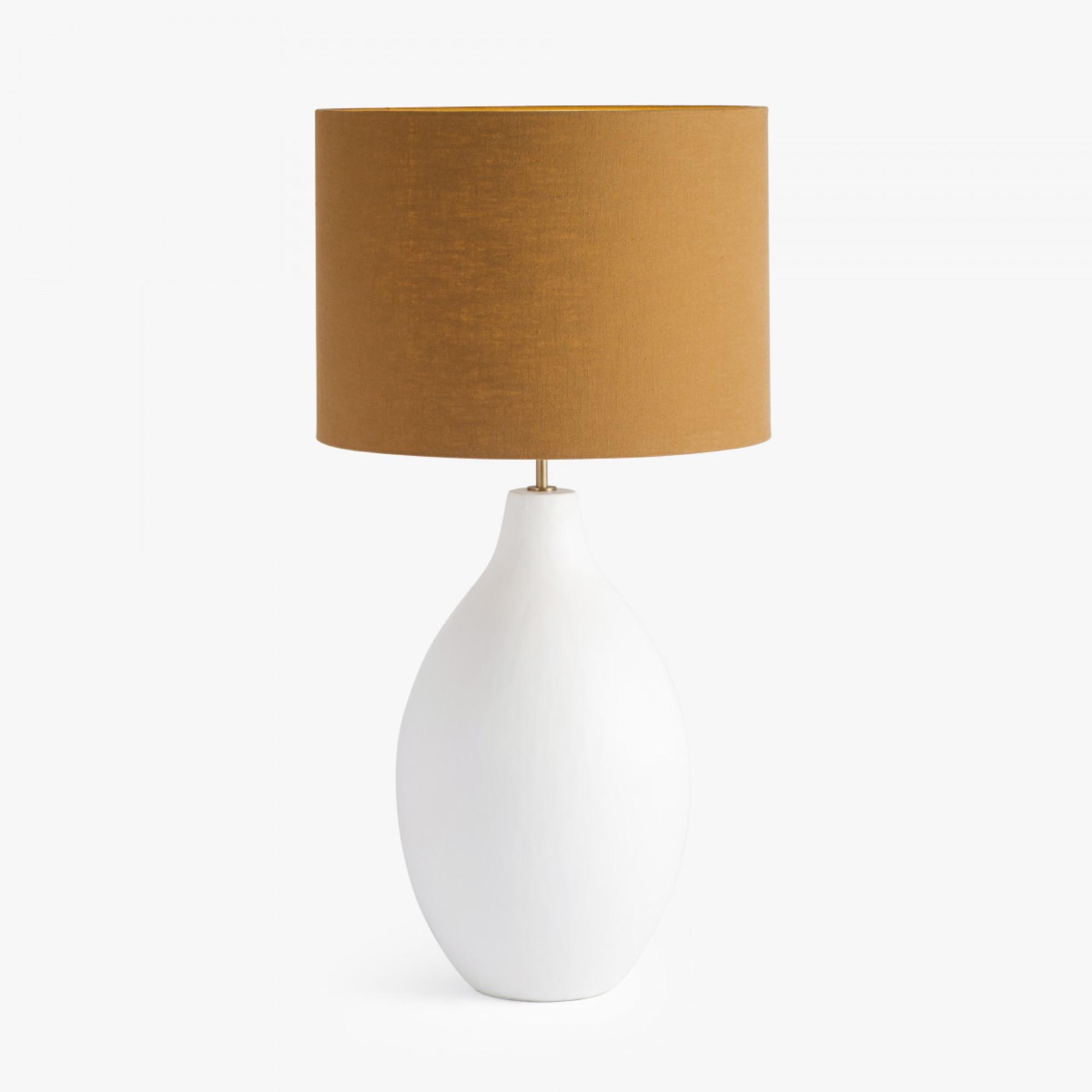
Large Round Gesso Table Lamp
£290
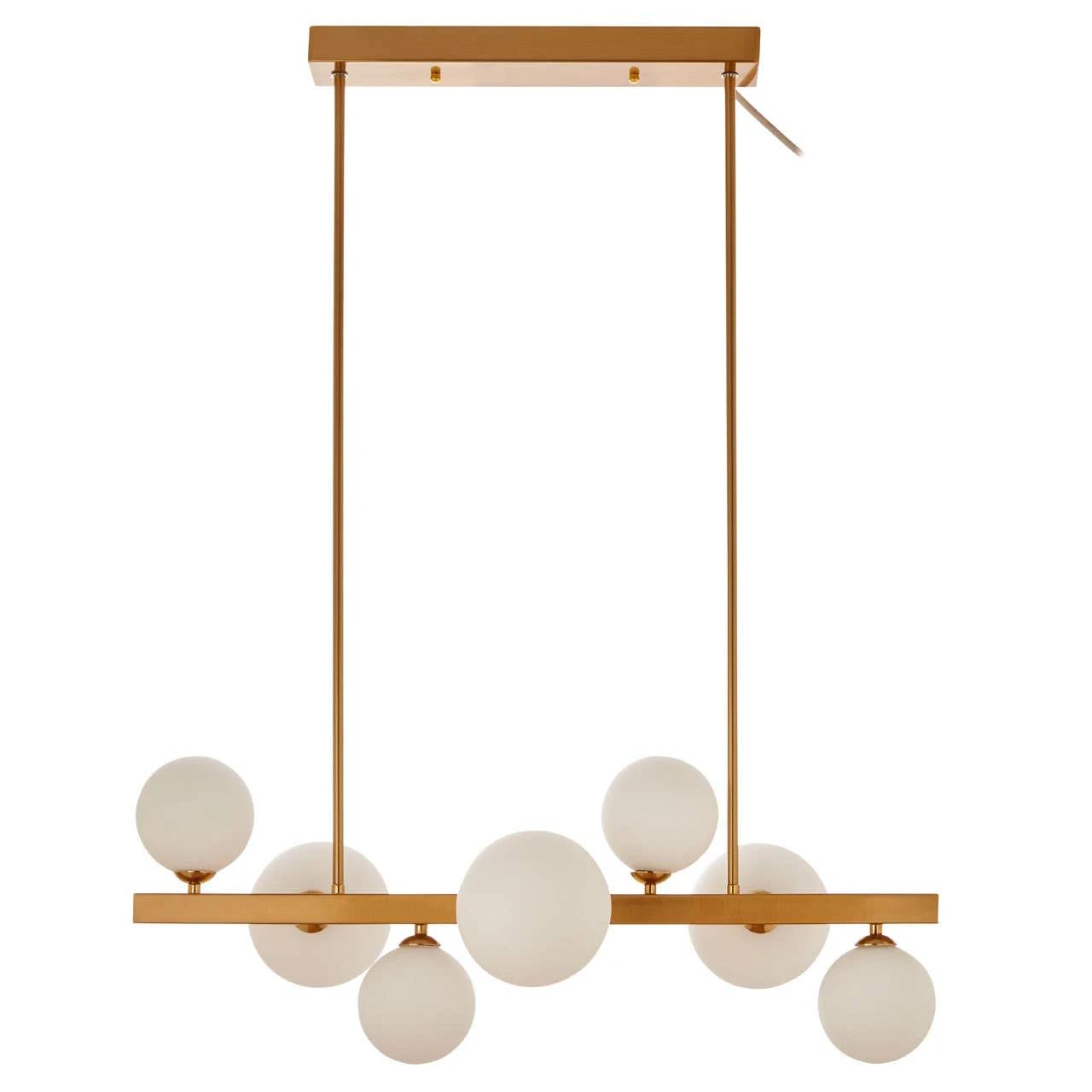
Abira Bronze Finish 7 Light Statement Pendant Light
£287
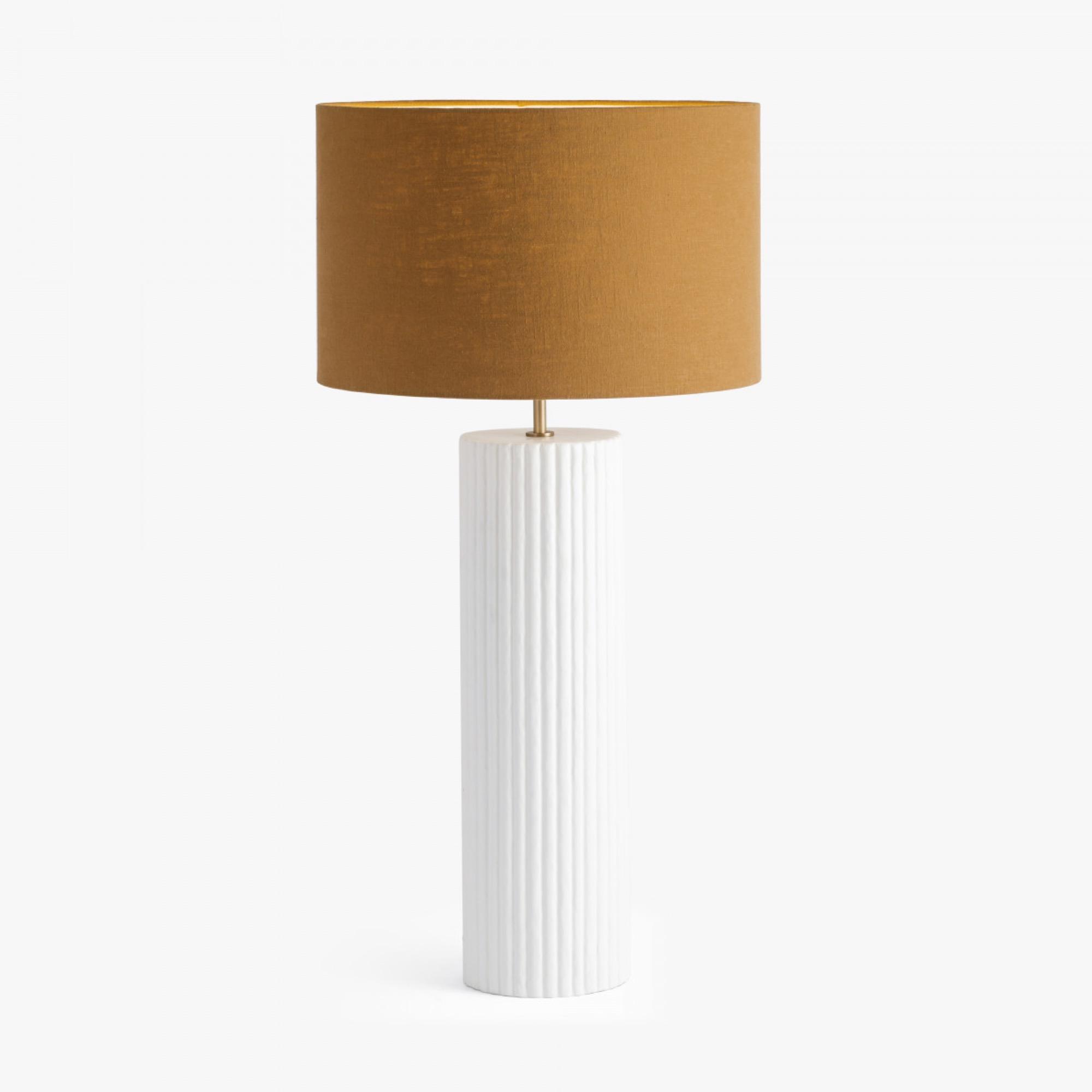
Large Ribbed Gesso Table Lamp
£238