Garden privacy screens: how many you need, where they go, and whether they stop wind
A screen that lets about half the wind through shelters further than a solid one. That is counter-intuitive and it is the most useful thing to know before buying: wind hitting a solid barrier rolls over the top and drops back down as turbulence a couple of metres behind it, while a permeable screen slows the air instead of stopping it and shelters a distance of up to ten times its own height downwind.
Every panel in this range is 198cm tall and 122cm wide, so size is not the decision. How many, where they stand, and how open the pattern is — those are.
Here to buy rather than to read? Start here.
| Screen height | Useful shelter downwind | Covers a seating group of |
|---|---|---|
| 198cm | Up to about 12–15m in theory | Any patio, in practice |
| 198cm, realistic | 4–6m of genuinely calmer air | 4–6 seats |
| One panel, 122cm wide | Shelters wider than itself | Two to three chairs |
How many you need
One panel screens a two-seat corner. Two at an angle to each other screen a four-seat table and do far more than two in a line, because wind and eyelines rarely arrive from the same direction. Three is the point at which a patio becomes a room.
Buy an odd number if they are standing free in a garden and an even number if they are flanking something — a door, a table, a gap in a hedge. That is the same rule that governs planters and lanterns, and it holds for the same reason: symmetry reads as deliberate and a random count reads as whatever was in stock.
Placement: shelter the seats, not the boundary
The instinct is to line screens along a fence to hide a neighbour. That usually wastes them. A screen works hardest close to the people it is protecting, because the sheltered pocket behind it is widest near the panel and spreads out thinner the further back you go.
So put them at the edge of the seating, angled slightly inward, rather than at the end of the garden. You get more shelter, more privacy from the angles that actually overlook you, and the screen becomes part of the seating area instead of part of the boundary.
How open should the pattern be?
For wind, roughly half-open is the target. For privacy, it depends entirely on distance — a pattern that hides nothing at two metres hides a great deal at eight, because the eye cannot resolve through overlapping gaps at an angle.
The grid and triangle patterns are the most open of the range and the best wind performers. The leaf designs — also in green — and the rhombus and twisted lines are denser and screen better at close range.
The height rule, and why 198cm is the number
In England and Wales, a fence or screen at a boundary can generally reach 2 metres without planning permission, and 1 metre where it fronts a road. These panels are 198cm — just under, deliberately.
Freestanding screens inside a garden, away from the boundary, are a different matter and are usually not caught by the same rule. The full position, including what counts as a boundary, is in our pergola and screen height guide. Check with your own council before fixing anything to a boundary, because local variation is real.
Climbing plants change what a screen is
A screen with a trellis function becomes opaque within two seasons if you plant the right thing against it, and stays interesting in a way bare metal does not. The climbing-plant trellis screen is made for it.
Clematis, star jasmine and honeysuckle all climb metal happily. Ivy will too, and will keep going — it does not stop at the top of the screen and it is heavy enough to matter on a freestanding panel. Plant into a decent-sized planter at the base rather than into the ground if the screen ever needs moving.
Wind is also what knocks them over
A 198cm panel is a sail. Every screen here comes with a stand, and the stand is the part that decides whether it survives a winter — a freestanding screen on a paved surface needs weighting, and the usual method is a planter either side of the foot doing double duty.
If a screen is going somewhere genuinely exposed, fix it rather than stand it. A panel that blows into a glass door costs more than the fixings would have.
Metal, and what a British winter does to it
Powder-coated steel is what these are, and powder coat is genuinely durable until it is chipped. Water gets under the coating at a chip, rust spreads beneath the surface, and the first visible sign is the coating lifting rather than a rust spot appearing.
So handle them carefully on the way in, and touch up any chip you make. A screen standing on soil rots at the foot faster than one on paving, because the base stays wet. If yours is going into a border rather than onto a patio, sit the feet on a paving slab or a couple of bricks — the same rule as a planter, for the same reason.
Privacy from above is a different problem
A 198cm screen stops a neighbour at ground level and does nothing at all about an upstairs window. If what overlooks you is a first floor, a screen is the wrong tool and you want something overhead — a pergola, a canopy, or a tree.
That is worth establishing before buying, because it is the commonest disappointment with screens. Stand where you sit, look up at whatever overlooks you, and ask whether a two-metre panel is in that line of sight. If the answer is no, spend the money on something with a roof instead.
What they cost to live with
Nothing, which is the quiet argument for them. A screen has no running cost, needs no power, and asks for a wipe once a season and a touch-up if it gets chipped. Compared with the other ways of making a garden usable — heating, lighting, a structure — it is the only one that keeps working for free.
That also makes it the sensible first purchase. Blocking wind is cheaper than heating against it, and a sheltered patio with no heater is used more often than an exposed one with a good heater. If the budget only stretches to one thing this year, it should be this rather than a fire pit table.
The short version
Half-open beats solid, because solid makes turbulence. One panel screens a corner, two at an angle screen a table, three make a room. Place them at the edge of the seating and angle them inward rather than lining the boundary. 198cm keeps you under the 2m rule at a boundary in England and Wales. Weight the stands or fix them, and if you want it opaque, plant something that climbs.
Common questions
- Do garden privacy screens actually block wind?
- A permeable one does, and better than a solid fence. Wind hitting a solid barrier rolls over the top and drops back down as turbulence a couple of metres behind it, so the sheltered patch is short and gusty. A screen that lets roughly half the wind through slows the air instead of stopping it, and shelters a distance of up to ten times its own height downwind.
- How many privacy screens do I need?
- One screens a two-seat corner. Two set at an angle to each other screen a four-seat table, and do considerably more than two in a straight line, because wind and eyelines rarely come from the same direction. Three is where a patio starts to feel like a room rather than a paved area.
- How tall can a garden privacy screen be without planning permission?
- In England and Wales a boundary fence or screen can generally reach 2 metres, or 1 metre where it fronts a road. These panels are 198cm, just under. Freestanding screens inside a garden rather than at the boundary are usually treated differently. Local variation is real, so check with your council before fixing anything to a boundary.
- Where should I put a privacy screen?
- At the edge of the seating, angled slightly inward — not along the fence at the end of the garden. The sheltered pocket behind a screen is widest close to the panel and thins out further back, so a screen works hardest near the people it is protecting. It also blocks the angles that actually overlook you rather than the ones that do not.
- What can I grow up a metal privacy screen?
- Clematis, star jasmine and honeysuckle all climb metal well and will make a screen close to opaque within two seasons. Ivy will too, but it does not stop at the top and gets heavy enough to matter on a freestanding panel. Plant into a large planter at the foot rather than into the ground if the screen might ever need to move.
The pieces in this guide
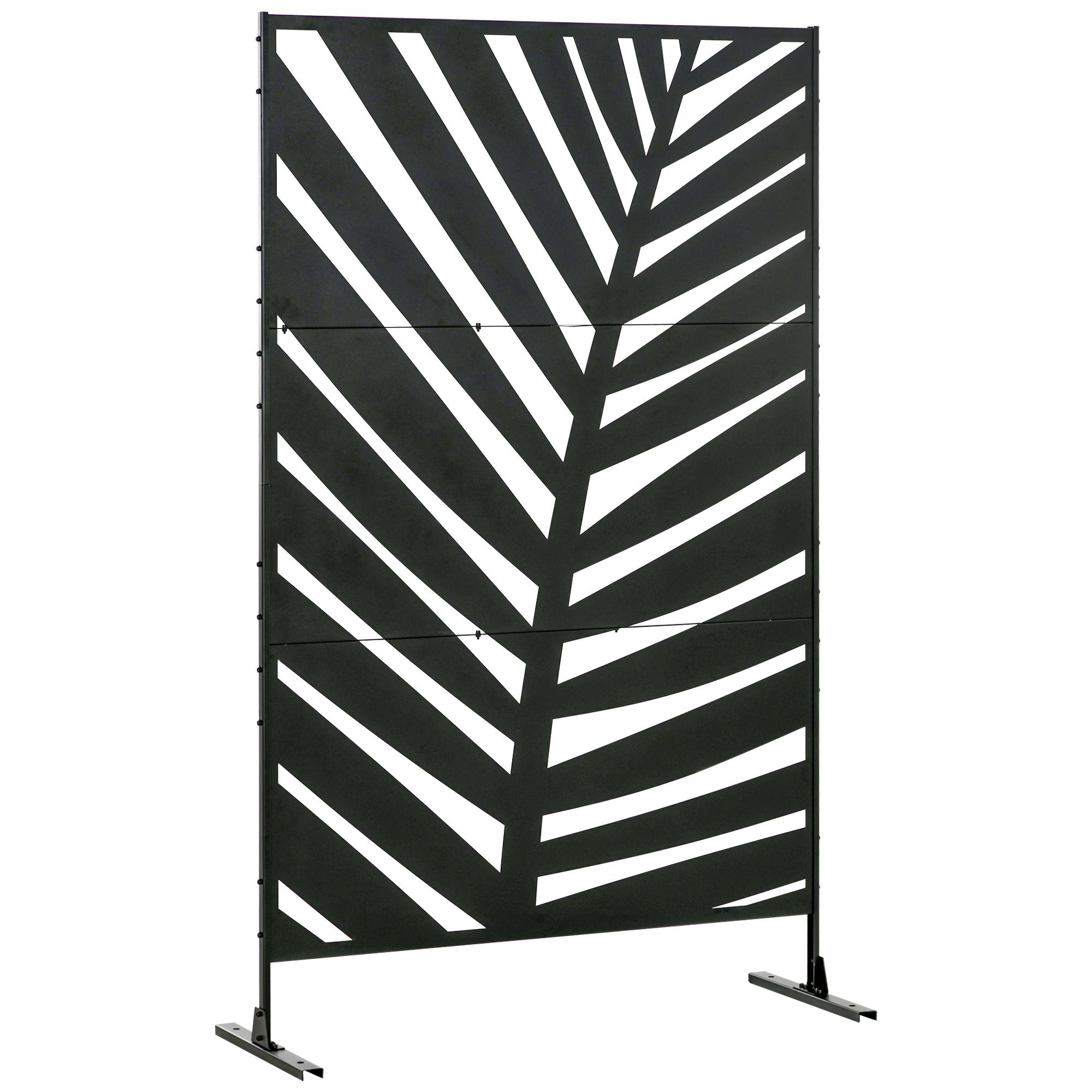
Banana Leaf Metal Privacy Screen with Stand, Black
£99
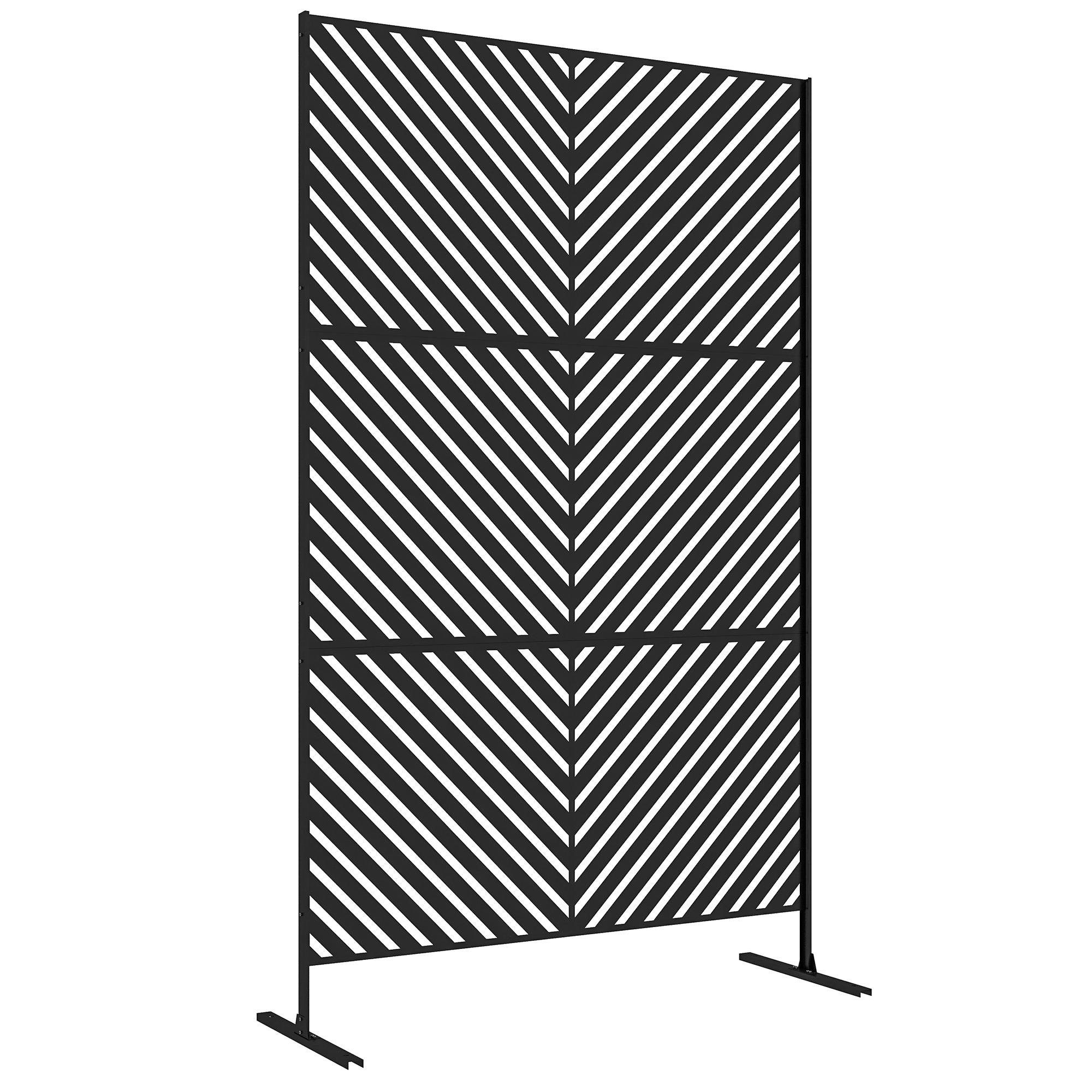
Triangle Metal Privacy Screen with Stand, Black
£109
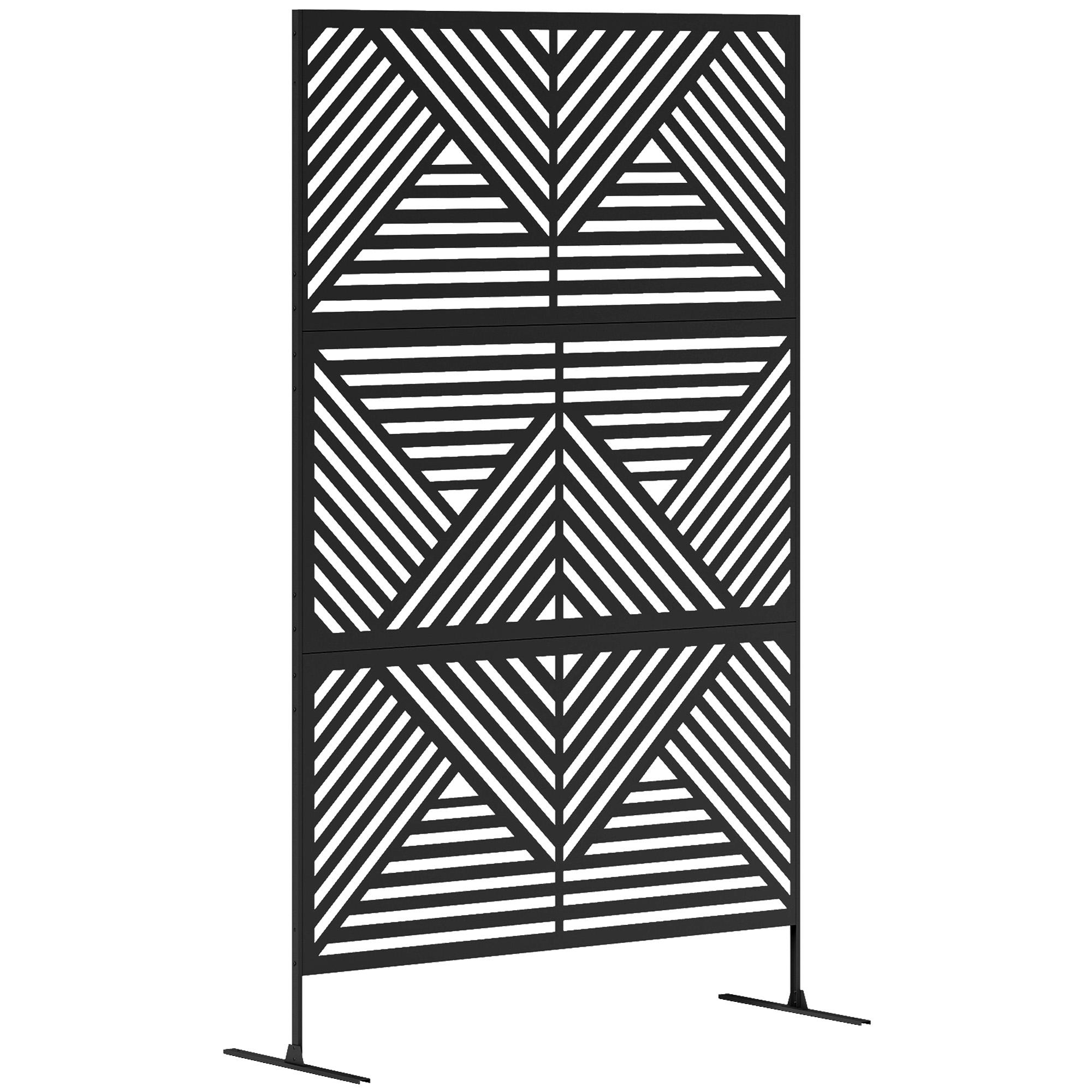
Rhombus Metal Privacy Screen with Stand, Black
£109
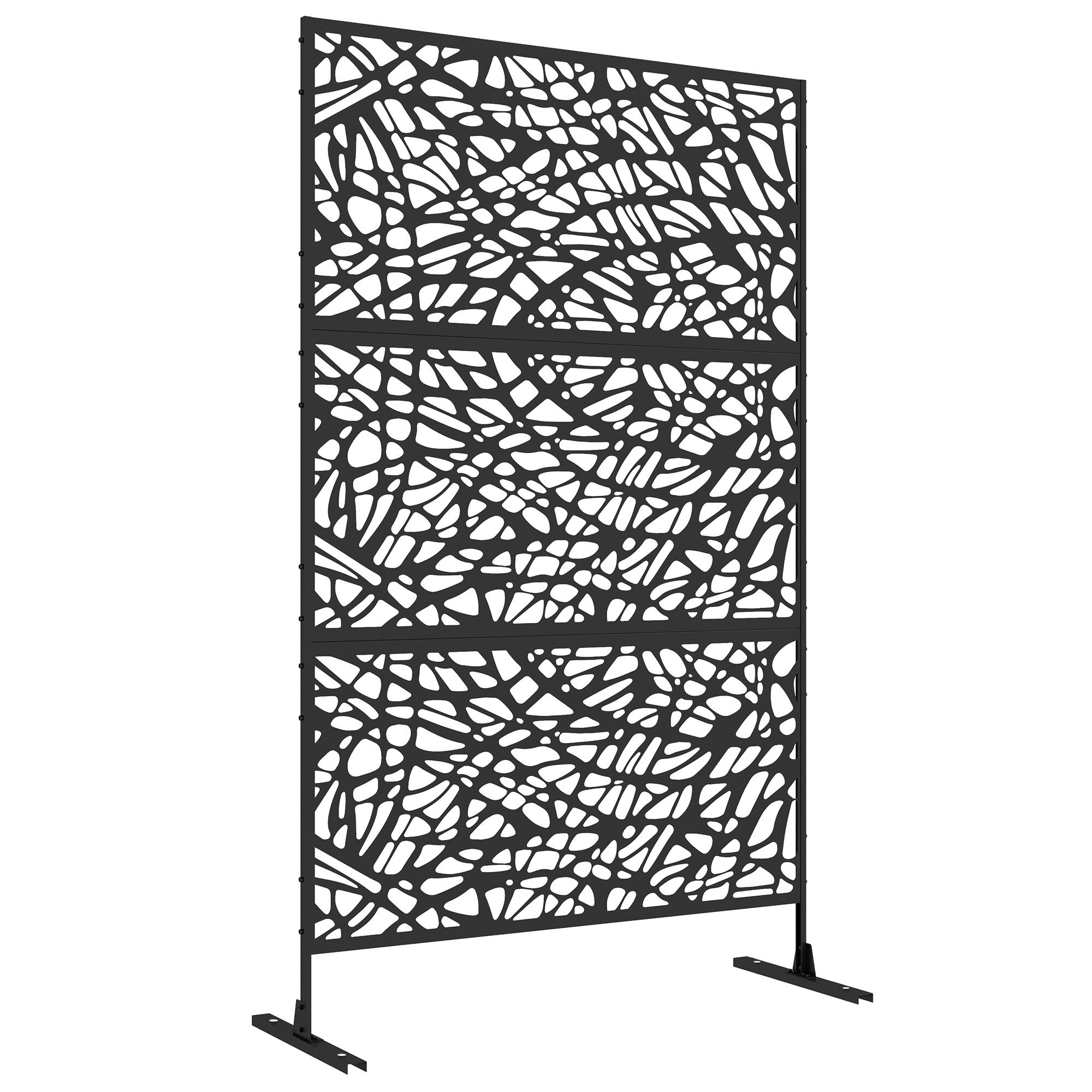
Twisted Line Metal Privacy Screen, Black
£119
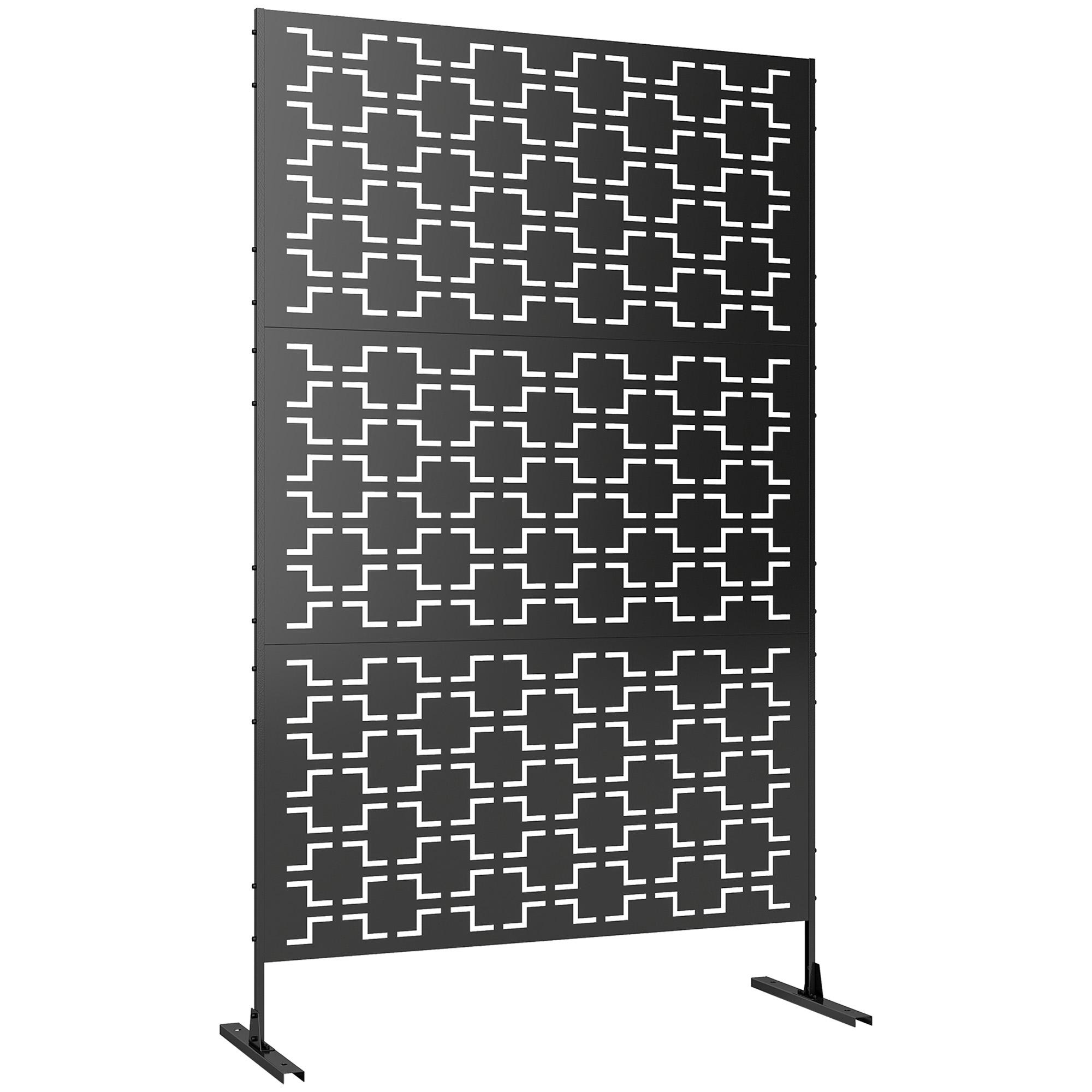
Grid Metal Privacy Screen, Black
£103
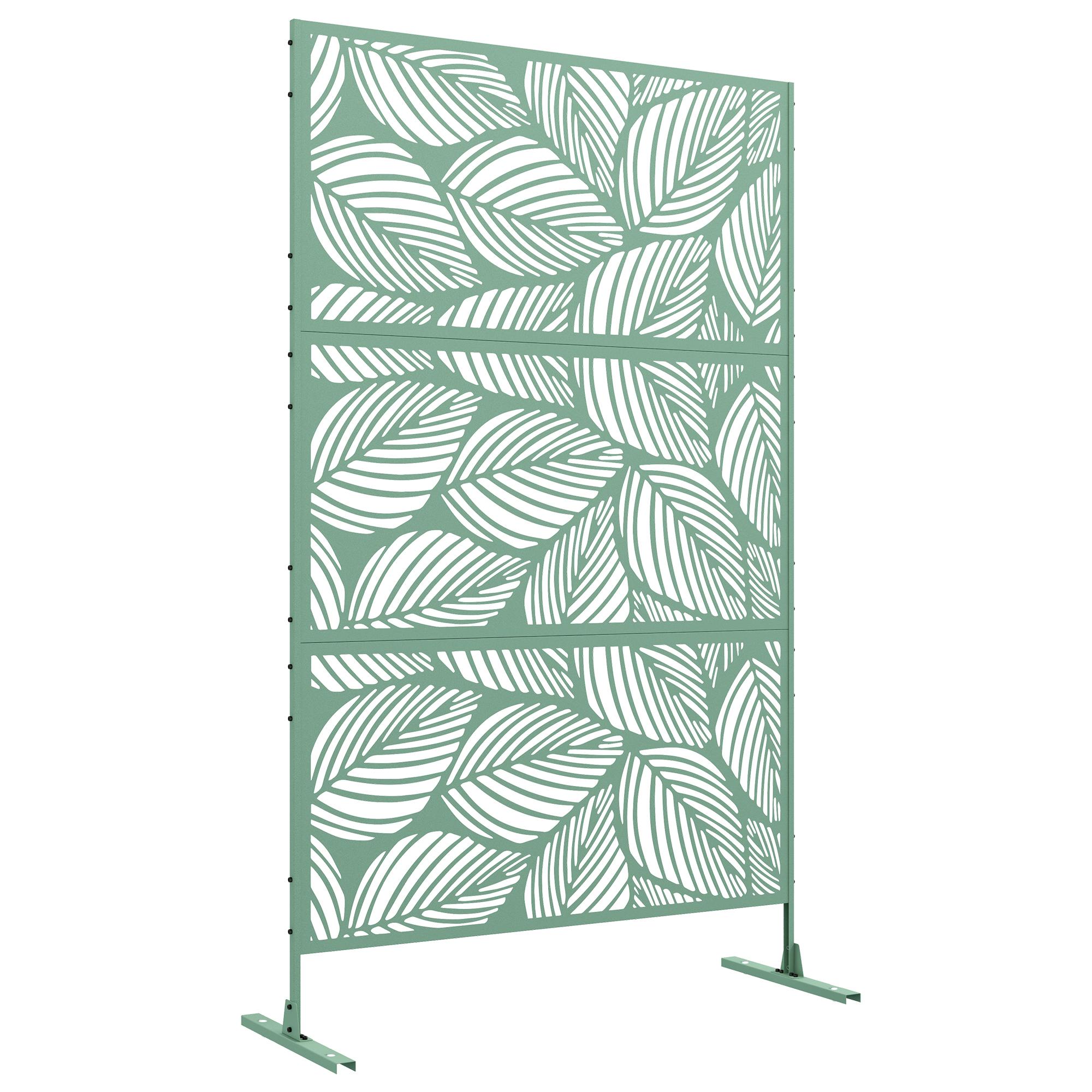
Leaf Metal Privacy Screen, Green
£103
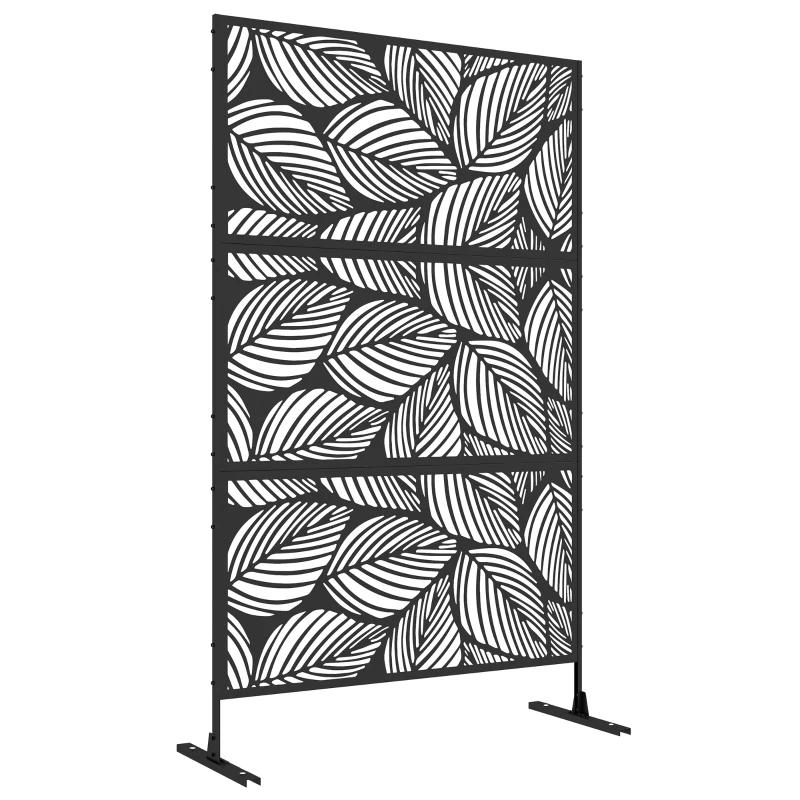
Leaf Metal Privacy Screen, Black
£105
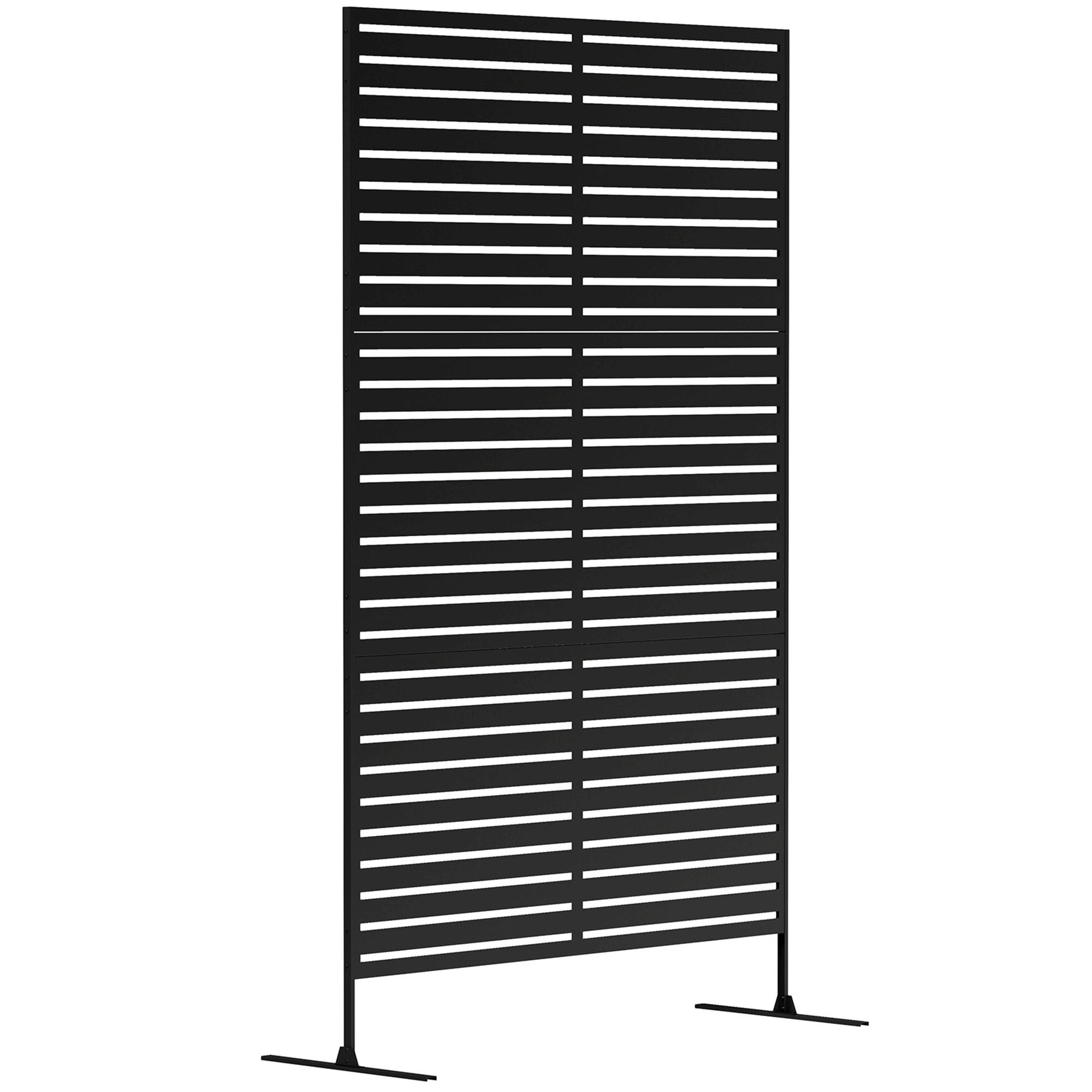
Metal Privacy Screen and Climbing Trellis, Black
£114