What size hurricane lantern, and which candle actually fits it?
Leave two to three centimetres of air between the candle and the glass, and never fill a lantern past two thirds of its internal height. Those two rules decide whether a lantern looks right and whether it is safe, and almost nobody states them before you have bought the thing.
British pillar candles come in a small number of diameters — 7cm, 8cm and 10cm cover almost everything sold. So the question is not what size lantern you like. It is which of those three the lantern takes.
Here to buy rather than to read? Start here.
| Lantern opening | Candle to buy | Air each side |
|---|---|---|
| 11–13cm | 7cm pillar | 2–3cm |
| 14–16cm | 8cm pillar | 3–4cm |
| 17–19cm | 10cm pillar | 3.5–4.5cm |
| 20cm and over | 10cm pillar, or three tealights | Group them |
Why the gap matters, and it is not only about heat
A flame needs air. Boxed in too tightly it burns dirty, sooting the inside of the glass within an evening, and a sooted lantern never quite comes clean. Three centimetres of clearance is the difference between a lantern you light every week and one that goes in a cupboard.
The height rule is the same idea. A candle burning near the top of an enclosure heats the rim, and on ceramic or stone that is how hairline cracks start. Two thirds is the working maximum, which is why a 50cm lantern wants a candle around 30cm and looks wrong with a short one rattling about at the bottom.
Indoors: 17 to 22cm, on a surface
For a mantelpiece, a console or a dining table, a lantern between 17 and 22cm tall is the size that reads as an object rather than an ornament. The round ceramic lattice lantern at 17cm across and the conical version at 22cm tall are both this brief. Lattice casts a pattern on the wall behind it, which is most of the reason to own one.
On a dining table, go lower than feels right. Anything above about 25cm is something people have to look around, and a lantern that interrupts a conversation gets moved to the sideboard permanently.
Outdoors: bigger, heavier, and on the ground
Outdoors the rules invert. Wind puts a flame out long before it burns down, so an outdoor lantern wants a lid or a deep body, and it wants enough weight not to go over. The grey stone-effect lantern at 32cm and the Sona with its lid at 50cm are both built for that, and the lid is the part that matters.
On a doorstep, go taller than you think and go in pairs — the same rule that applies to planters, and for the same reason. A set of three wooden lanterns at up to 104cm, or the cross-section version at 84cm, does the job a single lantern cannot at any price. Group in odd numbers and at different heights, and light them all or none.
Floor-standing is a different object
Above about 80cm a lantern stops being a table piece and becomes furniture. The Kensington floor-standing holder at 113cm is at eye level for a seated room, which means it is lit for the evening rather than for a moment, and it needs somewhere it will not be walked into.
The Cruzar at 51cm is the in-between size: too big for a dining table, right at the end of a hearth or beside a chair.
Tealights are not a smaller version of this
A tealight burns for three to four hours and throws almost no light beyond its own holder. That is a different job from a pillar candle, and a piece like the Rhea lighthouse holder is bought for the object rather than for the light.
If you want light, use pillars. If you want several small points of light across a table, use tealights and use more of them than feels necessary — five reads as intentional, two reads as what was left in the drawer.
Burn time, and how often you will be buying candles
A pillar candle burns roughly an hour per centimetre of diameter per session before it starts tunnelling, which is the rule that decides whether a lantern gets used or resented. A 7cm pillar wants at least seven hours the first time it is lit, because the first burn sets the width of the pool for every burn after it.
Light a wide pillar for an hour and you have permanently made it a narrow one, with a crater down the middle and a wall of unburnt wax around the outside. If an evening will not stretch to a proper first burn, use a smaller candle or use tealights, which have no memory and do not care.
Glass, ceramic or metal outdoors
Glass is the only one that lets light out sideways, which is the whole point of a lantern on a table. It is also the one that cracks, and it cracks from thermal shock rather than from cold — a cold night and a hot flame is the combination, and a lantern brought straight from a cold shed and lit is the usual casualty.
Ceramic and stone-effect bodies are tougher and throw light upward rather than out, which suits a doorstep better than a dining table. Metal frames with glass panels are the compromise and the most weather-tolerant of the three. Whatever the material, anything left out through a British winter with water in the base will crack when that water freezes.
Where lanterns go wrong indoors
Soot, almost always, and almost always from a draught rather than from the candle. A flame that flickers is a flame that burns dirty, so a lantern on a windowsill above a radiator or beside a door will black the glass in a fortnight while the same candle elsewhere in the room stays clean.
The other one is dust. An open-topped lantern collects it, and dust on a wax surface is visible from across a room. A lidded design solves that for an ornament that is lit occasionally; an open one wants wiping when you light it, which is a small thing that decides whether it stays on display.
Wind, and why most outdoor candles fail
A flame goes out at around 10mph of wind with nothing protecting it, which on a British evening is most evenings. That is the number that makes a lidded lantern worth its extra cost, and it is why an open hurricane on an exposed patio is an ornament rather than a light source.
A tall narrow body protects better than a wide shallow one, because the flame sits deeper relative to the opening. If the lantern is open-topped and the spot is exposed, put the candle lower — a shorter candle in a tall lantern is worse to look at and far more likely to stay lit.
The short version
Two to three centimetres of air around the candle, and fill to two thirds of the height, never more. 7cm pillars for openings up to 13cm, 8cm up to 16cm, 10cm above that. Indoors 17 to 22cm and lower on a dining table. Outdoors buy the lid. On a doorstep buy three, not one.
Common questions
- What size candle fits a hurricane lantern?
- Leave two to three centimetres of air between the candle and the glass. For an opening of 11 to 13cm that means a 7cm pillar, for 14 to 16cm an 8cm pillar, and for 17 to 19cm a 10cm pillar. Too tight and the flame burns dirty, sooting the inside of the glass in a single evening.
- How tall should the candle be in a lantern?
- No more than two thirds of the lantern's internal height. A flame burning near the rim heats it, and on ceramic or stone that is how hairline cracks begin. It also looks better: a 50cm lantern wants a candle around 30cm, and a short candle in a tall lantern reads as a mistake.
- Can hurricane lanterns be used outside?
- Yes, and they suit it — but buy one with a lid or a deep body. Wind puts a flame out long before the candle burns down, which is the single thing that decides whether an outdoor lantern gets used. Weight matters too, because a lantern that blows over is worse than one that goes out.
- What size lantern for a dining table?
- Lower than instinct suggests. Anything above about 25cm is something people have to look around, and a lantern that interrupts a conversation ends up on the sideboard. Between 17 and 22cm works on most tables, and a lattice design earns its place by casting a pattern rather than by height.
- How many lanterns should I put by a front door?
- Three, at different heights, or a matched pair either side. One lantern beside a door reads as an accessory; a group reads as a decision. Odd numbers work better than even ones except in a symmetrical pair, and they should all be lit or none of them — one unlit lantern in a group of three undoes it.
The pieces in this guide
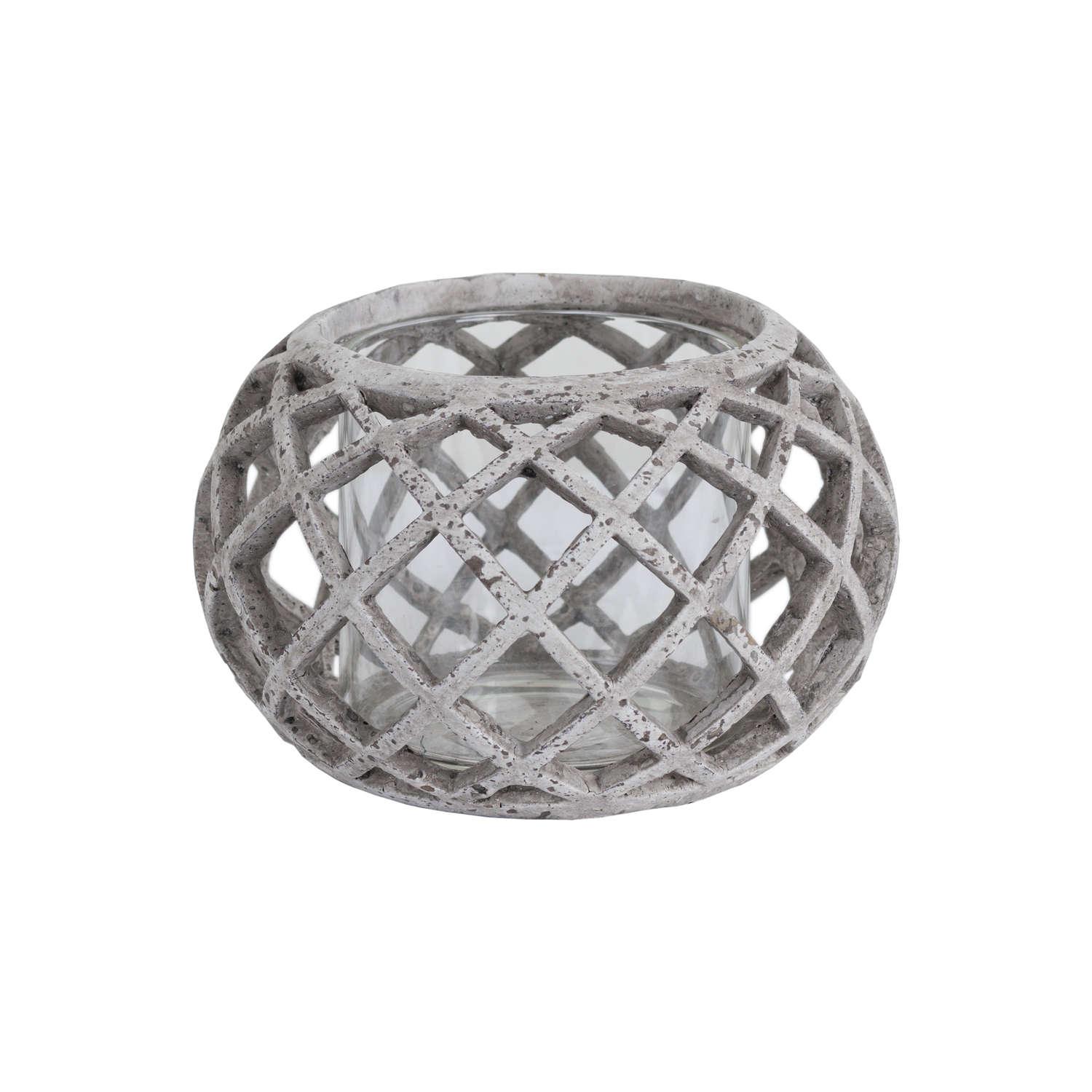
Round Ceramic Lattice Hurricane Lantern
£26
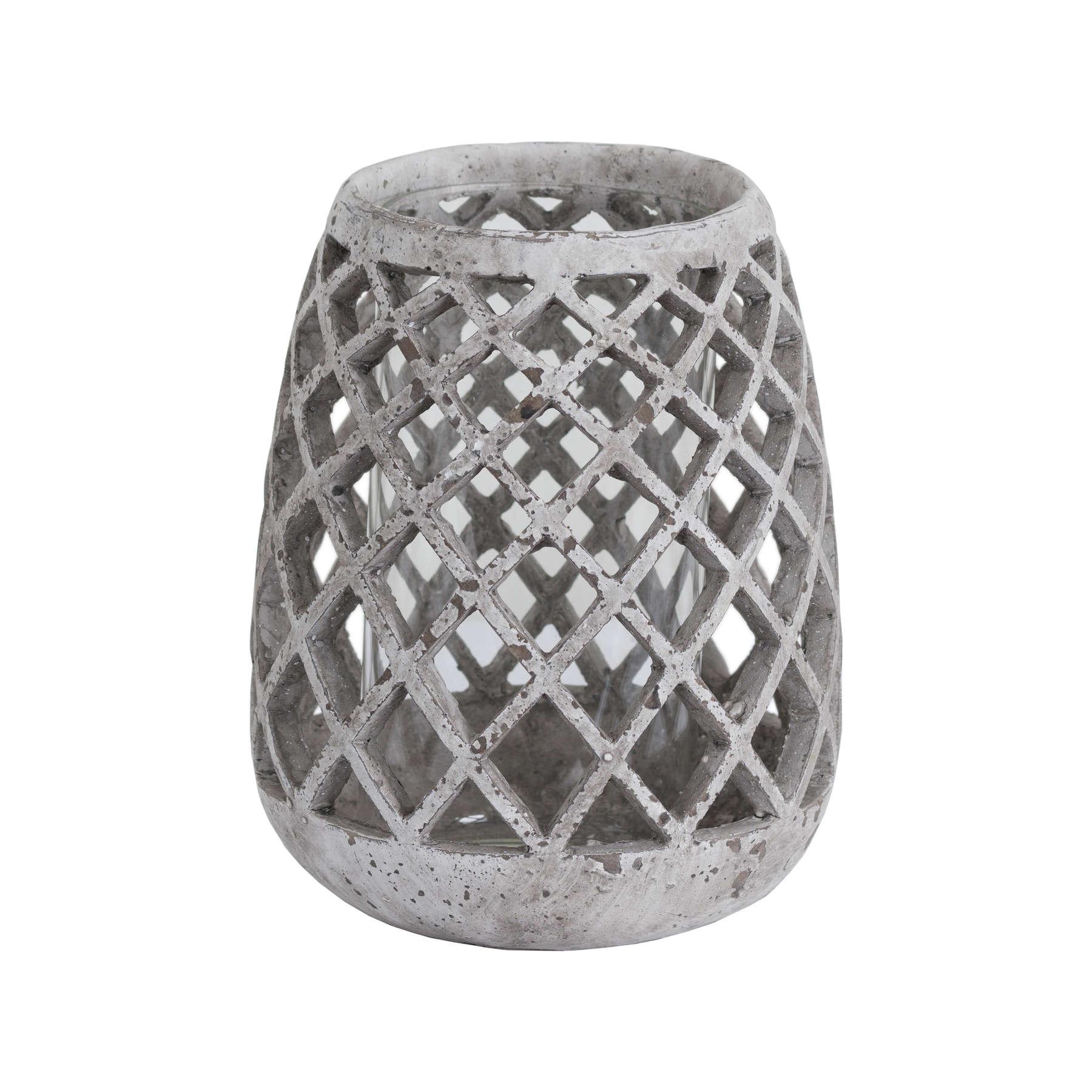
Large Conical Ceramic Lattice Hurricane Lantern
£43
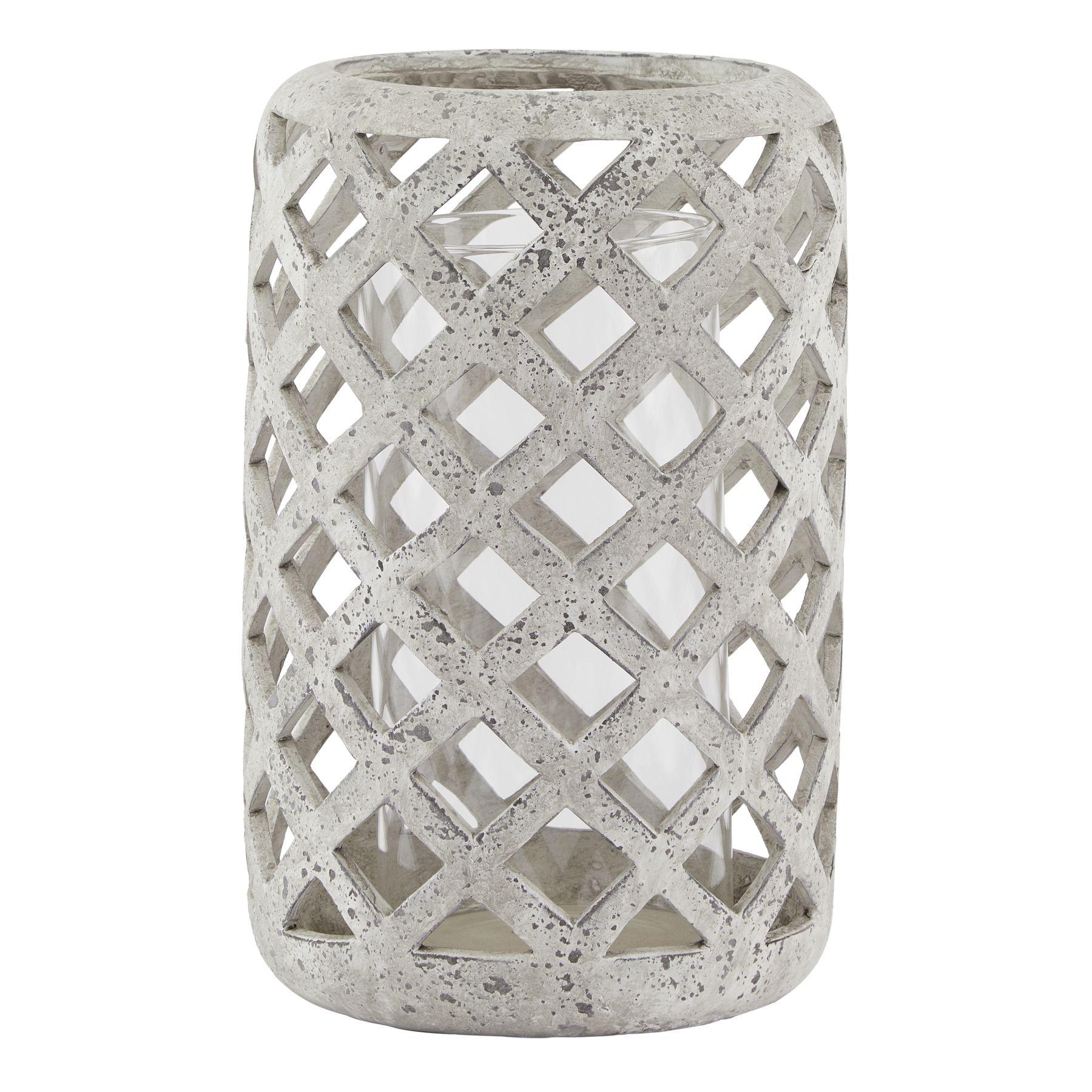
Large Grey Stone Effect Hurricane Lantern
£62
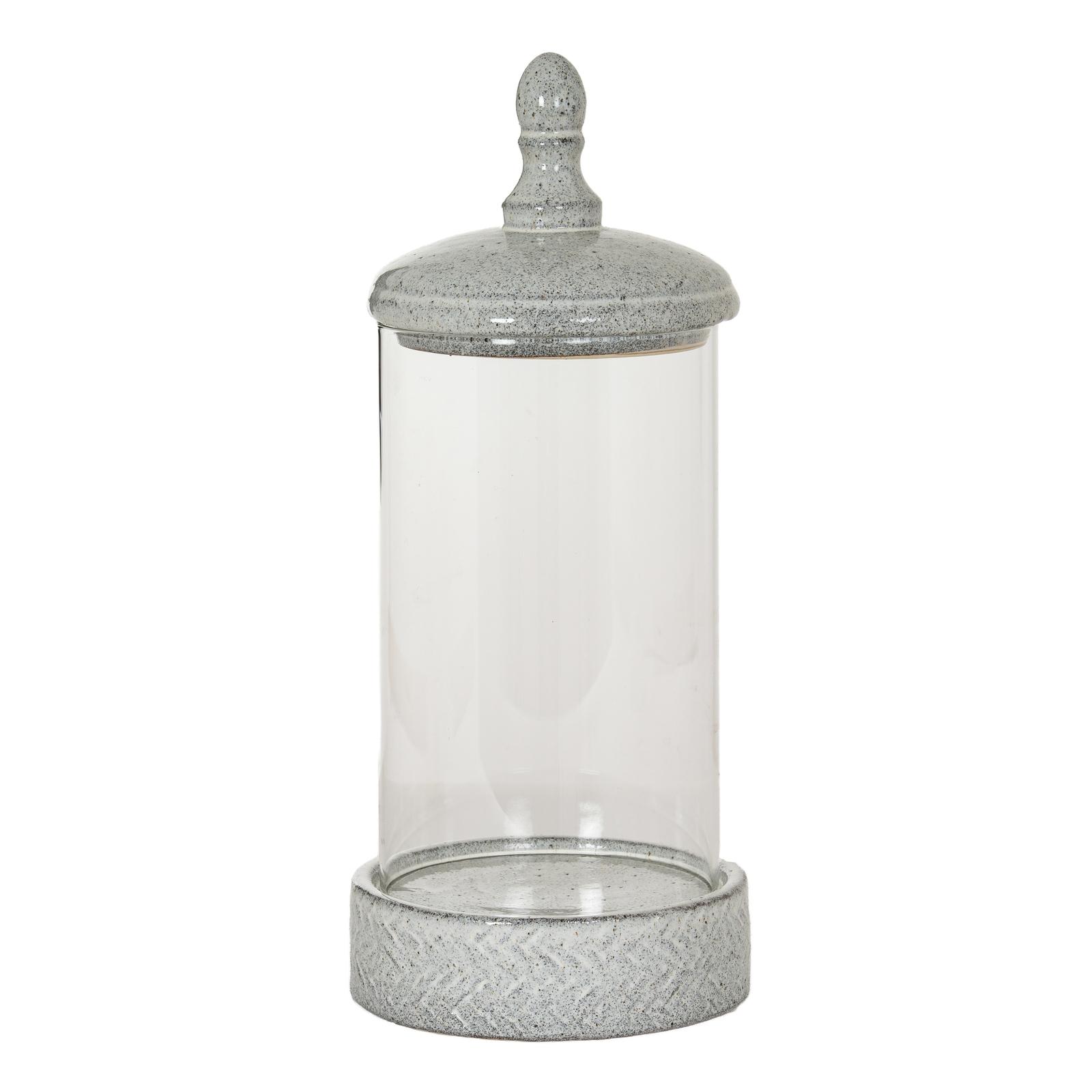
Sona Large Hurricane Lantern With Lid
£67
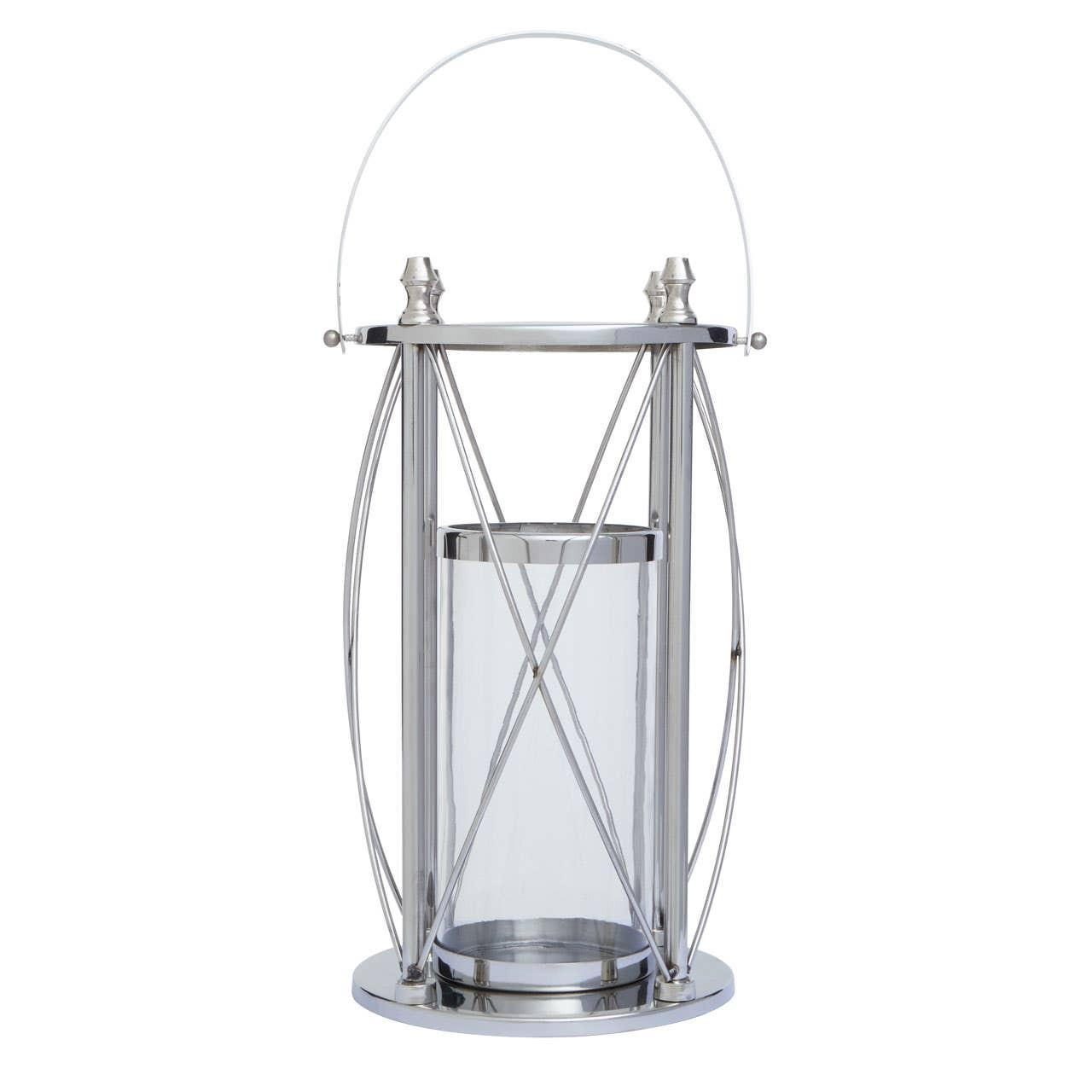
Cruzar Large Silver Lantern
£160
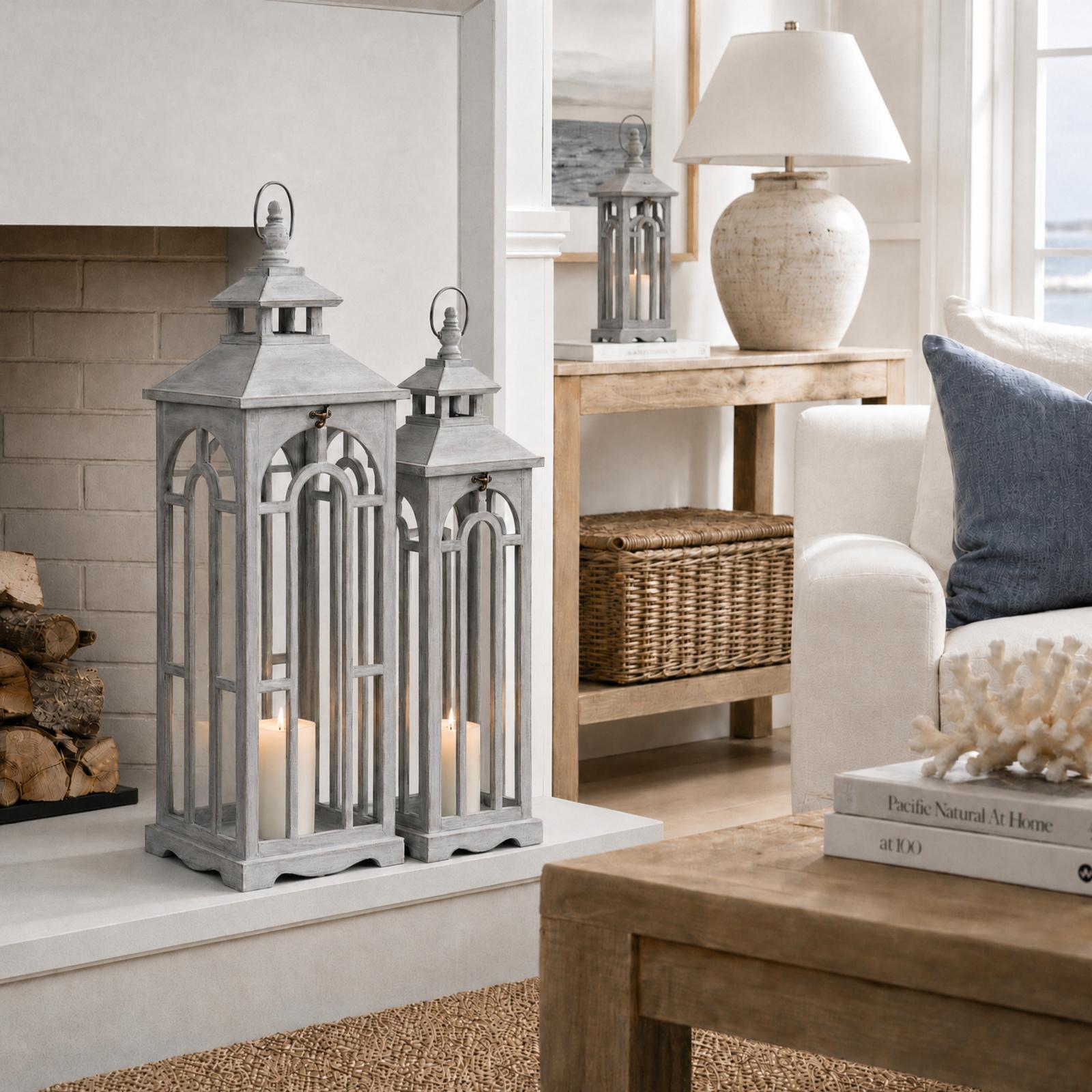
Set Of Three Wooden Lanterns With Archway Design
£219
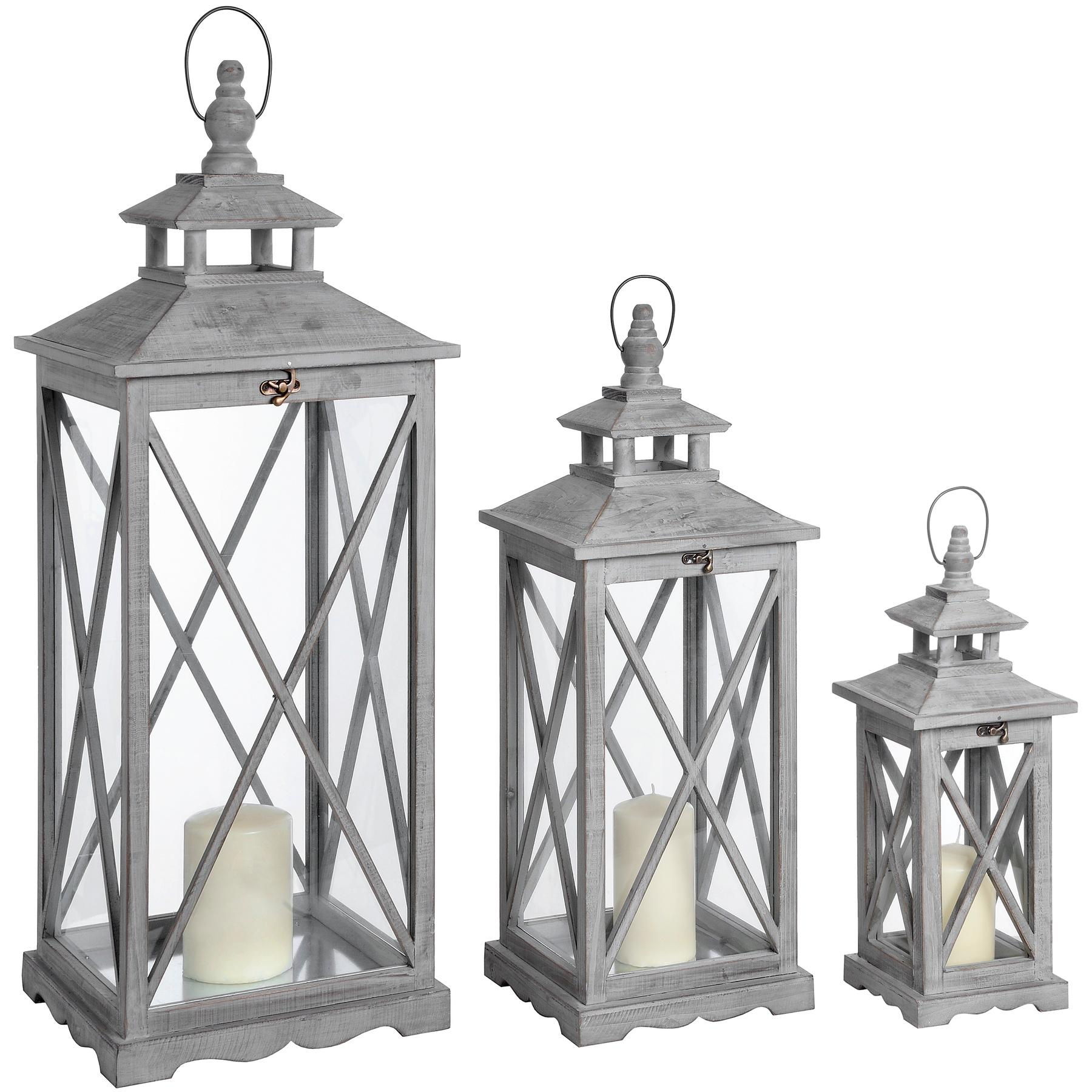
Set Of Three Wooden Lanterns With Traditional Cross Section
£186
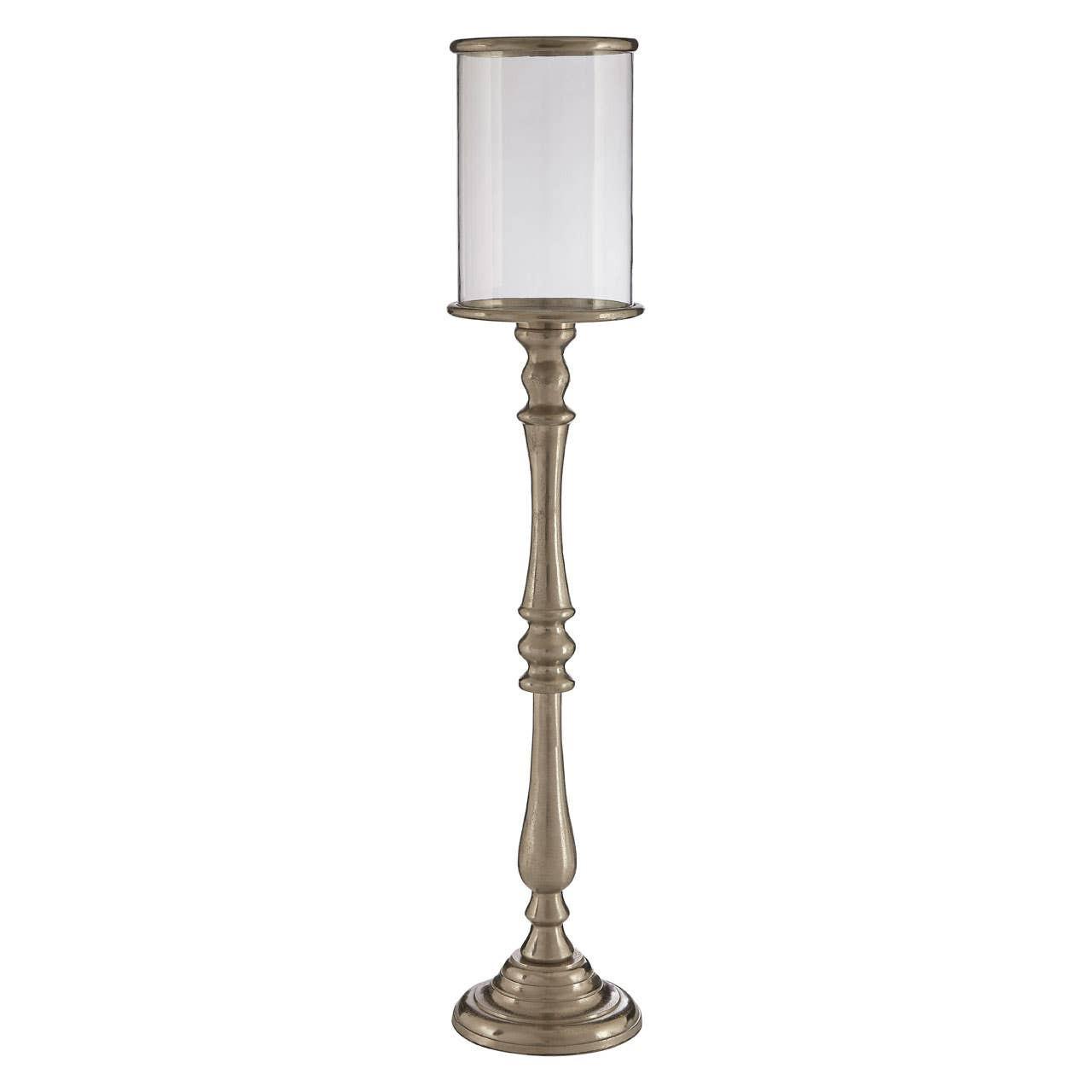
Kensington Townhouse Nickel Finish Large Floorstanding Candle Holder
£70
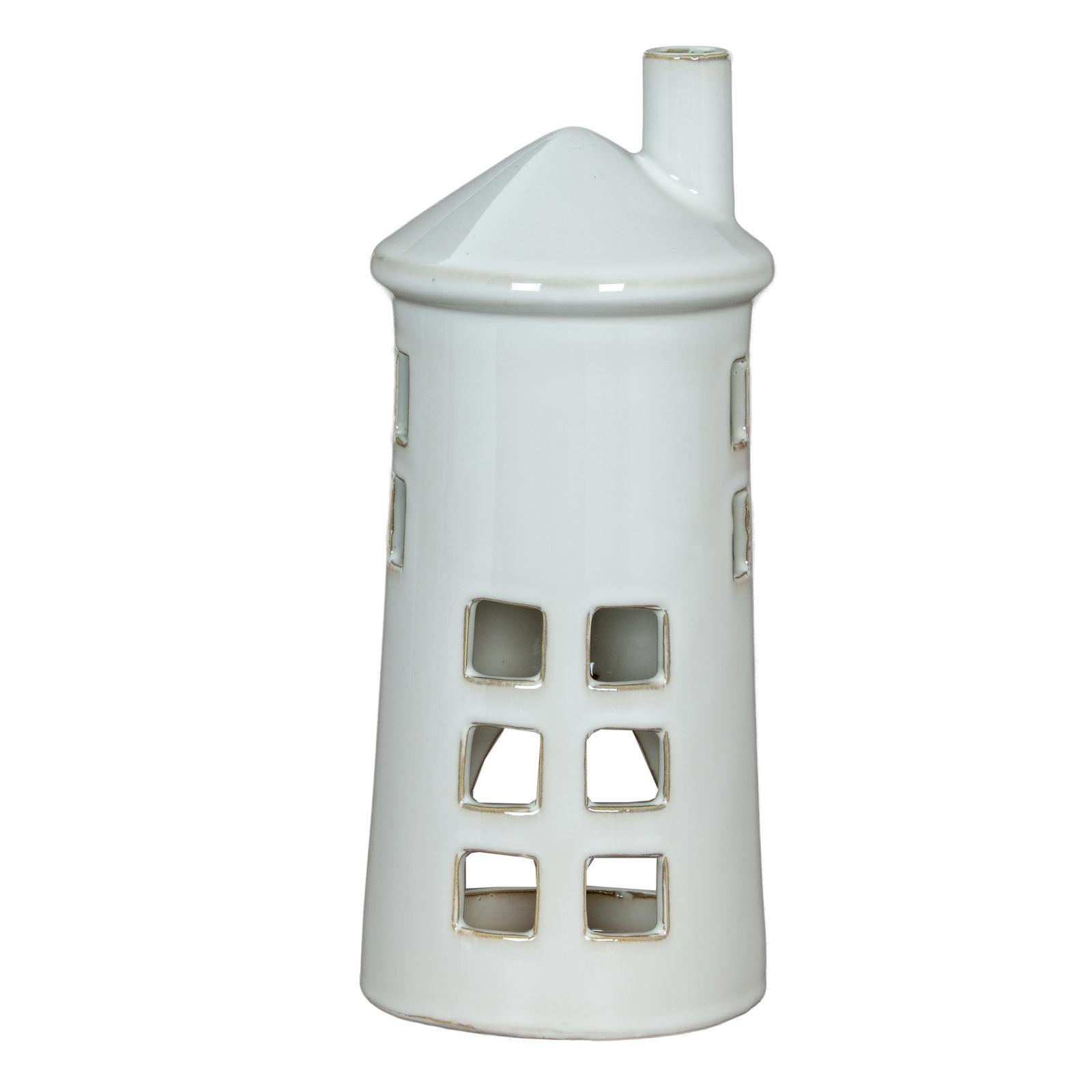
Rhea Large Lighthouse Tealight Holder
£33